A warehouse is supposed to empty. That is its least photogenic and most important talent. In autumn 2021, a food importer’s Northeast logistics provider was so congested that roughly 100 temperature-controlled containers stood stranded outside. Each carried a reported detention charge of $300 a day. The merchandise had somewhere to sit. It needed somewhere to go.
- ABW connects storage, secondary packaging, and transportation for consumer goods businesses.
- Its roots are in confectionery, where temperature and handling matter.
- The useful lesson: plan the handoffs as carefully as the warehouse.
A warehouse is supposed to empty
Atlanta Bonded Warehouse’s July 2026 account describes a forecast overshoot that blocked the other provider’s staging lanes. ABW arranged refrigerated transloading, redirected inbound freight to Atlanta, and established four Northeast cross-dock partners in about 30 days. The resulting program shipped 1,200 orders over approximately nine months. The company acknowledges that serving the Northeast from Atlanta cost more than serving it locally.
Illustrative calculation from reported detention rates. This is exposure, not a reported total bill.
The calculation changes the conversation. A longer freight route can look wasteful until the alternative is stalled inventory and missed orders. For a buyer evaluating logistics partners, the question becomes wonderfully concrete: what happens when the normal route stops working? A list of square feet will not answer it.
Candy had other plans
ABW began in 1948 when a Peter Paul candy broker organized protective warehousing for confectionery. The original business, Acme Bonded Warehouse, eventually occupied 42,500 square feet of refrigerated space with a ten-foot clear height. Chocolate imposed a discipline that ordinary boxes do not: the building had to protect what was inside them.
Expansion followed the work. A Kennesaw regional distribution center opened in 1985 for a large chocolate manufacturer. In May 2000, ABW opened a Southeastern Distribution Center for Hershey Foods. These were facilities built around customers’ distribution requirements, a different proposition from simply offering a spare corner of a building.
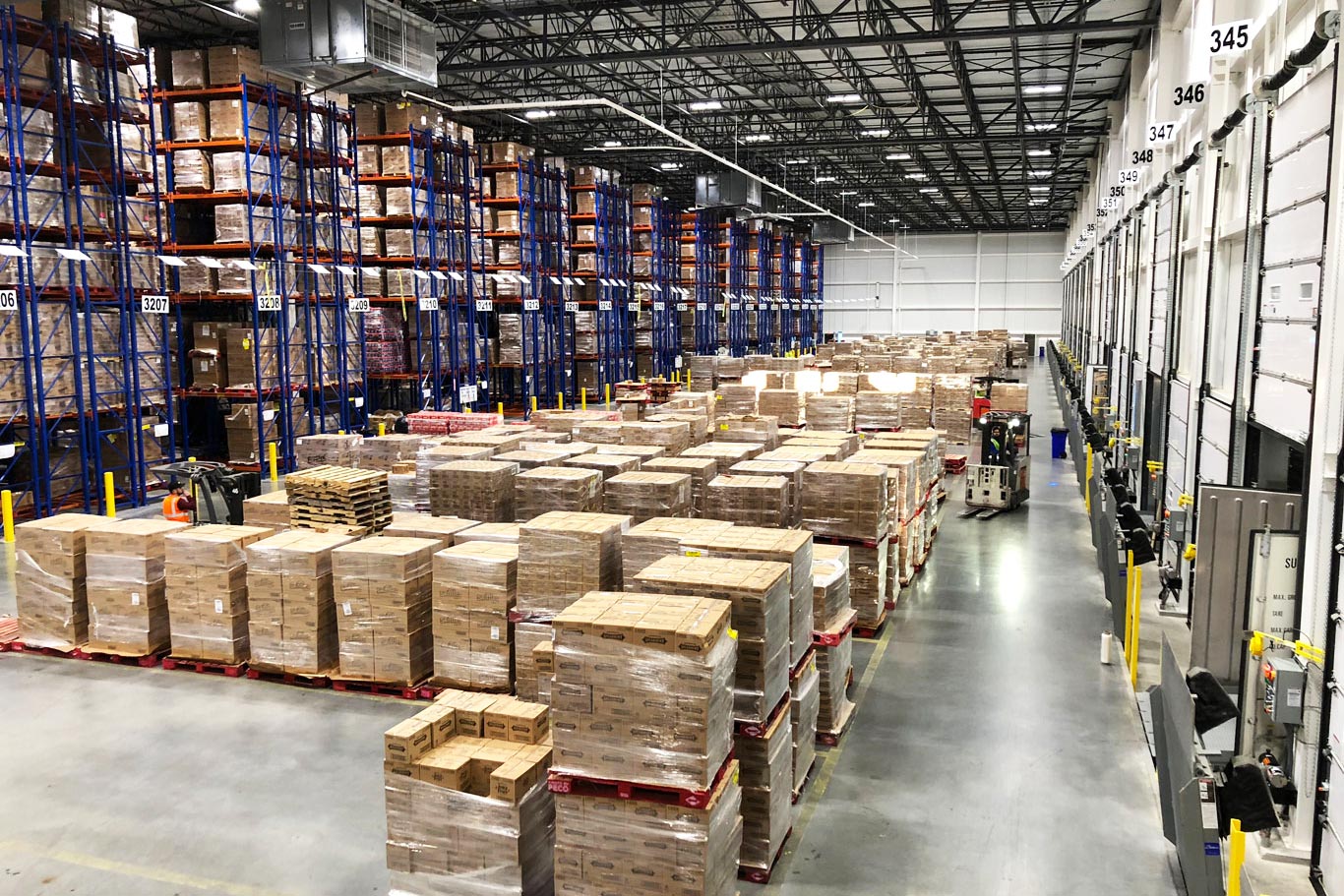
For 2024, ABW reports handling 730 million cases and nine million pallets across 7.5 million square feet. Its customers operate in food, beverages, pharmaceuticals, nutraceuticals, plastics, and other consumer packaged goods. The family-owned business described by software partner Cycle Labs has become a substantial U.S. logistics operation, while retaining a distinctly practical specialty.
The business between the shelves
A brand can buy several parts of that operation: shared warehousing, dedicated warehouse management, secondary packaging, and transport. ABW earns its business through contracted services. The customer is paying for people, space, equipment, systems, and execution without having to assemble the entire operation internally.
Secondary packaging deserves more attention than its name invites. A finished product may still need a club-store case, a promotional bundle, or a display built to a particular retailer’s specifications. ABW offers these configurations, including kitting and repackaging. It does not manufacture the product itself. Candy can be perfectly edible and still thoroughly unprepared for its retail debut.
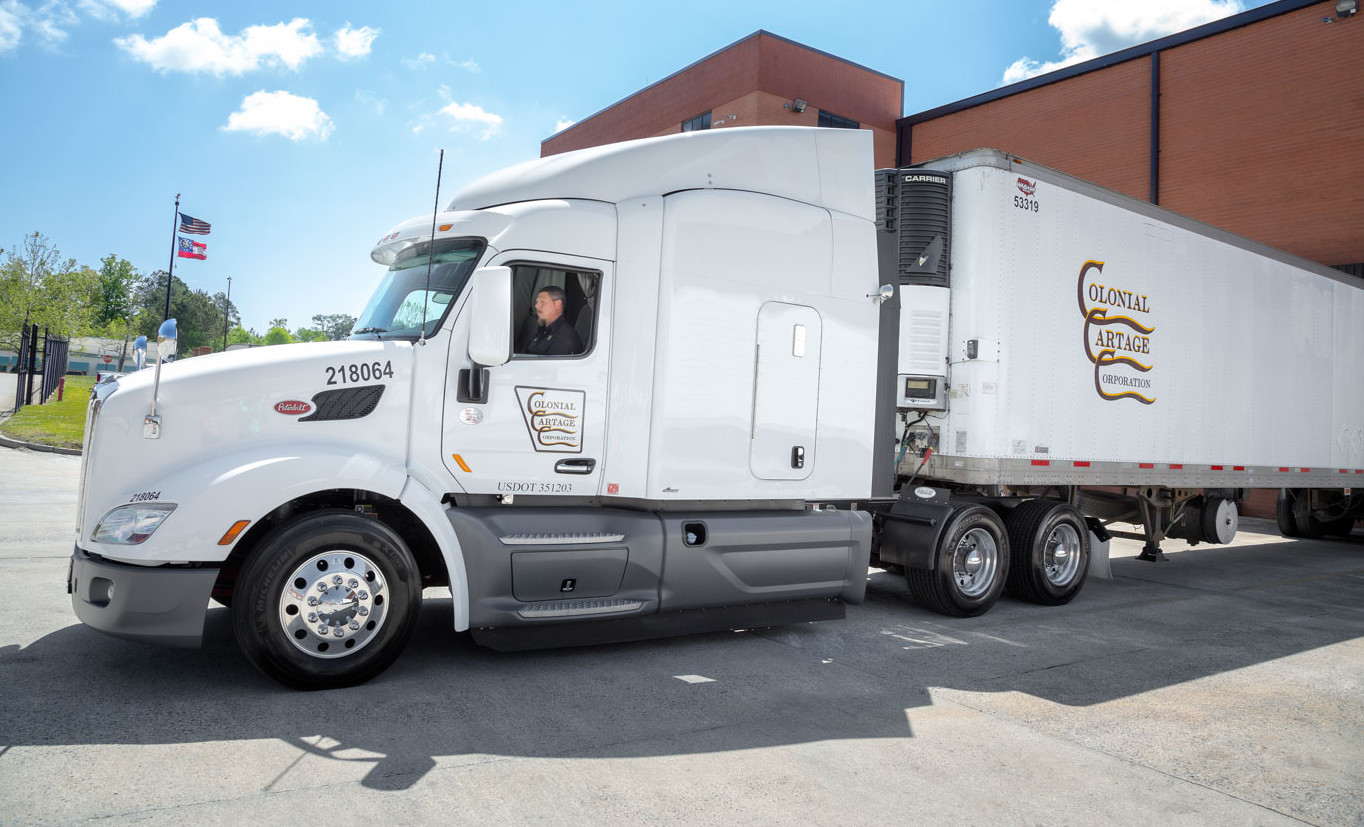
Colonial Cartage, its affiliated in-house carrier, supplies the transport connection. Its published regular footprint covers 26 states. Consolidating several customers’ smaller orders into loads for the same destination can improve shipping economics. ABW also coordinates managed freight, so a carrier’s regular route map and a customer’s distribution plan need not be identical.
The competitive argument is coordination. Regional warehouses such as Bonded Service Warehouse and Fulton Warehouse offer other local choices; larger cold-chain operators such as Americold occupy a broader market. A buyer should compare the actual product requirements, delivery lanes, packaging work, and service commitments. The attractive number on a storage quote is only one part of that decision.
The little tyranny of item 123
Coordination also happens inside a database. A 2017 JDA case study describes ABW replacing a paper-based legacy system after about 18 months of evaluation. Cost made the company hesitate over a top-tier warehouse-management system. One deciding feature was delightfully mundane: two customers could both use item number 123 without ABW rewriting their codes to distinguish them.
The software could direct forklift work and combine inbound and outbound tasks, cutting journeys with empty forks. That is a useful buying principle: test software against the repetitive awkwardness of your own operation. A demonstration is more revealing when it includes the thing employees currently work around.
Growth created another constraint. Cycle Labs’ 2025 case study describes five IT staff supporting six Blue Yonder warehouse-management instances and more than 120 clients. Manual regression testing had become a bottleneck. ABW began automating tests for receiving, storage, picking, and shipping. Its 60% automation figure was a Phase 1 objective; the document describes early implementation, with configuration problems already caught before operational disruption.
A warehouse with room to improvise
Physical design carries the same logic. In the 2018 Kennesaw expansion, builder A M King placed stormwater detention underground, preserving the working surface for trucks. The completed project added about 31,000 pallet positions while existing operations continued. Space becomes more valuable when several jobs can coexist without obstructing one another.
“Our name is local but our service knows no boundaries.”Atlanta Bonded Warehouse
There are limits to copying this approach. A detour through Atlanta needs available capacity and capable destination partners. Delaying packaging until an order arrives needs suitable line capacity and enough time to complete the work. A predictable product with a stable configuration may gain little from postponement. Flexibility has a cost, and its value depends on what uncertainty would otherwise cost you.
The actionable habit is to examine the next handoff before signing for the current one: where goods wait, who changes their packaging, which system tracks them, and how they leave. ABW’s fifteenth consecutive Inbound Logistics Top 100 3PL recognition in 2026 is a credential. The more useful proposition is a warehouse designed to keep emptying.