A hospital has a front door. What happens after someone walks out is harder to organize. There is another appointment to book, another clinician to find, another explanation of what happened. Universal Health Services has spent decades assembling places where people receive treatment. In August 2026, it bought Talkspace, the virtual mental healthcare business, in a transaction announced at approximately $835 million. The interesting purchase was the possibility of making those separate encounters feel connected.
- The base: acute care hospitals and a substantial psychiatric care network.
- The addition: Talkspace’s virtual therapy and psychiatry platform.
- The test: whether patients can move between services without losing their way.
That is a practical ambition with an expensive price tag. An organization can own both ends of a referral and still make the journey between them awkward. UHS’s next chapter turns on that distinction.
A small contract. A very large network.
The company’s beginning was agreeably uncinematic: a management contract at Waupun Memorial Hospital in Wisconsin. Alan B. Miller founded UHS in 1979; early purchases included hospitals in Hollywood, Florida, and Las Vegas. Management, ownership, expansion. The verbs were straightforward. The execution required people who could run hospitals.
One purchase changed the proportions. In November 2010, UHS acquired Psychiatric Solutions for a final reported price of $3.04 billion, including assumed debt. Behavioral healthcare became a much larger part of its footprint. Marc D. Miller succeeded Alan as chief executive in January 2021, while the founder remained executive chairman.
Today its subsidiaries provide emergency medicine, surgery and inpatient hospital care alongside psychiatric hospitalization, residential treatment, addiction services and outpatient programs. It also has physician management and health plan operations. This is a publicly traded care delivery business: insurers, government programs and patients pay for services. Employers and health systems also matter as purchasers and partners.
The market position spans two familiar worlds. In acute care, alternatives include HCA, Tenet and local public or nonprofit systems. In behavioral health, they include Acadia and regional providers. UHS’s distinctive proposition is the combination of hospital operating experience, a broad psychiatric footprint and, now, a national virtual platform. Ownership supplies the ingredients; coordination determines their usefulness.
Ninety-six beds, one local partner
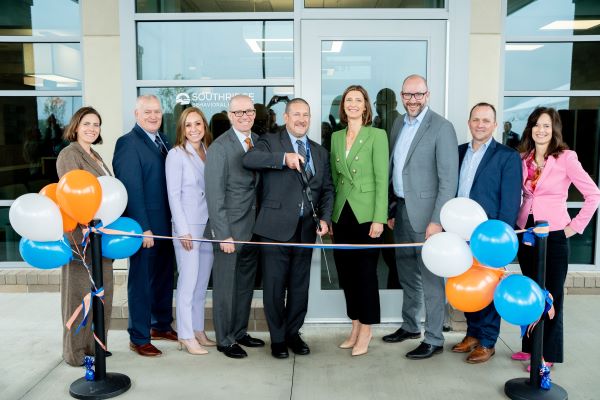
To see the machinery at a human scale, consider Southridge Behavioral Hospital in Byron Center, Michigan. The UHS joint venture with Trinity Health Michigan held its ribbon cutting in May 2025. It was licensed for 96 adult and geriatric beds, with approximately 170 full-time and part-time employees planned at full operation.
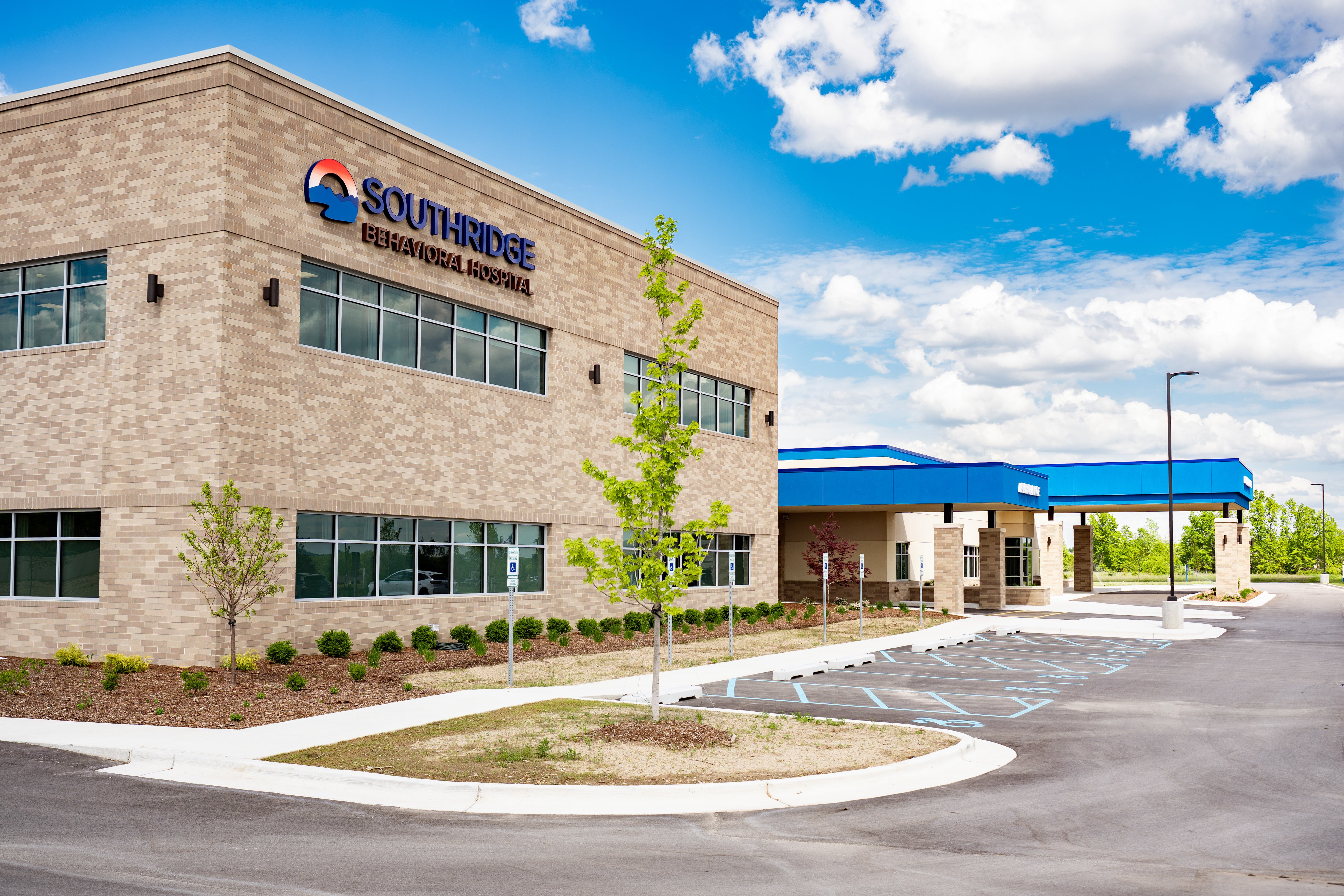
The treatment program includes psychiatric care and counseling, supplemented by art, music and outdoor activities. The partnership makes the growth model visible: a national operator joins an established local healthcare organization to add a specific service. UHS has pursued similar behavioral health partnerships elsewhere, including with HonorHealth and Penn Medicine Lancaster General Health.
There is an operating culture behind this repetition. In a 2025 interview, Marc Miller described teams comparing facility performance, trying process improvements and reproducing useful approaches. The company calls its cultural program Service Excellence. The useful part for another operator to copy is the comparison-and-testing habit, provided local clinical differences remain visible.
The price of a handoff
Talkspace brings a different kind of capacity: approximately 6,000 licensed providers and virtual therapy and psychiatry. The acquisition closed August 17, 2026. UHS originally proposed funding the approximately $835 million transaction through its revolving credit facility. This was a deliberate capital allocation to services beyond the hospital building.
appointments
programs
treatment
The intended benefit is movement in both directions. Someone receiving virtual therapy might need more intensive treatment; someone leaving hospital might need continued outpatient support. UHS presents the combination as a way to connect those settings. That remains an integration objective, rather than proof that every transition already works.
The scale needs careful reading, too. Talkspace’s services were available to more than 200 million people through benefits and insurance arrangements. Eligibility is potential access. It does not mean 200 million patients received treatment. For a prospective patient, the relevant questions are smaller: Is this service covered? Is a suitable clinician available? Who arranges the next step?
The network went quiet
Connectivity has a cost when it fails. After a September 2020 cyberattack, UHS suspended access to US information technology applications and used backup processes, including offline documentation. Some ambulance traffic and scheduled procedures went to competitors. Coding and billing delays extended into December. UHS estimated a $67 million unfavorable pretax impact for that year.
A separate accountability problem also belongs in the record. In July 2020, UHS agreed to pay $117 million to resolve federal and state allegations involving behavioral health claims and services. Turning Point, a UHS facility, separately agreed to pay $5 million. UHS denied the allegations; the settlements did not determine liability. Scale makes clinical oversight and appropriate billing consequential operating tasks.
“Healthcare is a people business, and it always will be.”
Marc D. Miller · The CEO Forum · 2025
The next appointment is the test
For another healthcare operator, the transferable lesson is to identify a gap between services, assign responsibility for crossing it and measure what happens. Follow-up completion and time to an appropriate appointment would tell more about continuity than a count of locations. That is an editorial test for the strategy, not a claim about results UHS has published.
The approach depends on sufficient clinicians, compatible coverage, usable records and patient consent. Without those, common ownership can leave the same obstacles in place. UHS has purchased another route into care. The ordinary next appointment will show whether the route connects.