The most interesting thing about a policy administration system may be who gets to change it. An insurer wants to enter another state, connect a rating tool, or adjust a workflow. Somewhere inside that apparently technical request sits a business question: whose timetable will it follow?
Combined Ratio Solutions has organized a company around that question. Its proposition is straightforward: give insurers control of their deployed software, remove the license fee, and charge for the expertise needed to make the system useful. The product is called OSPolicy. The ambition is to move the decision-making closer to the people writing the insurance.
- The product: policy administration for P&C carriers and managing general agencies.
- The difference: customer-controlled code and no software license fee.
- The business: paid implementation, integration, development and support.
The first thing to break was the financing
Michael Jones and Luke Magnan did not begin with a romantic attachment to bootstrapping. In the founders’ account, they had investors lined up in London, contracts in preparation, and a trip planned. Then the backing disappeared. Their prospective software company suddenly needed another way to pay its bills.
They turned to services. Founded in 2018, CRS publicly announced its launch in September 2019 as a firm helping insurers get more from existing technology. The work included clearing development backlogs, improving systems and connecting new tools. Before there was a platform to promote, there were customer problems to solve.
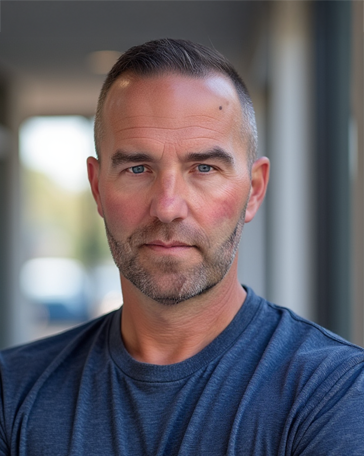 MICHAEL JONES / CEO
 LUKE MAGNAN / CHIEF INSURANCE OFFICER
The constraint mattered. Service contracts brought revenue; early profits could be reinvested in a reusable policy platform. In his 2025 Citybiz interview, Jones described a company that had reached roughly 200 people globally. The lesson is more specific than “stay persistent”: sell useful work that customers already need, then build a common foundation from what you learn.
The unglamorous center of insurance
A policy system lives beneath the moments people recognize as insurance. It handles the information and transactions behind submissions, renewals, endorsements and cancellations. Documents must be produced. Other systems must know what happened. A change in coverage cannot simply become an isolated note in somebody’s inbox.
OSPolicy brings those workflows together with account management, configurable interfaces and document generation. CRS describes connections to separate rating engines, billing systems, claims tools, business intelligence and reinsurance systems. That distinction matters: a connected policy core does not require every specialist function to come from the same software supplier.
CONNECTED TO: RATING / BILLING / CLAIMS / ANALYTICS
Its natural audience is the insurer with meaningful complexity and limited appetite for a giant transformation program. CRS emphasizes tier-two and tier-three carriers, specialty insurers, and MGAs. The founders bring experience across agencies, carriers and software vendors; Magnan’s background includes core-system architecture, while Jones has worked in insurance sales, risk and technology commercialization.
Consider a specialty carrier adding a product. The commercial idea is only part of the job. Staff need appropriate data fields, documents, approval steps and connections to pricing tools. OSPolicy’s configurable workflow and interface are intended to support that work. The promise becomes valuable when the carrier can translate a business choice into a software change.
Zero is a price, not a project budget
CRS publicly introduced OSPolicy in June 2025 as an open-source, license-free platform. The attractive number is zero. It applies to the software license. An insurer still needs its products configured, historical data migrated, integrations built and a production environment operated. Those are precisely the jobs CRS sells.
“We compete on business model.”
Michael Jones, Insurance Innovation Reporter, December 2025
Rebel OPS, the company’s services practice, covers implementation, integration, development and support. Hosting, DevOps and performance optimization sit alongside custom builds and cloud work. This gives the business a practical reason to care about what happens after installation: it earns money by doing work around a system the customer controls.
That is a different purchasing proposition from licensing a commercial platform. Guidewire and Duck Creek remain established alternatives in the P&C market. A buyer comparing them with CRS should examine functional coverage, delivery capability and ownership terms together. A cheaper license line alone cannot tell you which system will cost less to run.
There is also a concrete first step for technical buyers. CRS routes requests for source-code access through its website. Getting access, inspecting the architecture and understanding the deployment arrangement belong early in an evaluation. The word “open” should lead to an engineering conversation about what the team can actually operate and extend.
Budget separately for configuration, data migration, integrations, infrastructure and ongoing care.
A customer turns off the old system
In April 2026, Universal Shield Insurance Group supplied a useful test of the pitch. Its announcement said commercial property and general liability were live on OSPolicy, policy data for those lines had been converted, and the previous system had been shut off for those products.
USIG built its proprietary Universal Connect program on the platform. Its stated motivation was ownership and the freedom to develop without competing for another vendor’s priorities. Additional lines and the elimination of manual policy assembly were described as next steps. The completed result was narrower, and more persuasive: two lines operating on the replacement.
The keys come with a job
Ownership changes the work; it does not abolish it. The practical implication for buyers is that someone must maintain the code, manage security, test changes and keep operations dependable. An insurer unwilling to develop that capability, internally or through service partners, may find a managed commercial platform more comfortable. Freedom has an operating budget.
CRS’s international team reflects that emphasis on people. Its careers page describes a collaborative culture across Providence, Montevideo, Belgrade and Tbilisi, and displays photographs taken by employees. Even the company’s noisy “rebel” branding rests on a fairly old-fashioned activity: skilled people doing paid work for customers.
The organization has added experience around that delivery model, too. In November 2025, CRS announced an advisory board including former Agencyport CEO Curt Stevenson and PCMI president Clyde Owen. The relevant expertise is insurance software and the difficult business of making it work inside real organizations.
There is something a reader can copy here without replacing any software. Ask who owns the deployed code. Ask who can change it. Ask what happens when the relationship ends. Then price the people and infrastructure needed to exercise those rights. The useful number is the cost of making your next business decision happen.