UNIQA already had a mobile app. That was the awkward part. According to DICEUS’s account of the project, customers did not want to use it. They kept reaching for the telephone. An insurer could put another icon on a screen, but the expensive business of answering questions would continue much as before. The problem was the distance between having an app and giving somebody a reason to open it.
- DICEUS builds insurance products and connects them to existing systems.
- Its work spans customer apps, underwriting, policy administration, and captive insurance.
- The recurring lesson: fix the handoff before adding another interface.
The app nobody wanted
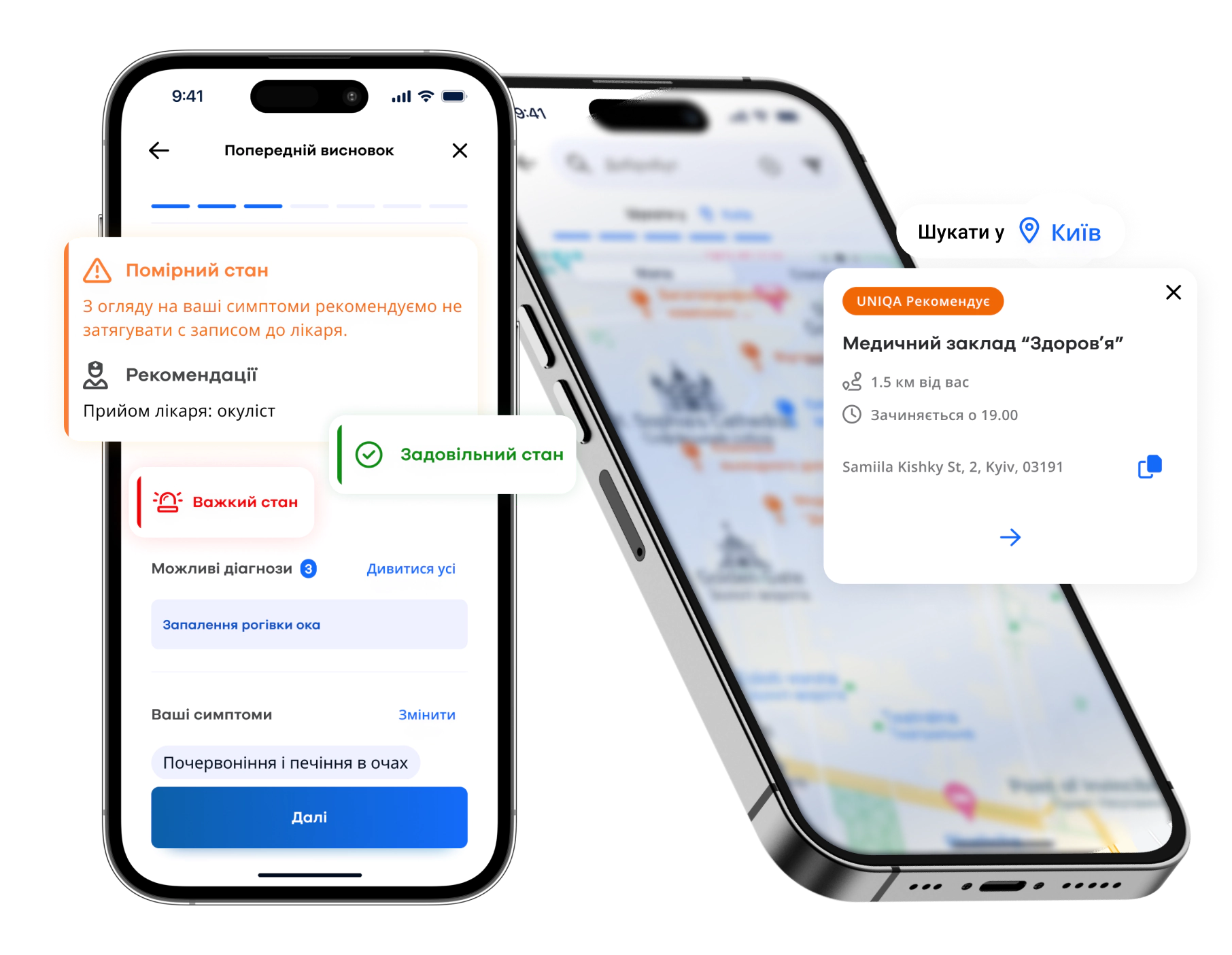
DICEUS began the replacement with discovery: interviews with existing users, buyer personas, journey maps, and requirements. The resulting myUNIQA app put policies, doctor appointments, medical reports, and medicine orders within reach. For the insurer, self-service offered a way to ease pressure on the call center. For customers, it meant fewer reasons to call.
The case study records a 13-person team and a year of work, from July 2023 to July 2024. It also records trouble connecting directly to Siebel CRM, including incorrect server errors. That detail deserves attention. The customer sees the appointment button. The developer sees everything that must answer when it is pressed.
When the messenger blocks the messenger
Another DICEUS customer, Kniazha Vienna Insurance Group, had a wonderfully specific problem. Insurance coordinators used personal messaging accounts to speak with policyholders. Viber sometimes treated them as spam and blocked them. Conversations were difficult to assign, and operators spent time asking customers for identification before getting to the actual request.
DICEUS’s case study describes a three-person team delivering a chatbot over two months in 2024. Its launch announcement dates the go-live to May 1. Customers could use Viber, Telegram, or WhatsApp; operators received a shared web interface, individual accounts, and conversation histories. The bot gathered identification details before handing the customer to an assistant.
“I liked the quality of services and especially the communication with the team.”Ihor Zhyzhara, Kniazha VIG, in a company-published testimonial
The interesting change was organizational. A conversation gained an owner. A returning customer gained a history. DICEUS reports faster inquiry processing, without publishing a measured percentage. This is a useful distinction for buyers: the documented mechanism is stronger evidence than an impressive number with no explanation.
Build once. Configure the next time.
These projects help explain DICEUS’s position in the market. Founder and CEO Illia Pinchuk established the company in 2011. It still sells custom development and engineering services, including work outside insurance. Its insurance offering now also includes configurable products: policy administration, an underwriting workbench, customer and broker portals, a Super App, and data warehousing.
The commercial idea is straightforward. Insurance businesses share enough processes to reuse software, while differing enough to need configuration and integration. DICEUS occupies the space between commissioning everything from scratch and adapting a business to a fixed package. That position is an editorial reading of its product-and-services mix, rather than a claim that customization becomes effortless.
Its underwriting workbench illustrates the approach. DICEUS describes submission intake, account views, quoting, broker collaboration, referrals, and authority management in one workspace. AI supports processing and decisions. The practical purchasing question is whether these capabilities fit a particular insurer’s rules and data, rather than whether the demonstration contains enough AI.
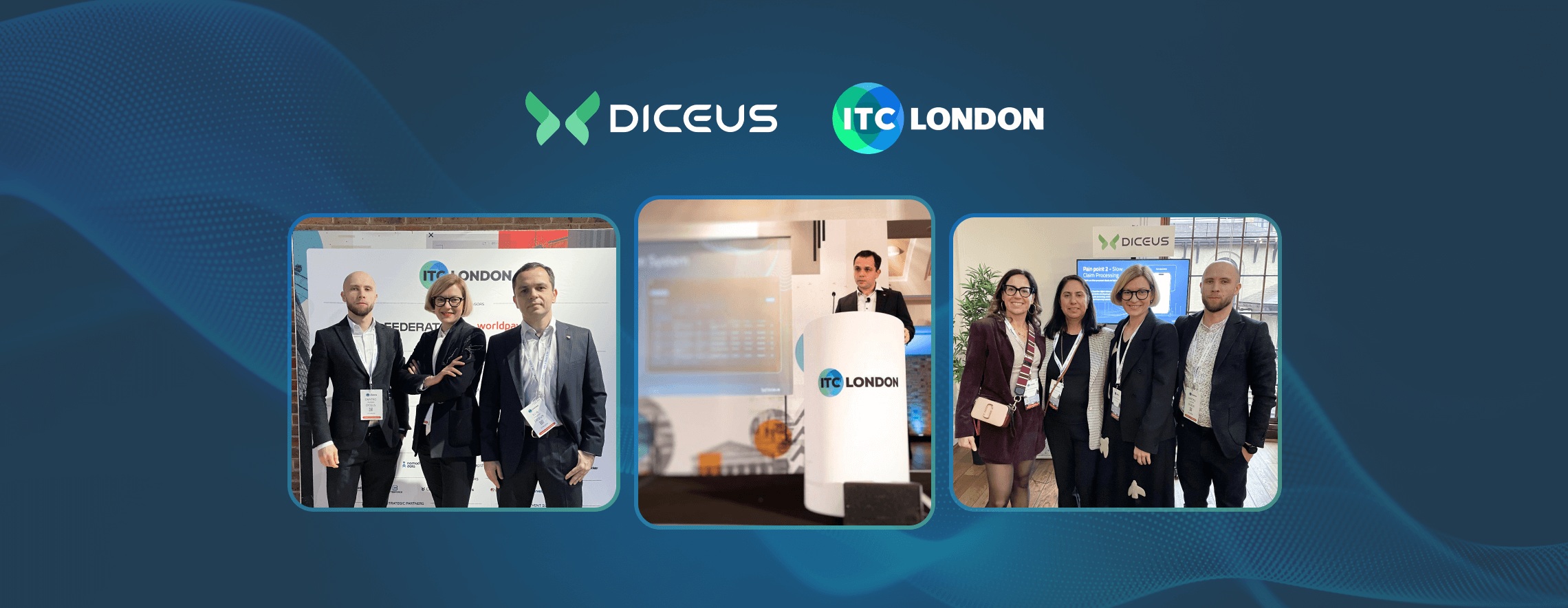
Partnerships extend that reach. Fadata announced a strategic implementation agreement in December 2022, building on earlier collaboration. DICEUS can help implement INSIS, Fadata’s insurance platform. In January 2024, its chatbot joined the Fadata ecosystem. Here, a software company can supply its own product while helping another vendor’s core system succeed.
The bill lives behind the screen
The Super App’s published pricing structure separates an annual base license, module fees, support, and implementation. Discovery and customization are calculated separately. That gives buyers a useful way to interrogate a proposal: identify the recurring license, the work required to launch, and the work required to make the product fit.
Delivery effort also varies sharply. A tightly scoped messaging workflow and a mobile app connected to sensitive customer systems are different purchases. The two-month and one-year case studies illustrate that spread; they are not competing speed records. A short implementation depends on what already exists, what must change, and which connections are ready.
That dependency explains the April 2026 partnership with insureMO. The partners describe combining an API-first middle office with DICEUS’s modular software to connect back-office operations and customer experiences. In July, DICEUS announced a Kruzr partnership to bring driving-behavior data into motor insurance workflows. Both announcements concern movement between systems as much as features inside them.
Start with the handoff
There is a smaller experiment worth borrowing. In the Vitaminise project, DICEUS and its client chose a chatbot MVP while keeping a mobile app as a future possibility. The delivered motor-insurance flow pulled vehicle details, offered customer-data entry through Ukraine’s DIIA service, and connected payment to policy delivery. The case also records integration work where ready-made APIs were absent.
For an insurance team, the lesson is practical: choose a transaction, map its dependencies, and make that route usable before widening the scope. It works best when someone can supply the data, approve the workflow, and own the integration. Without those conditions, a configurable product still leaves people bridging the gaps by hand.
Pinchuk’s July 2026 Insurtech Leadership Podcast appearance takes the same concern into captive insurance: spreadsheets, manual administration, and growth that demands more staff. Across these examples, DICEUS’s most persuasive proposition is specific. Give the next person in the process what they need to act. Then the software has done something. For the buyer, that is a sensible test of any promised transformation: follow one request from its first message to the person who can resolve it.