At Saint Francis University in Loretto, Pennsylvania, the ambition was to reach students beyond the region through online programs. The work required to get there included a new card access system, stronger authentication, and better campus Wi-Fi. A growth strategy had become an infrastructure project. This is the territory Collegis Education occupies: the distance between what a college wants to accomplish and what its operating systems allow.
- Collegis supplies the people and operating support behind campus technology, recruitment, and online learning.
- Its Connected Core offering joins existing systems while keeping data ownership with the institution.
- The revealing results come from fixing specific bottlenecks, then measuring what changes.
A growth plan with a Wi-Fi problem
Collegis assessed Saint Francis’s technology, developed a roadmap, supplied a virtual chief information officer, and brought university IT staff into its technology team. The engagement combined daily operations with longer-term planning. Infrastructure upgrades were accompanied by governance and expanded support. In its published case study, Collegis reports a 14% saving in the university’s IT budget, with funds available for reinvestment.
The sequence matters. Stabilize the machinery, establish expectations, then improve it. It offers a useful interpretation of Collegis’s business: selling a college more capacity to execute. A consultant’s recommendation becomes someone’s ongoing responsibility.
Company-reported case study result
The college that became the workshop
Collegis Education’s documented launch came in August 2013, when Rasmussen, Inc. introduced the business under president J. Michael Locke. Its capabilities had been developed through work at Rasmussen College and Deltak, the online education business formerly owned by Rasmussen. The launch team numbered 180 across three offices. The company was packaging operating experience for other institutions.
That history helps explain a service menu that can seem unusually broad. Admissions outreach sits beside course development. Paid media sits beside enterprise applications. The connective tissue is practical knowledge of running the business around education, from attracting an interested student to supporting the technology through which that student learns.
Collegis later expanded its portfolio through the 2020 acquisition of Education Management Solutions, a provider of healthcare simulation learning technology. That move added learning products to a business already spanning enrollment and managed technology services.
One student, several databases
Consider Dominican University in Illinois. When it engaged Collegis in 2018, the problem included data scattered across tracking systems and gaps in admissions staffing. The institution had information, but insufficient connection between the places holding it.
Collegis joined CRM and marketing analytics data, mapped the enrollment journey, and supported outreach, paid media, reporting, and forecasting. The distinction is consequential: a recruitment campaign can produce inquiries while admissions struggles to convert them. Measuring the first activity alone leaves the second problem conveniently out of frame.
For fall 2022, the company’s case study reported first-year undergraduate enrollment growth of 31%. In FY22, inquiries exceeded goal by nearly 500, at about $75 less per inquiry than planned. These figures describe performance against particular comparisons, rather than the fee paid to Collegis.
“Collegis helped us leapfrog 5-10 years into the future.”Glena Temple · President, Dominican University
In a testimonial published by Collegis
Buying the work, keeping the data
Connected Core gives that integration work a name. Built using Google Cloud, it connects campus systems such as customer relationship management, student information, and learning management software. Collegis describes a model in which the institution owns both the data and the infrastructure. For a buyer, ownership is a practical question about future access, reporting, and the ability to change providers.
Existing systems become more useful when their information can travel.
The commercial proposition combines custom projects with ongoing services. Institutions can select support for an individual initiative or a broader collection of functions. Collegis promotes flexible contracts; Trocaire College’s May 2025 announcement, for example, describes a multi-year engagement combining enrollment support and Connected Core.
The alternatives depend on the job. EAB offers enrollment recruitment services, Ellucian offers managed IT, and Risepoint supports online programs. Collegis’s position crosses those categories. Its argument is that the connections between functions deserve as much attention as the functions themselves.
An exit with the lights still on
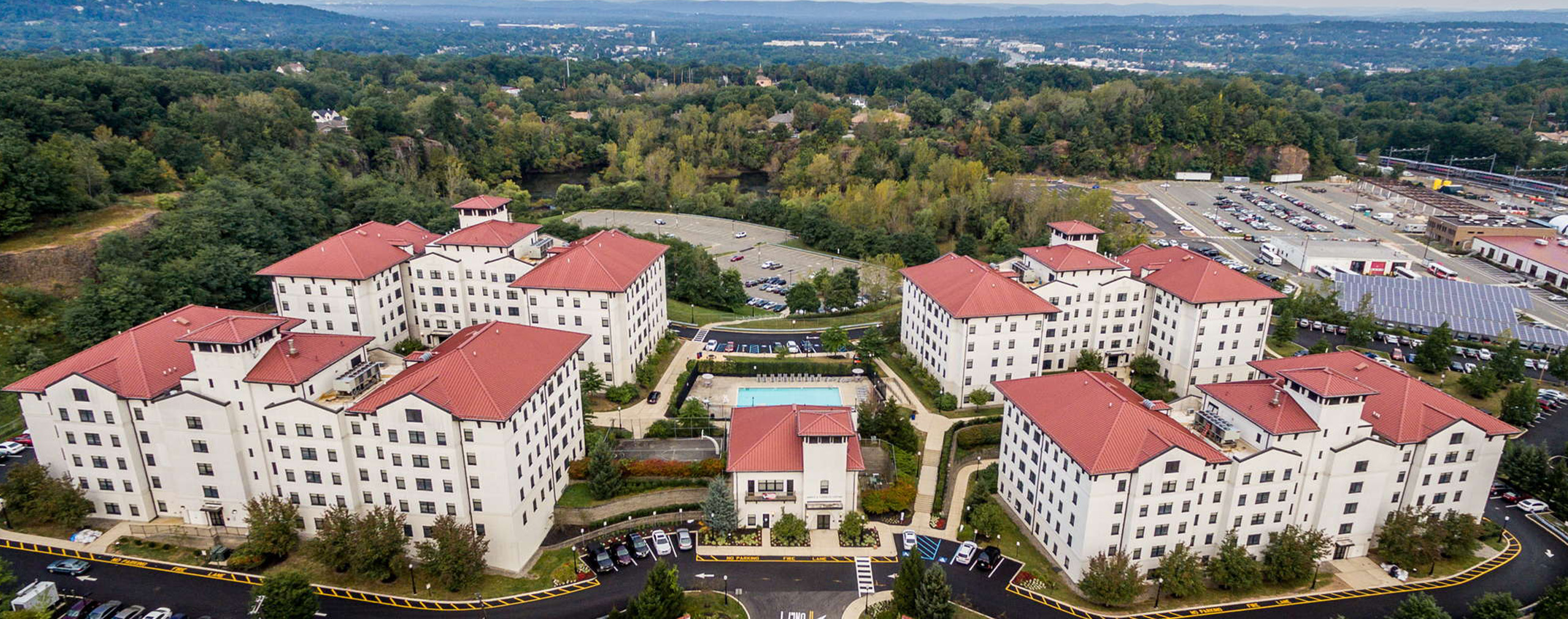
Montclair State University provides another test. Leaving an online program management arrangement requires someone to assume work that still has deadlines. Collegis supported phased transition planning, program research, marketing, enrollment operations, and continuity of technology and data. The company reports more than 500 new online students for fall 2025 and a 24% increase in new online starts.
The interesting part is the handover. Campaigns, access permissions, reporting, and staff responsibilities must keep moving together. The lesson for another institution is to plan around enrollment cycles and assign ownership before a transition creates an interruption.
Delivery also depends on who is available to do it. Collegis’s leadership roster spans academic, analytics, marketing, enrollment, and enterprise technology specialties. Its careers page describes flexible hybrid schedules and tuition support. The breadth is part of the offer: a campus can draw on specialists without assembling every discipline into a new internal department. That arrangement still requires campus leadership to set priorities, judge progress, and decide which responsibilities it wants to keep.
What to borrow before buying anything
Start with a single student journey. Identify where an inquiry becomes an application, where a response slows down, and which department owns the next step. Then ask whether the data can follow that journey. This is an inference from the customer cases, and a useful exercise even for a college that hires nobody.
It also sets limits on the proposition. Integration depends on access to systems and agreement about responsibility. If departments refuse to change workflows, a clearer report can simply document the same delay. If an academic program lacks demand, more efficient outreach does not manufacture it. Technology work needs a decision it can improve.
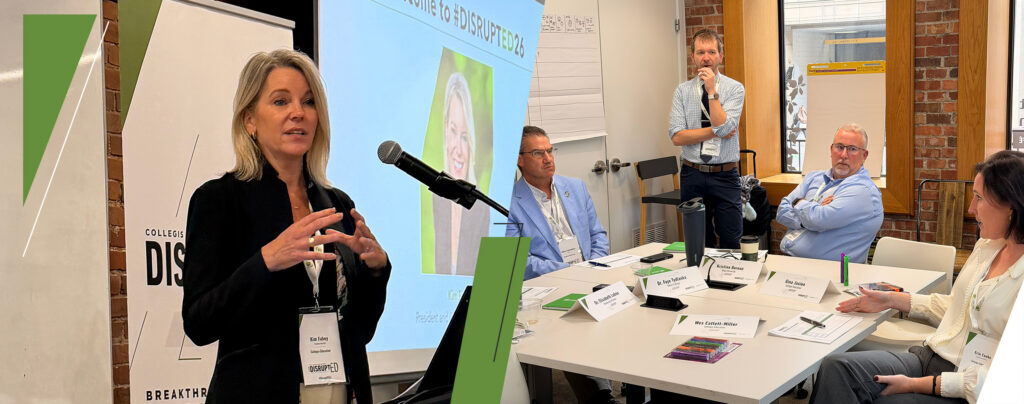
That is consistent with the company’s October 2026 DisruptED recap, which places retention, operating capacity, and modernization in the same conversation. Collegis’s most useful idea is modest enough to copy: before adding another tool, find the handoff that keeps failing. Make someone responsible for it. Give that person information they can use.