At Allan Hancock College in Santa Maria, California, the obstacle was surprisingly ordinary. Awarding a degree involved manual work that could take weeks or months. The college wanted to automate it. Students had already done the academic work; the institution needed a better way to recognize it. Ferrilli entered the story at that awkward junction between an achievement and the machinery that records it.
- Ferrilli supplies technology and operational expertise to colleges and universities.
- Its credential automation connects existing records with rules for awarding degrees.
- Its contracts range from specific support assignments to embedded, multi-year partnerships.
That junction explains a great deal about this company. Campus technology is where a registrar’s rules meet a database, where a financial-aid deadline meets a staffing shortage. Ferrilli earns its place by understanding both sides. The interesting question is what happens when the software exists, but the institution cannot quite make it do the thing people need.
The student who has already finished
At Hancock, Ferrilli worked with DegreeWorks, which evaluates academic progress, and Banner, the student system. According to its project account, the firm programmed automatic awards around predefined criteria. The college supplied the ambition and academic judgment; Ferrilli supplied the technical implementation. Admissions and records staff could spend less time shepherding individual awards through a manual queue.
Today, Hancock describes automatic degree and certificate awarding on its own website. Eligible students receive earned credentials without submitting an application, and the process has expanded to include external credits from selected feeder institutions. That last detail matters. Transfer credit is exactly the sort of complication that makes a beautifully simple diagram turn into a rather untidy real-world system.
Process illustration, not a measured performance comparison.
Ferrilli offers the broader approach as its Automated Degree & Certificate Evaluator, also called AutoGrad. It runs evaluations across groups of students, identifying completed credentials and people close to finishing. Its useful trick is to search beyond the students who know to ask. A certificate can be sitting inside a transcript long before its owner realizes it is there.
The people between the platforms
Founder Robert Ferrilli worked at the University of the Sciences in Philadelphia and at CampusWorks before building his own firm. That background helps explain the company’s emphasis on institutional experience. In a 2024 interview with The EdUp Experience, he put it plainly: “We are all in on education.” He described a business selling expertise and intellectual capital, with repeat work dependent on delivering.
“We are all in on education.”Robert Ferrilli / The EdUp Experience, 2024
The service menu follows campus operations: enterprise resource planning and student information systems, CRM, infrastructure, cloud migration, cybersecurity, assessments, and interim leadership. Supported platforms include Ellucian Banner and Colleague, Workday, Anthology, Salesforce, and Slate. Customers featured publicly include Colorado State University and West Hills Community College District. The buyer is an institution trying to keep complicated work moving.
This puts Ferrilli among higher education service specialists such as CampusWorks. Colleges can also hire internally or turn to a software vendor’s own consultants. Ferrilli’s pitch combines technical work with knowledge of institutional processes and a money-back satisfaction guarantee. Ellucian’s recognition provides a narrower, concrete distinction: Ferrilli won its Most Enabled Partner award for 2024 and 2025, reflecting investment in training and product expertise.
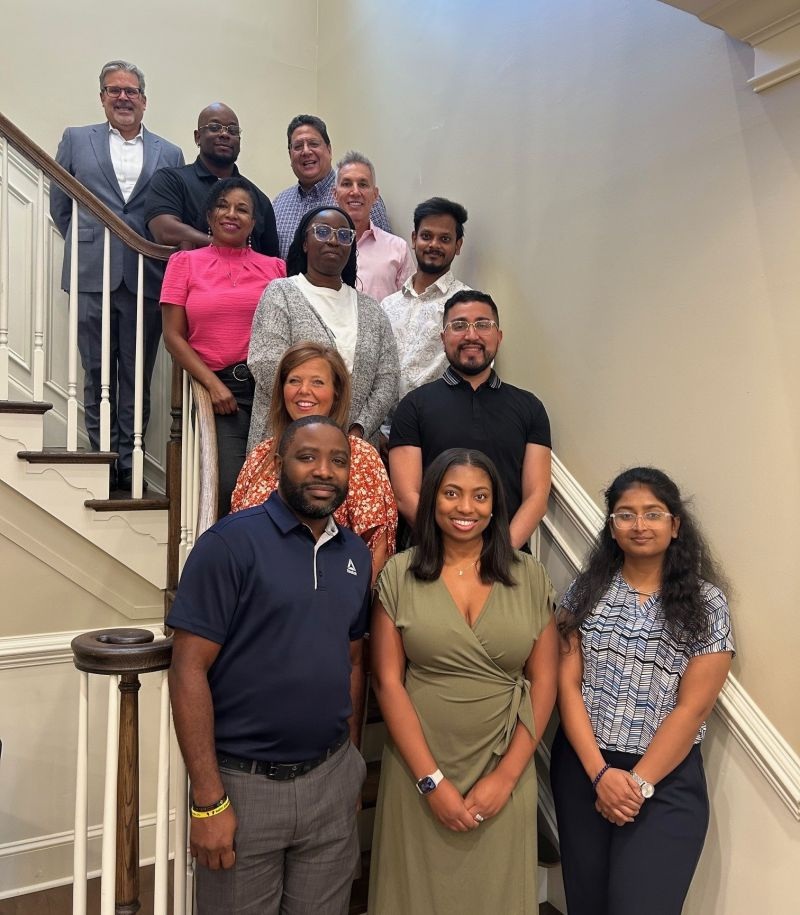
Ferrilli makes its people part of the proposition. Its culture page names a principle called RAVE: Respect, Appreciate, Value Everyone. Those are the company’s stated values, rather than proof of anyone’s daily experience. But the emphasis makes commercial sense. A consultant who understands a registrar’s constraints has a better chance of proposing a change the office can actually use. Technical competence gets the meeting; working relationships help the project survive it.
Two contracts, two kinds of help
To understand the business model, look at a college budget. Finger Lakes Community College’s September 2023 board minutes approved a Ferrilli renewal with a $70,380 ceiling for Colleague system administration through August 2024. A separate renewal allowed up to $15,000 for on-demand programming and emergency support. These were spending limits for specific assignments, rather than a universal price list.
Finger Lakes Community College. Separate scopes; actual spending may differ.
The distinction is useful. One contract keeps the system administered; the other reserves help for less predictable demands. Ferrilli also markets strategic partnerships with embedded expertise and fixed costs across multiple years. Its help desk offers continuous coverage, with escalation involving institutional staff and outside vendors. Buying support still involves deciding which responsibilities remain on campus.
At Southeast New Mexico College, that decision became explicit. October 2024 minutes recorded three-year Ferrilli proposals ranging from $3.7 million for remote support with a help desk to $4.7 million for a broader model with an on-site CIO. Trustees questioned authority and reporting relationships. These were proposals under discussion. The debate illustrates why expanding a service agreement also changes how a college is governed.
Support belongs where students already are
Ferrilli also develops narrower tools. Intuition Payment Solutions integrates campus commerce with ERP and student systems, including billing, deposits, and payment posting. The underlying problem resembles degree awarding: a transaction starts in one place and must arrive correctly somewhere else. A payment button is only the visible end of that journey.
In April 2026, Ferrilli announced that its Student Wellness Experience Card would be available free through its Pledge 1% initiative. Ellucian independently named it the Student Wellness Challenge winner in its Experience Idol program. The card brings resources into the campus workspace and includes a workflow connecting students worried about class with instructors, with escalation when needed.
The integration guide makes the human responsibilities visible. Faculty need a way to receive concerns and confirm a response; primary advisors need timely notifications. That is a useful buying test for any campus tool: identify the person at the receiving end before celebrating the interface. A message has value when it reaches someone with the responsibility and capacity to act on it.
Start with the handoff
The practical lesson is to examine the step between systems before commissioning another system. Trace a credential, payment, or request for help. Establish who owns the rules and who handles exceptions. At Hancock, eligibility still matters; its guidance directs some students to counselors. Automation depends on accurate records, and support routing depends on somebody responding. Ferrilli’s most persuasive work makes those everyday institutional obligations easier to carry out.