A patient in one country needs an oncologist in another. The search begins with a frightening diagnosis and quickly becomes a second illness: twelve browser tabs, three currencies, an unanswered WhatsApp message, a visa question and no clean way to compare what happens after the plane lands. CloudHospital was built for that gap. The Seoul company does not employ the surgeon or own the hospital bed. It organizes the digital trip between interest and treatment - then sells hospitals the machinery to organize it themselves.
That distinction matters. The front door, iCloudHospital, looks like a global medical marketplace. Patients search hospitals, doctors, specialties and treatment packages, request a consultation, make a booking and, in some cases, arrange the decidedly unmedical parts of medical travel: translation, transport, lodging and visa support. The company says 4.8 million people use the service annually. It advertises coverage across more than 30 countries in at least 35 languages.
Behind that front door sits the more revealing business. CloudHospital AI sells providers multilingual websites, search optimization, content production, a unified inbox for WhatsApp, WeChat, LINE and web chat, booking forms, patient support and funnel analytics. It is the website agency, international marketing desk and lightweight patient-operations system squeezed into a subscription. A hospital can be excellent at medicine and still be nearly invisible to a patient searching in Arabic at 2 a.m. CloudHospital makes that invisibility billable.
The outsider saw the missing aisle
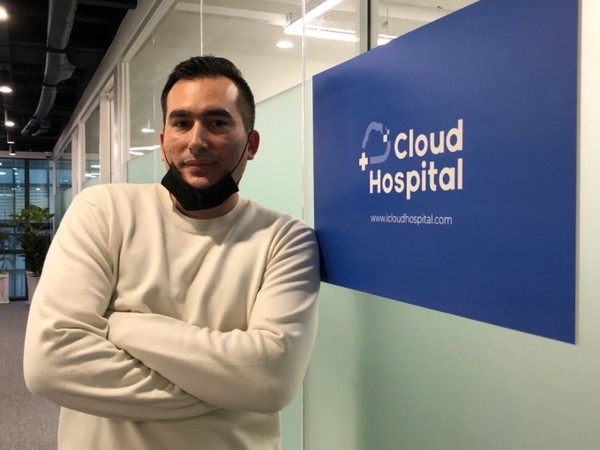
Founder and CEO Suleyman Nazarov grew up in Turkmenistan, came to South Korea on a government scholarship, earned graduate degrees and a CFA charter, then spent more than five years in asset management and technology finance. His investor Ascendo Ventures says Nazarov had watched people fail to reach appropriate medical care simply because the route was opaque or unavailable. Korea gave him a useful contrast: sophisticated hospitals in a country where insiders could take medical access for granted.
The insight was less “medicine should be global” than “global medicine needs better plumbing.” Hospitals already hired country coordinators, translators and marketers to find patients abroad. Patients already traveled for cancer care, complex surgery, fertility treatment and cosmetic procedures. What failed first was the handoff: discovery lived in search engines, inquiries in chat apps, clinical records in email, and logistics with assorted intermediaries. Each new language multiplied the mess.
“This is the only case in our portfolio where an investment was made starting from a cold call.”Ascendo Ventures, on meeting CloudHospital
The cold call is more than a charming funding anecdote. Ascendo says it initially saw the company without the comfort of a network introduction. Learning how Nazarov's outsider status produced an advantage changed the firm's view of foreign founders in Korea. A native founder might have known the hospital market better. Nazarov understood the patient who could not enter it. That tension became the product.
A marketplace with a SaaS business hiding inside
The first product aggregated the supply. By early 2023, CloudHospital reported more than 400,000 monthly active users, 1,100 overseas partner hospitals and more than 200 Korean partners. Aggregation created traffic, but it also exposed what providers lacked. A listing can generate an inquiry; it cannot guarantee somebody replies in the patient's language, nurtures the lead, schedules the call, takes a deposit or measures which country produced revenue.
So CloudHospital moved down the funnel. The B2B product builds and hosts multilingual hospital sites; produces and localizes search-friendly medical content; routes conversations from major messaging networks into one inbox; connects forms and bookings; supplies round-the-clock multilingual agents; and reports traffic, conversions and revenue. The company is also developing Azure OpenAI-based communication and marketing tools through a collaboration with Microsoft Korea. Microsoft Marketplace lists both the patient-hospital matching product and the multilingual SaaS.
This is not a full hospital information system. It sits closer to the revenue edge, where an unknown patient becomes a known lead. That makes the competitive set delightfully untidy. On one side are medical travel marketplaces such as Bookimed, WhatClinic, Medical Departures and FlyMedi. On the other is the stack a hospital might assemble itself: a web agency, a CRM, translators, call-center staff, analytics software and local marketing contractors. CloudHospital's argument is that one specialized system can make those pieces behave like a department.
Find and coordinate care
Search providers, compare options, request consultations, book treatment and get help with the language and logistics around a medical trip.
Attract and manage demand
Publish in many languages, rank in local search, answer across chat channels, track the lead and connect marketing activity to bookings.
What it costs - and what the company sells
There is no public sticker price for the provider software. CloudHospital says packages vary with features and operating model, prefers annual billing for the largest discount, and allows quarterly billing for small clinics. Initial setup is handled by its onboarding team; limited customization costs extra. That is enterprise service wrapped around SaaS, a sensible choice when a clinic's website, languages, regulations and staffing differ by market.
The patient economics are easier to see. CloudHospital's terms say users do not pay a separate broker cost beyond the booked product. Some bookings require a 10 percent deposit, with refund rules tied to the product and hospital policy. The platform can process card or bank-transfer payments, but the hospital remains responsible for diagnosis, prescriptions and care. CloudHospital is emphatic about being an intermediary. In healthcare, that legal boundary is as much a product feature as the search bar.
The chart is illustrative, but the burden is real: every separate agency, inbox and spreadsheet adds another place for an anxious patient to disappear. CloudHospital's value is less about inventing a new task than reducing the number of handoffs between familiar ones. Its strongest reported proof came from adoption. In November 2025, the company said 80 hospitals had taken its domestic SaaS within ten months and set a goal of more than 300 during 2026. Earlier, it said Seoul National University Hospital grew more than 500 percent year over year in 2022 using the platform. The underlying measure was not disclosed, so treat that as a company case study, not a clinical outcome.
The Middle East test
Localization is where the pitch becomes concrete. In 2023 CloudHospital added Arabic service, refined its inquiry response system and adjusted the interface for Middle Eastern users. It reported a 30 percent traffic increase from the region. The opportunity included cardiovascular, oncology and cosmetic treatment, but the operational lesson travels: translation alone is insufficient. The response time, consultation etiquette, treatment explanation and travel support must also fit the patient.
That work hints at the company's defensibility. Any competent agency can translate a page. It is harder to maintain medical content across dozens of languages, understand which searches signal treatment intent, answer through the channels patients already use and preserve the context through booking and follow-up. The data loop is the prize. Search behavior informs content; content produces inquiries; inquiries show hospitals what converts; hospital inventory improves the patient marketplace.
The part you can steal
CloudHospital offers a clean playbook for founders in fragmented service markets. Start where the customer is searching. Aggregate enough supply to observe the transaction. Then map the ugly work after the click - every translation, status update, approval and payment. The repeated internal tasks become the software. The marketplace is not merely a destination; it is customer research with a checkout button.
There is a second lesson in how the team formed. Because the business was cross-border from day one, Ascendo says CloudHospital recruited developers, marketers, salespeople, medical staff and coordinators internationally, especially through Nazarov's Eastern European network. Remote work and OKRs were operating requirements, not pandemic decor. The organizational design matched the product: distributed people for distributed patients.
It does not work simply because a market has language friction. The treatment must be valuable enough to justify travel; providers must have spare capacity and international ambition; and somebody must own clinical quality, privacy, advertising rules, refunds and aftercare. A beautiful multilingual funnel attached to an unprepared hospital only moves confusion downstream.
The broker will not vanish entirely, either. Cancer care and surgery contain judgments, fear and exceptions that do not submit politely to automation. Human coordinators remain important, and CloudHospital itself offers them. The credible version of the operating-system ambition is not “AI replaces the middleman.” It is “software gives each human fewer loose ends.”
A sharper second act
CloudHospital closed a Series A in November 2025 with Friend Investment Partners and SJ Investment Partners. The company said the round brought cumulative investment to 8.5 billion won and would fund overseas subsidiaries, local marketing and AI-based communication. The supplied company record values the round at $4.5 million. Exchange rates and reporting conventions make the totals imperfectly comparable, but the direction is clear: more capital is going toward the provider network and its software layer.
Nazarov now talks about CloudHospital as an operating system for global hospitals. The phrase is ambitious, but the strategy underneath it is disciplined. Patient marketplaces are expensive to feed and easy to compare. Workflow software can become habitual, hold useful data and deepen with each language and channel. CloudHospital did not abandon the travel agent. It walked behind the counter and started selling the reservation system.