The modern international hospital has an oddly antique front door. A person can discover a specialist through a search engine, read a translated page at midnight, and then tumble into a thicket of chat windows, unanswered forms, mismatched time zones and handwritten instructions. The medicine may be sophisticated. The handoff can feel like buying a railway ticket in 1894.
Suleyman Nazarov has spent the past seven years working on that handoff. CloudHospital, the Seoul company he founded in 2019, began as a marketplace connecting people with hospitals and doctors in other countries. Its more revealing second act is the software behind the marketplace: multilingual websites, search tools, messaging, booking, payment and follow-up for the providers trying to meet those people.
Nazarov calls the eventual destination an operating system for global hospitals. The phrase sounds architectural. The daily work is closer to plumbing - keep the inquiry moving, preserve its context and stop a good prospect from disappearing between departments.
A long route to the front desk
Nazarov came to South Korea from Turkmenistan in 2010 on a government scholarship. His education was unusually broad for a software founder. He studied political science and international relations at Kyung Hee University, completed an MBA at Hanyang University, and earned the CFA charter. Then came more than five years in South Korean asset management and new-technology finance, including work at Fidelis Asset Management Korea.
That résumé could have led to a life spent assessing other founders. Instead, he became one. Finance had taught him to follow capital through a system. CloudHospital required following something more impatient: a person trying to move from search to a real appointment while institutions, languages and borders pull the transaction apart.
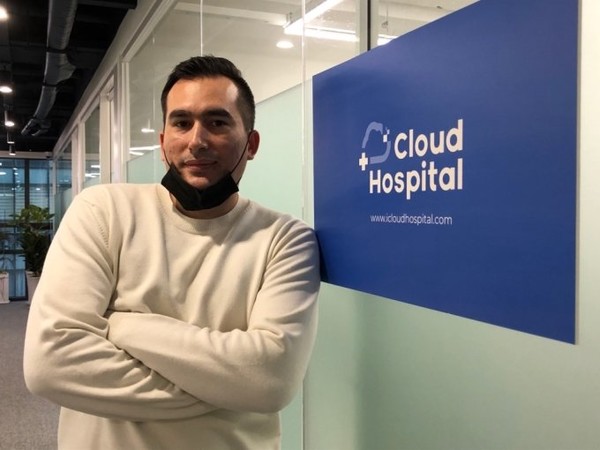
The international angle was never decorative. Nazarov was building in South Korea, for providers and customers spread far beyond it. In 2020, CloudHospital joined a global market-entry program run for Shinhan Square Bridge Incheon. That year it also announced a seed investment from Boryung Pharmaceutical, following earlier backing from The Invention Lab and Korea Venture Investment.
The cold call is a compact founder story because it contains no magic. There was no famous connector, chance elevator ride or ceremonial pitch-room thunder. There was a telephone and somebody willing to use it. Ascendo later backed CloudHospital and said the encounter changed how it viewed foreign founders in Korea. Nazarov's outsider position carried the obvious disadvantages, but it also put him close to the person who could see the hospital and still could not easily enter its commercial system.
The marketplace found a SaaS company
CloudHospital's first layer organizes supply. People can search for providers and treatments, request consultations and coordinate the steps around an international visit. By early 2023, the company reported 400,000 monthly active users, 1,100 overseas partner hospitals and more than 200 partners in South Korea. Those are company figures, but they show the shape of the experiment: aggregate enough demand and supply to see where the transaction keeps snagging.
The journey CloudHospital wants to hold together
A directory can create an inquiry. It cannot make a hospital answer in the right language, retain the details from an earlier message, schedule a video call, collect a deposit or tell the marketing team which country produced a booking. Each missing capability becomes a handoff. Each handoff becomes a place where the thread can snap.
This also changes what a useful metric looks like. Traffic is flattering, but a visitor who lands on a page and vanishes has contributed very little beyond a chart that rises. The provider needs to know whether the visitor asked a question, received an answer, kept the appointment and completed the next administrative step. Nazarov's finance background is relevant here, not because a hospital funnel resembles a balance sheet, but because both punish vague flows. Money, messages and intent all become less valuable when nobody can say where they went. CloudHospital's software pitch is therefore partly an accounting argument: connect activity at the edge of the organization to an outcome the organization can recognize.
So CloudHospital moved behind the counter. Its provider platform builds multilingual sites, produces localized content, routes conversations from services including WhatsApp, WeChat and LINE, connects booking forms, and measures what happens in the funnel. The company has also described work with Microsoft Korea on communication and marketing tools using Azure OpenAI infrastructure.
A global marketplace where people find providers, compare options and begin a conversation.
Software that helps the provider publish, reply, schedule, collect and measure across languages.
This is a useful pattern for founders in fragmented service markets. Start where the customer is searching. Gather enough supply to observe the journey. Then map every repeated chore after the click. The marketplace becomes a listening device; the messy internal work becomes the SaaS roadmap.
There is discipline in waiting for the mess to reveal itself. Founders often design a grand platform before they have watched a single customer improvise. CloudHospital took the opposite route in public: discovery first, infrastructure later. That sequence does not make the infrastructure inevitable, but it gives each feature a witness. The unified inbox exists because conversations were scattered. The multilingual publishing system exists because one market speaks in many searches. Analytics exists because providers need proof that the expensive work of localization produced more than applause.
Translation is only the first mile
There is a comic belief in software that a translated button has completed an international expansion. In practice, localization reaches into response time, payment preferences, communication channels, staffing, search behavior and the tone of a consultation. A page can speak Arabic while the organization behind it remains stubbornly monolingual.
CloudHospital encountered that distinction directly. In 2023 it added Arabic support, refined its online response system and adjusted its interface for Middle Eastern users. The company reported a 30 percent increase in traffic from the region. The interesting part is not the percentage alone. It is the collection of ordinary changes behind it. Language opened the door; operations kept someone from walking away.
The company now presents its two sides as a loop. Search behavior on the marketplace reveals what people want. Content answers those searches. Inquiries show providers where demand originates. Provider participation improves the marketplace. Done well, each side teaches the other. Done poorly, it is simply two expensive businesses sharing a logo.
Capital for the second act
In February 2023, CloudHospital announced a KRW 2 billion pre-Series A backed by SJ Investment Partners, Ascendo Ventures and individual investors. In November 2025 it completed a Series A with Friend Investment Partners and SJ Investment Partners. The company reported that cumulative investment had reached KRW 8.5 billion.
Nazarov said the money would help expand the hospital SaaS network, develop AI-based marketing and communication, establish overseas subsidiaries and localize the business in new markets. The stated 2026 target was more than 300 hospitals on the domestic SaaS product, after 80 adopted it in the first ten months. In July 2026, CloudHospital was also named to South Korea's Innovation Premier 1000 program in the AI category, a government-backed program offering selected companies financial and business support.
An operating system is a demanding metaphor. It implies something essential, habitual and difficult to remove. CloudHospital is not there merely because it has combined a directory, an inbox and a booking form. Hospitals have existing software, local rules and staff whose improvisations are often more durable than code. International transactions also contain exceptions that refuse to behave like neat funnel stages.
But the ambition points in a coherent direction. Marketplaces are costly to feed and easy for users to compare. Workflow software can become part of the daily routine. Each language, messaging channel and provider integration makes the system more useful, while every completed journey produces better information about where the next one may fail.
The lesson hiding in the handoff
Nazarov's career is a sequence of border crossings: Turkmenistan to South Korea, political science to finance, finance to operations, marketplace to SaaS. None of those moves guarantees the next. Together, they explain why CloudHospital looks at a familiar internet transaction and sees a chain of institutional obligations.
The stealable idea is modest. Do not stop studying a customer when the lead arrives. Follow the work until the value is delivered. Every copy-and-paste, delayed reply and lost bit of context is evidence. Some evidence belongs in a training manual. The repeated evidence may belong in the product.
CloudHospital has not abandoned its public marketplace. It has walked behind the desk and started selling the reservation book, the switchboard and the multilingual clerk. The future of global hospital software, it turns out, may look less like a robot and more like a front desk that remembers why you called.