In January 2013, Clive Armitage was starting again in a stationery cupboard. He and his co-founders, Paul Mackender and Dan Sands, had permission to build a new business, but no clients and no revenue. The office was borrowed space at another Next Fifteen brand. It was an economical way to discover that a successful career does not come with a transferable order book.
There was also a filing cabinet. Years later, when Mackender recalled the venture’s successes and mistakes, Armitage supplied an omission: letting him try to assemble it. Corporate memory often preserves the acquisitions and quietly disposes of the furniture. Here, the furniture got a mention.
By then, the three had built Agent3 into an international marketing business. They were preparing to fold it into another venture, Pretzl. Armitage had already helped build Bite Communications before Agent3 existed. The recurrence is striking: just when a business becomes a substantial achievement, another problem presents itself, requiring a different beginning.
The account that needed an agency
Bite began with an unusually specific obstacle. In 1995, Apple was available to pitch. Text100, where Armitage worked, already served Microsoft. The conflict made the opportunity awkward for the existing agency and attractive for a new one.
With backing from Text100’s board, the founding team created Bite and won Apple. Other technology clients followed, including BT, Toshiba and Oracle. A commercial restriction had supplied the opening brief for a business. Apple’s relationship with the young agency would last close to a decade.
That origin matters because it gives the familiar founder story a useful complication. Armitage’s independence developed inside an existing group. The parent could support a separate agency that pursued work its sister company could not. Starting something did not require pretending that everything before it had been a mistake.
Technology communications
Account-based marketing
People, data and AI
There was an international business to build. By 2005, a Next Fifteen offer to buy Bite’s remaining minority interests described offices in London, San Francisco, New York and Sweden. Armitage held 8.78 per cent of Bite at the time. The corporate paperwork catches a founder halfway through a much longer story: no longer a small new agency, still building its geographical reach.
An education within earshot
Armitage had joined Text100 in 1990. The craft was audible. He listened to colleagues pitching journalists, noticing how they spoke and how they prepared. Years later, his argument for Bite’s open office had the practicality of someone who had benefited from exactly that arrangement. Senior people within earshot meant that juniors could learn while work was happening.
He called the atmosphere a “newsroom feel”. The appeal was the circulation of judgment: a newcomer could hear an experienced colleague handle a conversation, then ask about it. Preparation and confidence were available for observation. An office layout could make teaching part of an ordinary working day.
“An insatiable desire for knowledge and hunger to learn.”
Clive Armitage, on entering public relations, 2012
That advice has a pleasing lack of ceremony. Curiosity is a requirement somebody can practise immediately. It also makes sense of the career that followed. A person whose work involves explaining technology has to keep learning as the technology changes. Eventually, changes in the subject require changes in the agency doing the explaining.
In November 2012, Bite’s merger with digital marketing agency Bourne was announced, with Andy Cunningham succeeding Armitage as CEO from January. The business he had helped create was changing its offer. He was preparing another one.
The cupboard years
Agent3’s name described its intended ingredients: data, technology innovation and creative content. These were becoming harder for marketers to treat as separate concerns. Knowing an audience, reaching it through digital channels and making something relevant for it belonged in the same conversation.
The founders had worked together at Bite. Their new business developed a focus on account-based marketing, concentrating effort on particular customer organisations. By September 2023, it employed more than 200 people worldwide. The distance from cupboard to international agency was considerable, although the filing-cabinet joke suggests its founders retained a useful sense of scale.
Mackender’s own retrospective included a bracing list of errors: hiring mistakes, lost clients and occasions when the business had stopped paying sufficient attention to its data. He also remembered friendships, curry and laughter. This is a more recognisable account of building an agency than a procession of launch announcements. Some decisions work; others acquire colleagues willing to remind you about them.
Armitage’s later role as an interviewer offered another way to keep learning. In Next Fifteen’s 40th-anniversary conversation, he questioned Tim Dyson about the group’s beginnings and future. He had become an experienced agency leader who could still take the other seat and ask how someone else had done it.
What the numbers were supposed to mean
The practical character of his marketing arguments emerges in the detail. Discussing account-based marketing for smaller businesses, he acknowledged that individually tailored work could be difficult to justify for customers with smaller budgets. Grouping similar target accounts could make the economics more workable. The method had to fit the value of the opportunity.
It is a useful qualification from somebody selling the service. Personalisation costs money and attention. A company cannot resolve that arithmetic simply by giving its campaign an attractive name. Armitage’s argument allowed for different approaches, including programmes aimed at clusters of companies and technology-assisted activity across larger groups.
He was similarly practical about marketing software. Before investing, he argued, a business should understand how it intended to use the technology. That sounds elementary until a buying discussion becomes a tour of capabilities. The existence of a tool gives a team options; somebody still has to decide which problem deserves the investment.
In 2023, an Agent3 customer dinner put measurement under examination. Thirteen people spent three hours considering what useful evidence of marketing success might look like. Armitage’s account of the discussion allowed for several objectives: gaining customers, improving margins within existing relationships, or defending an important account.
The implication is almost domestic in its simplicity: agree what you are trying to do before arguing about whether it happened. Sales and marketing also needed to understand each other’s responsibilities. Where accurate attribution was difficult, elaborate measurement could become an exercise in producing disappointment with impressive labels.
This is where the agency founder and the communications practitioner meet. A measurement system has to communicate. If the people responsible cannot explain the objective or read progress towards it, the dashboard has acquired the expensive habits of office wallpaper.
There were awards to celebrate, too. In November 2023, he described Agent3’s work with NTT Data on a global account-based marketing centre of excellence. The project received recognition from Forrester and Marketing Week, alongside silver at the B2B Marketing Awards. Work for Splunk won gold in the digital experience category at the latter awards. Armitage’s account dwelt on the partnership with clients and the work required before anybody collected a trophy. It adds a concrete test to the management language: the relationships were producing work that people outside the agency were prepared to recognise.
Five names, one difficult change
On October 22, 2025, Next 15 announced Pretzl, combining Agent3 Group, Publitek, This Machine, Velocity and Twogether. Around 300 employees across North America, Europe and Asia Pacific would come together. Armitage would lead it.
The proposed offer reflected another change in the market. Pretzl argued that a simple, linear sales funnel poorly represented how business buyers actually behaved. Its AI platform, JourneyLab, was designed to help teams understand audiences, map buying behaviour and adapt programmes as customer requirements changed. The ambition was to connect specialist people with data and technology in a single business.
The organisational work had its own less glamorous vocabulary. By the February 2, 2026 launch, Armitage was writing about integration, client transitions and technology consolidation. His personal adjustment included moving from Google tools to Microsoft. The founder whose first agency had emerged from a Microsoft-related conflict was, three decades later, getting used to a different office setup.
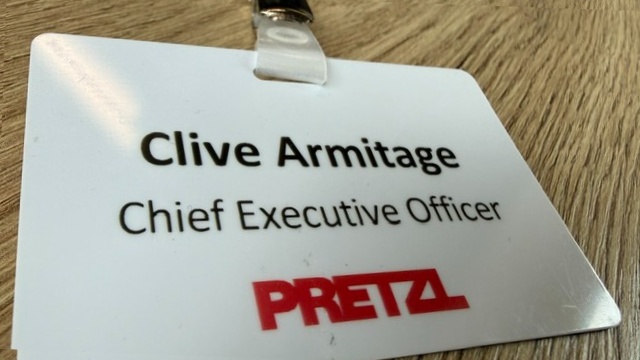
In his November 2025 conversation with Joel Harrison, he also considered the human complications of bringing agencies together: explaining the vision, maintaining client confidence and communicating through uncertainty. A combination of businesses includes people who have attached their professional identities to the old names. Renaming the organisation is one task; giving those people reasons to believe in its future is another.
Leaving room for somebody else
Then came a different decision. In July 2026, Armitage announced his departure after 36 years at Next Fifteen. He named Greg Salmon as the next Pretzl leader. Salmon had come through the group, including Bite and Agent3.
Armitage’s plans included time away and travel, with business building and growth strategy possible interests afterwards. His public profile now describes consulting with agencies. The next chapter had room for a less crowded diary.
A career that began in technology PR had moved through account-based marketing into an agency built around AI. Along the way, the office changed, the brief changed and the name on the badge changed. The people were the part he lingered over when saying goodbye.
The cupboard is a useful place to leave the story. It contains experienced founders facing an empty order book, a proposition still to prove, and some furniture requiring attention. Beginning again can look remarkably ordinary while it is happening. You still need colleagues. You still need customers. Somebody still has to put the cabinet together.