A man called John Lewis kept receiving messages intended for a department store. He answered them with patience and jokes. In 2018, The Romans helped Twitter turn this recurring case of mistaken identity into a Christmas film. While British retailers were spending the season polishing their own mythology, here was an actual person who had acquired a supporting role by having the inconveniently correct name.
It is a useful place to meet Joe Mackay-Sinclair, the agency’s co-founder and CEO. The idea begins with somebody behaving like a person. The advertising machinery arrives afterwards. There is a joke, but the joke has an affectionate subject. A familiar annual spectacle gets a small, sideways interruption.
Eight years later, Mackay-Sinclair has a rather different problem. The firm he started in 2015 now has five offices. Its own headcount has passed 250. An agency built on impatience with the usual way of doing things has become a sizeable thing itself. Somewhere between the first good idea and the fifth office address, the founder’s job changes.
The brief he wanted to leave behind
Before The Romans, Mackay-Sinclair worked in digital agencies, then became a creative director at Burson-Marsteller. He later served as executive creative director at Citizen. His background joins the practical business of making things for the internet to the more established business of helping organisations explain themselves. Those two worlds offer plenty of opportunities to irritate one another.
He had already experienced the pleasure of work receiving serious recognition. A Cannes Lions win for the Royal British Legion during his Burson-Marsteller years remained a career highlight when he looked back in 2018. He was leaving a profession in which he had evidence that he could do well. His objection concerned the work he wanted to spend his time doing.
By his own account, he felt that his abilities were being applied to clients and briefs that did not fit. In 2015, he and Misha Dhanak founded The Romans, with minority backing from advertising agency Mother. Dhanak left in 2019. The original proposition gave creative ideas a central place in a public relations business.
Mother’s investment represented a shared belief in PR’s creative possibilities. The advertising agency gave the new business an experienced backer while remaining a minority shareholder. The family resemblance was useful. So was having a room of one’s own.
A Christmas film for the wrong John Lewis
The Twitter campaign is a compact example of the kind of opportunity the agency pursued. John Lewis, the individual, had become familiar to British Twitter users through his good-natured replies to people seeking the retailer. The film made him the central character in his own seasonal advertisement. It borrowed the recognisable language of the department store’s Christmas productions while acknowledging the person living beside that enormous brand shadow.
The campaign’s charm depended on an existing public relationship. People had already encountered the confusion and enjoyed his responses. The Romans could build on recognition rather than manufacture a backstory. Even the little references to earlier Christmas advertisements rewarded an audience that knew the ritual. There was something to notice before there was something to sell.
When asked in 2019 about creative work he admired from his agency, Mackay-Sinclair picked that campaign among his examples. He also gave an unusually economical account of authorship: “Great creative is a team game, not a solo show.” It is a sensible sentence for a founder whose name tends to appear beside work made by many other people.
“Great creative is a team game, not a solo show.”
Joe Mackay-Sinclair, 2019
The award institutions have seen him from both sides of the table. He chaired D&AD’s PR jury in 2018 and returned as a juror in 2023. In 2026 he served on the Cannes Lions PR jury. Making work and judging other people’s work are different occupations, though both require an opinion about what deserves somebody else’s attention.
The person sitting next to him
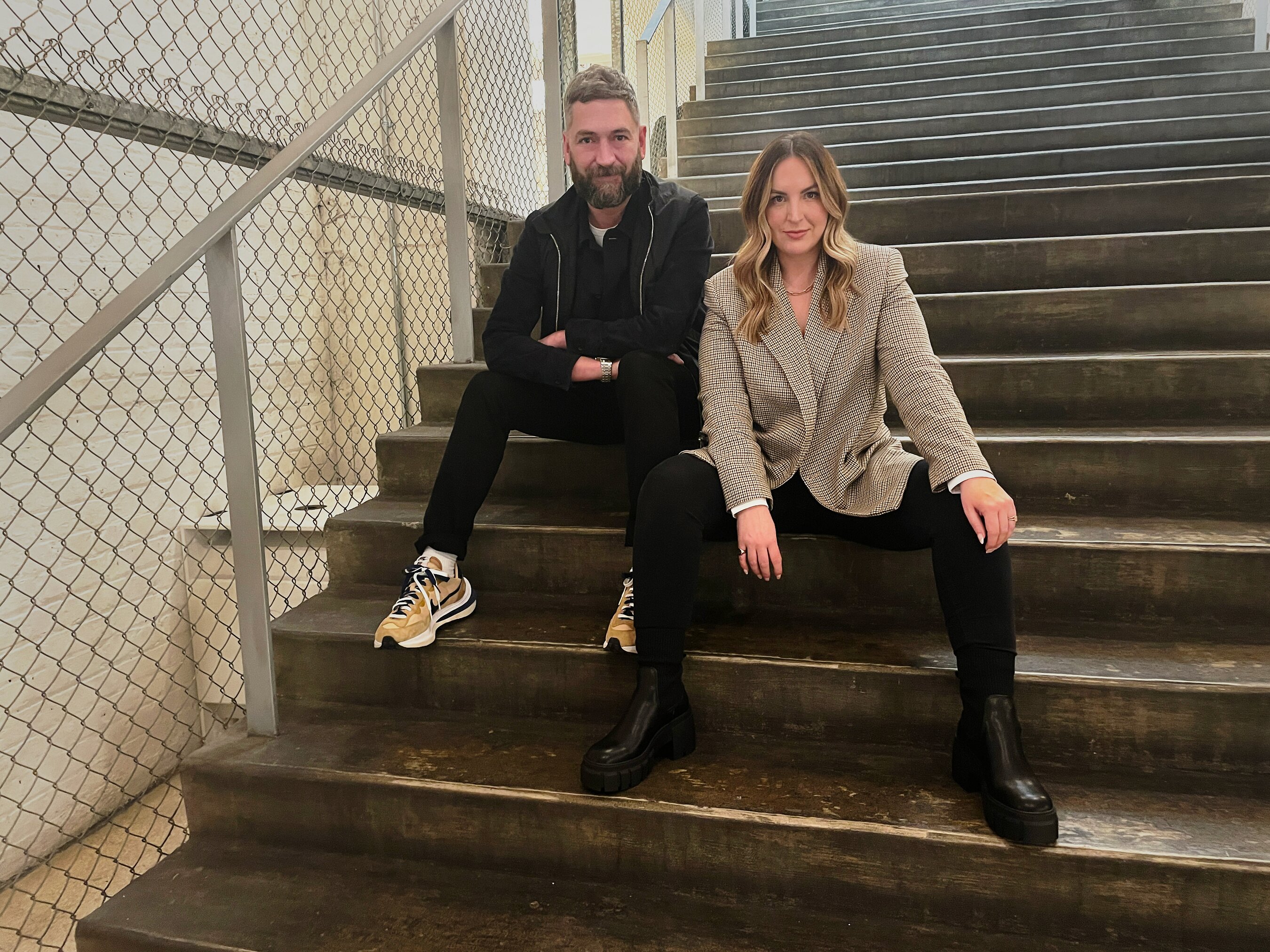
One relationship supplies a more intimate account of how the business grew. In 2026, Mackay-Sinclair and his long-term business partner Lucy McGettigan reached number one in PRWeek’s consumer agency Power Book ranking. His response was a celebration of their working life together, including nine years of sitting next to each other, pitching together and exchanging messages.
He wrote about marriages, children and visits to the pub alongside the growth of the agency. The professional partnership was described through repeated ordinary contact. An awards ranking gave him a reason to talk about the person beside him. For all the agency’s public appetite for spectacle, that account of its leadership was reassuringly domestic.
McGettigan has described the trust he placed in her to run the UK business. That is a consequential detail in a founder’s story. A firm cannot add offices and disciplines while every important decision waits for one person’s permission. Her account identifies a practical transfer of responsibility beneath the entertaining public language.
Brooklyn, then another map pin
The first overseas office opened in Brooklyn in April 2022, led by newly recruited partner and executive vice president Sarah Jenkins. She brought experience from NVE and BCW. The Romans shared its Brooklyn home with Mother, repeating the combination of separate agency identity and a useful family connection that had accompanied its London beginning.
The launch also came as the firm added sports and entertainment to its offer. Its client list already included brands such as Twitter, Dove, Duolingo and Formula E. Expansion involved both geography and the kinds of assignments the agency could accept. A bigger address book required people who understood more than the founding market.
By 2024, the US business had grown to 23 people and reported $8 million in revenue, up 60% that year. Those figures describe the American operation, rather than the group as a whole. They give the Brooklyn launch an observable sequel: a local team with its own commercial weight.
Berlin followed in February 2026 as the fifth office, joining London, New York, Dubai and Amsterdam. Sophie Nicholson took responsibility for the German and Dutch operations. Early German clients included Gymshark and easyJet. Mackay-Sinclair linked the decision to international clients wanting a German presence, alongside the opportunity to work for national brands.
Putting a price on the idea
In 2019, Mackay-Sinclair described the effort to charge for ideas alongside delivery. The hours are visible. The value of the thought is harder to put in a column.
Ottilie Ratcliffe ran a weekly creative forum and mentored junior talent. Creativity had a place in the calendar as well as in the pitch.
The investment continued as the firm grew. In April 2026, the arrival of group creative director Indy Selvarajah brought another experienced creative leader into a department reported to have 26 people. He would report to executive creative director Dan Roberts. The founder who once carried that creative leadership title was now running a business with other people responsible for leading the work.
The assignments also stretched beyond consumer publicity. Corporate affairs represented a quarter of the agency’s work in its 2025 industry profile. Companies have reputations to manage alongside products to promote. For Mackay-Sinclair, that expansion makes the founding argument more demanding: the creative approach must prove useful on subjects that cannot always be carried by a joke.
The pastry has a business model
A handbag shaped around Lidl’s croissant offered a more playful demonstration. Developed with designer Nik Bentel, the campaign brought supermarket familiarity into the customs of a fashion launch. There was advance publicity, an online release and a London Fashion Week pop-up. A daily purchase acquired the ceremony of a coveted accessory.
The agency recorded more than 10,000 people waiting online immediately before release. It also reserved bags for people who visited the pop-up in person. The sequence gave audiences several ways to participate: see the news, try to buy the object, join the queue. A croissant had acquired a distribution strategy. Many pastries spend their entire careers merely being breakfast.
People waiting online before the Croissant Bag release, according to The Romans’ campaign account.
The work belongs to the agency and its collaborators; treating every campaign as its founder’s personal invention would miss his own point about teamwork. Its relevance to his story lies in the business he chose to construct. The organisation can make an object, stage a launch and earn attention around it. His original dissatisfaction has acquired departments, colleagues and production capabilities.
How big can the joke get?
In 2025, The Romans became Cannes Lions’ first PR Agency of the Year. The following year brought global PR agency honours from Campaign and PRWeek. The sequence supplies public recognition for the enterprise Mackay-Sinclair and his colleagues built. It also raises expectations for the next piece of work, which must survive without borrowing applause from the last one.
His October 2026 podcast conversation returned to the mechanics: recruitment, corporate communications, sports, overseas markets and the difficulty of winning business. It also included his description of himself as a “social introvert”. That detail complicates the impression left by an agency with such an exuberant public voice. The CEO’s role requires connection even when performing for a room may have little personal appeal.
He lives in East London with his wife and two sons, and lists ancient history among his interests. His annual LinkedIn reviews bear Roman numerals. The historical enthusiasm has found a convenient outlet; few agency founders can make their year-end recap double as practice for reading an inscription.
The question now is how the organisation keeps producing work with the freshness of that film for the other John Lewis. More offices give Mackay-Sinclair more colleagues to trust and more clients whose problems require an answer. The next useful idea may arrive from any of them. A founder who insists on the team game has to leave space for somebody else to take the shot.