What gets lost when a person goes
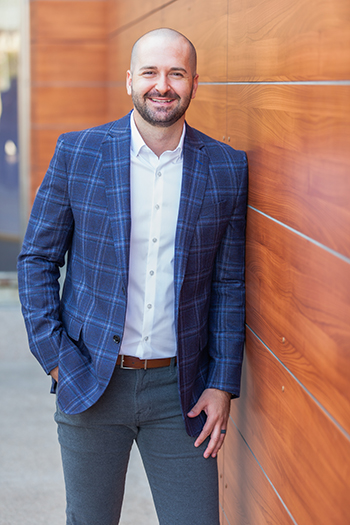
Clint Lee was 23 when his grandfather died. The family had photographs. What they didn't have was the sound of him talking - the specific way he said things. That absence became a company.
Most software companies begin with a market and work backward to a mission. OneDay went the other way. Before it was a SaaS platform in the Dallas Design District, before the funding rounds and the AI assistant, it was a family sitting with the realization that a voice they loved had not been recorded anywhere they could play it back.
"We had lost his voice," Lee has said of that moment. "The way he would say things." He and his father started asking a simple question that turned out to be a business: why is it so hard to capture and keep the everyday stories of the people we care about, especially the ones running out of time to tell them?
The answer they built, in 2012, was OneDay - a platform to record the personal narratives of seniors and hand those recordings to the families who would one day want them. The company's own framing put it plainly: tell your story, one day at a time, for your kids to one day have.
Their stories are disappearing at an alarming rate.
That urgency is not marketing language for Lee. It comes from where he grew up.
Raised inside the business
Lee grew up in and around his parents' assisted living homes in the McKinney, Texas area. Where other teenagers took summer jobs to get away from their families, he spent his after-school hours and holidays among the residents - buying groceries, doing yard work, and, at holidays, dressing up as the Easter Bunny.
It is an unusual apprenticeship for a technology founder. Long before he thought about product-market fit, Lee understood the day-to-day texture of senior living: the loneliness, the routines, and above all the stories that residents carried and rarely got asked about. When he later decided to build software for that industry, he was not entering a foreign market. He was going home.
He studied business at the University of North Texas, earning a BBA, and co-founded OneDay with John Boaz. The company would spend years finding its shape.
Six years to a rebrand
OneDay is often described in shorthand as a video-storytelling company, which makes the arc sound tidier than it was. The company started in 2012, but it went through several iterations before the pieces clicked. The turning point came with a 2018 rebrand, when the team sharpened its focus squarely on senior living rather than trying to be everything to everyone.
The thesis underneath the product is a bet about human behavior: people trust a face on video more than a paragraph of text. A short, personal clip from a real staff member does more to move a family touring communities for a parent than any brochure. Once OneDay proved that in senior living, the same logic opened doors elsewhere.
Senior Living
The original product. Personalized video for marketing, resident engagement, and staff hiring and retention.
Reflect
Launched in 2020 for the funeral and memorial industry - crowdsourced video tributes assembled from family and friends.
Convey
Launched in 2021 for multifamily real estate, bringing personalized leasing video to apartment operators.
The three products read almost like a life cycle: Convey for where people live, the core platform for how they're cared for later, and Reflect for how they're remembered. It is an unusually human product line for a B2B software company.
Investors funded what he did with the grief
Emotion may have been the seed, but investors backed the system Lee built on top of it. OneDay raised a $5.2M Series A led by Austin's Silverton Partners around 2019, then a $19M Series B led by Boston-based Volition Capital in July 2021, with Silverton participating again. That put total funding in the neighborhood of $24 million.
By the time of the Series B, OneDay was working with thousands of senior living communities across the United States, the United Kingdom, and Canada, and its customer base had grown well over 150% since 2020. The team moved into a 10,000-square-foot office in the Dallas Design District and was recognized on Inc.'s Best Workplaces of 2020.
We know there's a massive business opportunity for video storytelling across the markets we currently serve.
What struck Lee, he has said, was how customers used the product in ways the team did not fully anticipate. A tool sold for marketing and sales turned out to foster resident engagement, fuel employee hiring and retention, and, in his words, strengthen human connection using video.
The build, year by year
Adding AI without losing the point
In early 2025, OneDay introduced AVA, described as an AI-enhanced video assistant for sales and leasing across senior living and multifamily. The addition puts AI scripting, teleprompting, and automated delivery on top of the platform's original promise.
The interesting tension in that move is the one Lee has been navigating since 2012. OneDay exists because a machine failed to capture something human - a grandfather's voice that no one thought to record. Layering AI onto a company founded on that gap is a bet that the technology can help people tell their stories, not replace the reason for telling them.
Lee's framing of the mission has stayed consistent through every product and round: capture as many of these stories as possible, because they're unbelievable, and because the window to do it keeps closing.
See how the platform works and hear the company's story at oneday.com, or follow OneDay on LinkedIn and Facebook for product videos and updates.
Quotes
We had lost his voice. The way he would say things.
Our hope is to help capture as many of these amazing stories of these residents as possible because they're unbelievable.
If we can build technology that connects people in unique ways and helps them tell stories, then that's awesome.
Our products are being used to foster resident engagement, fuel employee hiring and retention, and strengthen human connection using video.
Facts worth keeping
Clint grew up in and around his family's assisted living homes in the McKinney, Texas area.
OneDay's tagline captures its origin: telling your story one day at a time, for your kids to one day have.
The company started in 2012 but only found its focus after a 2018 rebrand.
Its product line - Convey, the core platform, and Reflect - roughly maps to where people live, how they're cared for, and how they're remembered.
Common questions
Who is Clint Lee?
Clint Lee is the co-founder and CEO of OneDay, a Dallas-based SaaS video platform for senior living, multifamily real estate, and funeral and memorial services.
Why did Clint Lee start OneDay?
He started OneDay in 2012 after his grandfather died and his family realized they had almost no video or audio to remember him by - they had "lost his voice."
How much funding has OneDay raised?
Roughly $24 million across two rounds: a $5.2M Series A led by Silverton Partners and a $19M Series B led by Volition Capital in 2021.
What does OneDay do?
It lets teams create, send, and track personalized videos to build engagement and convert leads, with products for senior living, multifamily real estate, and funeral homes, plus an AI video assistant called AVA.
Where is OneDay based?
OneDay is headquartered in Dallas, Texas, in the Dallas Design District.