The first version of Cream Co. Meats had the storage capacity of a road trip and roughly the same glamour. In 2016, Cliff Pollard bought ten cattle from an organic dairy in Balico, California. The rancher did not know whether the new buyer would be able to pay. Pollard had the animals processed, packed meat and ice into coolers, and drove the orders to a small group of Bay Area restaurants. No delivery truck waited outside. There was only a promise, a cold chain and a founder doing his darnedest to keep both intact.
Slanted Door Group, Mister Jiu's, Aster and Calibur Burger were among the early customers willing to take that bet. Then a pork rancher gave him a chance. Then a lamb rancher. The company grew in the old manner, one useful transaction followed by another, except that its ambition was aimed at a peculiarly modern problem: how to make responsible meat convenient enough for serious buyers without erasing the farms that raised it.
Pollard calls the problem the missing middle. A ranch can raise an excellent animal and a chef can want to buy it, yet goodwill does not perform slaughter, inspection, fabrication, labeling, cold storage or delivery. Somebody has to turn a whole carcass into the exact cuts and quantities a kitchen can use. Somebody also has to find a buyer for everything else. The middle is a machine made from people, steel, regulation and nerve. Pollard decided to build it.
A cook follows the order backward
Food was already a family language. Pollard's mother grew up on Terceira in the Azores, in a small house where chickens were kept and one pig a year became linguiça. His father's side had a cattle farm in Missouri. Childhood visits meant sheep, tomatoes, cattle auctions and farmers' markets. Long before the word regenerative became a label on a deck, the family farm used mixed grazing, cover crops and low-till practices because fertile ground was the condition for having another season.
At 18, Pollard enrolled in culinary school. He cooked professionally and absorbed both the romance and the arithmetic of a restaurant. Great ingredients arrived at the back door; getting them there required a chef to juggle relationships, deliveries and uneven supply. Pollard enjoyed kitchens, but he could see his future did not involve closing a line at one in the morning forever. He began looking backward from the plate.
Farmers' markets were the visible point of aggregation. They led him to Prather Ranch Meat Company, where he spent about five years learning farm-direct meat from markets through wholesale and operations. Every role sharpened the same question: could small producers reach larger buyers without each side performing all the work of the other?
“I think the complexity was attractive. I wanted to solve one of the bigger problems.”Cliff Pollard
After Prather, Pollard traveled through more than 20 countries to document food systems and food culture, including a short stint as a CNN International Food Guide in Lebanon. Back in California, he became COO and partner at Mindful Meats, which sold beef from organic dairy cows and became an early Non-GMO Project Verified beef company. By the time he started Cream Co., he had seen the same animal from several angles: family sustenance, restaurant ingredient, rancher's livelihood, regulated commodity and cultural object. The business came from fitting those views together.
The missing middle, made visible
The handshake on the hill
Cream Co. was profitable within six months, but the early operation remained compact. Pollard and Kevin Cimino were the team for the first year. By the end of year two there were perhaps five employees. Then Shake Shack began preparing to enter Northern California. Its team ate around the Bay and, when a burger impressed them, asked where the meat came from. The answer kept being Cream Co.
Six months of conversations, farm tours and slaughter-facility visits followed. On a ranch, a senior Shake Shack supply-chain executive shook Pollard's hand and gave him a condition: get a facility operating within six months and Cream Co. could supply the grind for Northern California. The young company suddenly had a deadline large enough to pull its next form into existence.
Pollard raised money, obtained an SBA 504 loan and acquired a 15,000-square-foot USDA cut-and-wrap plant near the Oakland Coliseum in August 2018. The first Shake Shack delivery went to its Palo Alto restaurant in January 2019. One restaurant did not transform the balance sheet. The name transformed the company's sense of what its system could carry.
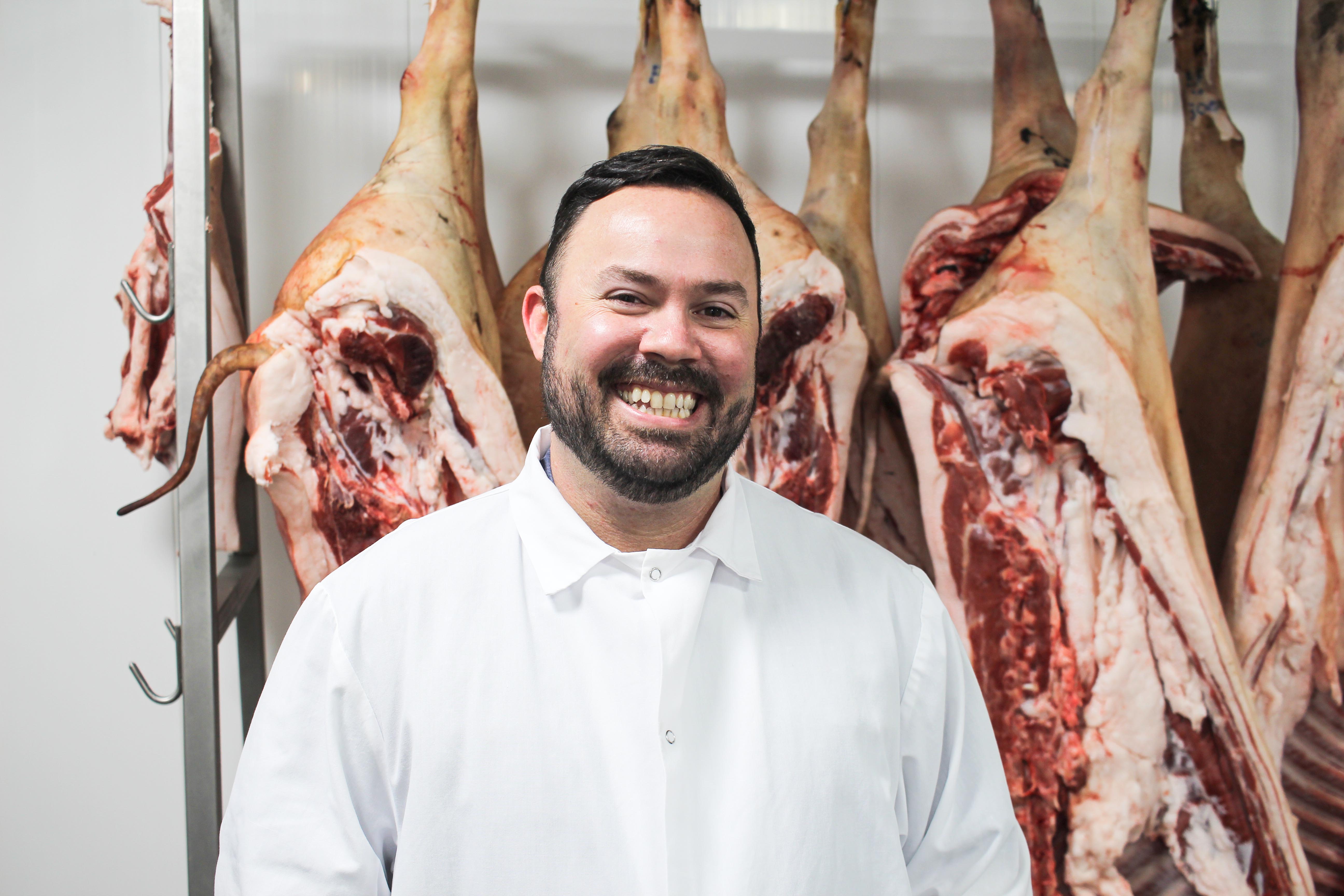
Owning the plant changed the meaning of the company. Cream Co. could buy animals on the rail, preserve a ranch's identity through processing and make chef-ready cuts to specification. It could grind, portion, dry-age and label. That control also carried the less photogenic obligations: inspectors, audit trails, food-safety plans, yield calculations and refrigerated rooms that never get to have an off day.
Pollard is blunt about why it matters. A company cannot promise one set of values at the farm and casually outsource the step where those values are easiest to lose. “Certified by many but verified by us” is his phrase for the difference between collecting badges and maintaining a relationship close enough to check the work. Infrastructure is where the mission either survives contact with volume or becomes decoration.
Every cut needs somewhere to go
Whole-animal economics have an almost comic refusal to respect a menu. A steer does not arrive as a box of ribeyes. It arrives with two of some things, many pounds of others and a large quantity of trim, bone and fat. Buy eighty cattle in a week and the imbalance becomes an operating thesis. Cream Co.'s job is to match steaks with restaurants, grind with burger programs, volume with institutions and less familiar cuts with customers who can make good use of them.
This is where Pollard's culinary past keeps earning its wages. He knows consistency is not a dull concern in a kitchen; it is how a chef translates an idea through sous chefs, line cooks, portion costs and a dinner rush. A loin that weighs eight pounds one week and 17 the next may carry a fine certification, but it is a small managerial crisis. Cream Co. looks for environmental practice and culinary performance at once.
“The two areas I love are being on the farm sourcing products and being in the kitchen selling products.”Cliff Pollard
Those two ends explain Pollard's ease moving between cultures. On a ranch, patience is measured in seasons and animal growth. In a kitchen, it is measured in tickets. The processor between them must speak both clocks. It also has to translate values into specs that a public school, university or restaurant group can put on an order.
Cream Co. has worked with public schools, the University of California system and commercial buyers including Google and Shake Shack. The institutional work matters because it moves responsible sourcing beyond the tasting menu. In 2023, Pollard joined ranchers, food companies and investors at UC Berkeley to discuss regenerative animal protein. The conversation centered on the unglamorous constraints he knows well: processing capacity, aggregation and contracts large enough to give producers confidence.
Three things operators can steal
- Follow the inconvenience. Pollard's idea began with the extra work chefs and ranchers were both doing.
- Own the point where quality can disappear. Cream Co. bought processing capacity because sourcing claims depend on execution after the ranch.
- Let one precise promise create capability. The Shake Shack deadline forced financing, a facility and systems that later served many customers.
Building the company past the founder
The pandemic delivered the sort of stress test nobody requests. Cream Co. pivoted into direct-to-consumer sales, reaching $300,000 a month within 90 days. Later, it closed that channel and rebuilt its business-to-business base. Pollard has described the period without polishing it: staff absences, abrupt turns and the daily obligation to appear as a steady leader for a growing team even when he felt worn down himself.
By late 2025, Cream Co. had become a multi-facility operation with roughly 90 employees. Its institutional round made Pollard consider an odd and healthy possibility: the company might outlast him. The founder who once held every cooler could see a business held by leadership, systems and a market that relied on it.
In January 2026, Cream Co. announced an $8 million Series A led by Soilworks Natural Capital, with Builders Vision, Desert Bloom and the Schmidt Family Foundation participating. The money was directed toward processing capacity and a larger regenerative sourcing network. A senior credit facility followed in April to support the working-capital demands of wholesale. Meat has velocity in the literal sense, and suppliers need paying before customers settle invoices. Even the financing must understand the cold chain.
Pollard's next chapter sounds less like an exit plan than a return route. He wants to spend more time on farms and with customers, the places where he feels useful. Cream Co. is developing value-added products such as marinated cuts and sausages, alongside more dry-aging capacity. He wants the company to create careers, teach people and remain a place where work can still be fun, though he concedes that everyone has a different definition of the word.
A decade after those first ten cattle, the original promise remains visible. The rancher should have a dependable market. The buyer should receive something delicious, consistent and legible. The animal should be used with care. Between them sits the middle, still difficult, still refrigerated, still full of paperwork. Pollard has made a life there. The loading dock may lack poetry, but every plate has one somewhere behind it.