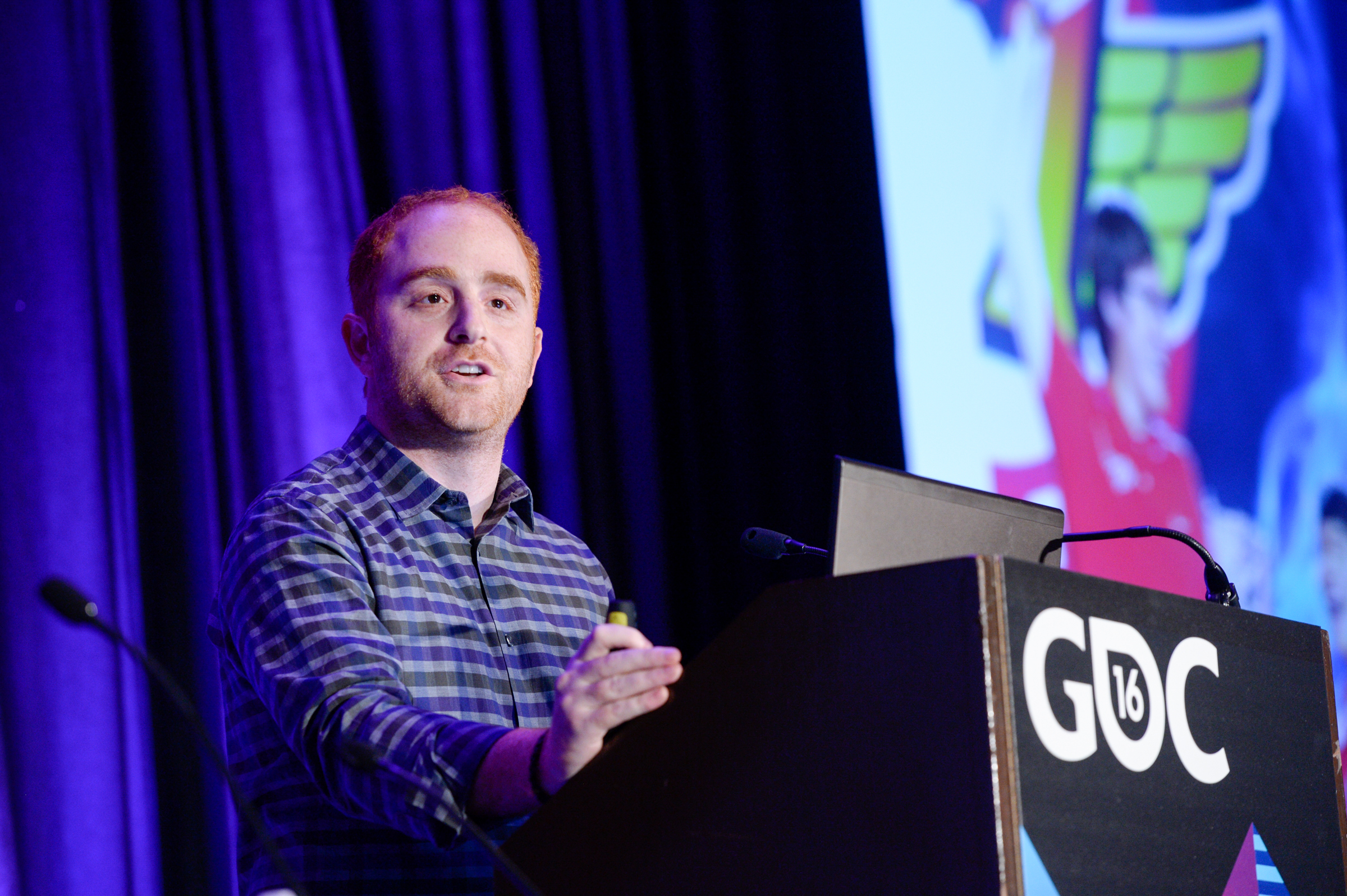
The people at Staples Center needed a little clarification. Dustin Beck was proposing a video-game event in their arena. Naturally, they imagined people turning up to play. Beck explained that the customers would be coming to watch other people play. In his recollection, the distinction took some explaining. The building eventually filled. A misunderstanding had become a ticketed attraction.
That exchange, which Beck recalled during his 2016 Game Developers Conference talk, offers a useful entrance to a career that has moved between investment banking, enterprise software, competitive gaming and food. He has spent time on both sides of the spreadsheet: evaluating businesses and helping run one whose customers were capable of arguing passionately about a game character’s abilities.
Today, Beck is known as a co-founder of Butterfly Equity, the Beverly Hills investment firm he started with Adam Waglay in 2016. Its interests extend from food production to restaurant counters. The move from League of Legends to eggs, avocado oil and carrots sounds like an abrupt change of menu. Look at the work involved, though, and a connection emerges: organizing the less glamorous machinery that lets a popular product become a durable business.
The gamer with a finance résumé
Beck’s professional route began in familiar financial territory. He graduated from the University of Southern California with a Bachelor of Science and worked in Goldman Sachs’ technology, media and telecommunications investment-banking team. In 2008, he joined Vista Equity Partners, a firm focused on enterprise software. Those jobs gave him experience with transactions before Riot put him closer to the daily decisions of an operating company.
At Vista, Beck was the twelfth employee and participated in 13 software transactions. He also helped launch Vista Consulting Group, which codified operating practices and applied them across the firm’s portfolio. It was an apprenticeship in making an investment thesis useful after the acquisition documents were signed. A deal can establish ownership in an afternoon; changing how a company works is a longer appointment.
Gaming was already part of his life. Beck has described an early competitive career that included Warcraft II and Rainbow Six. He once ranked second on Battle.net in Warcraft II. The rewards were modest enough that he remembered tournament winnings in terms of the Magic cards they might buy. It is an appealingly precise unit of ambition: before the arena, a few more packs.
His brother Brandon co-founded Riot Games with Marc Merrill. Dustin joined Riot in 2012 and launched and led its esports business. That family connection belongs in the account, along with the distinction between their jobs. Dustin’s responsibility was to develop the competitive and spectator side of League of Legends, bringing the game’s audience into a more organized sporting calendar.
A sport needs a calendar
Riot already had players and competition. Beck’s challenge involved what happened around the matches: salaries, broadcast production, scheduling and the experience of a person trying to follow a team. An audience can love a game and still find a tournament exhausting to navigate. Weekend-long events and unpredictable match lengths ask spectators to organize their lives around uncertainty.
The League Championship Series brought regularity to that experience. In its early format, North American matches ran on Thursdays and Fridays, while European matches ran on Saturdays and Sundays. Single-game matches helped make the schedule more predictable. There were studios, high-definition streams and production staff. These were practical choices with consequences for whether an interested viewer could become a habitual one.
Beck also enjoyed the stories emerging from the competition. He pointed to Team MRN, which squeezed into an online qualifying tournament with less than half an hour remaining. Players were leaving familiar homes for team houses and a professional career. Those moves gave a broadcast something to follow between matches: people making consequential decisions, rather than a scoreboard floating in isolation.
“Part of the magic of Sunday football is that it’s always on Sunday.”
Dustin Beck, GDC 2016
In 2012, Beck described Riot’s ambition to make professional League a viable career. Regular competition required commitment from players, and the league was preparing salaries and support alongside its events. The argument was straightforward: someone expected to practice and compete at a professional level needed a structure that made that possible. Tournament winnings alone made for an uncertain employment contract.
He was equally direct about the spectator experience. When asked which part of the finals he most wanted to improve, Beck singled out the live and broadcast experience. His answers often returned to the audience. Even the pacing of the playoffs mattered: traditional sports offered examples of how anticipation could accumulate as the stakes rose. The finals needed a season behind them.
Leaving room for the next act
On January 19, 2016, Beck announced that he would step back from day-to-day leadership and become part-time chairman of the LCS. His note remembered the Season Two World Championship at USC’s Galen Center, and the friendships formed during his years at Riot. The language was personal. He was leaving a routine, a set of colleagues and a community he intended to remain part of.
Whalen Rozelle and Jarred Kennedy would take over leadership of Riot esports. Beck described a role offering mentorship and guidance, with involvement in strategic projects. He also disclosed the next ambition: running a startup in the investment world. In the same announcement, he mentioned becoming a better support player. The proposed schedule contained both a new business and unfinished business on the game server.
Butterfly followed that year. Waglay brought experience from KKR’s consumer and retail investing team; Beck brought Vista’s investing and operations background and his time building Riot’s esports business. Their firm chose food as its field. Its familiar description, “seed to fork,” made the scope unusually literal. A meal has a history before it reaches the plate, and Butterfly wanted to invest along that history.
What happens before the fork
The food business offers plenty of visible brands. Butterfly’s remit also includes ingredients, manufacturing, packaging, equipment, distribution and services. A restaurant sign or a bottle label is only one part of the commercial picture. Someone has to make the product, move it, store it and provide the package that gets it to the customer in usable condition.
That breadth gives the firm room to connect businesses with different expertise. In 2022, Butterfly described an emphasis on companies with greater control over their inputs and manufacturing. Supply-chain disruption had made access to production capacity especially consequential. Its restaurant investments also created a potential route into foodservice for packaged products. A portfolio could offer practical introductions as well as financing.
- 01 / Make itIngredients · manufacturing · packaging
- 02 / Move itDistribution · outsourced services · data
- 03 / Serve itPackaged food · beverages · restaurants
Butterfly’s three current investment areas. A map of its remit, not a measure of portfolio allocation.
The firm closed its second fund with $1 billion in commitments in August 2022. Together with its earlier fund and co-investments, that brought assets under management to nearly $4 billion at the time. Those figures describe the firm’s capital, rather than Beck’s personal wealth. More revealing for his working style is the operating experience he brought into the partnership: an investment needed people who could do something useful with it.
In a 2024 interview, Beck put the average ownership period at five to seven years. He emphasized building agreement with management before introducing changes. He also discussed pricing power, capable teams and the risk of excessive dependence on one customer or supplier. These are prosaic considerations. They become rather less prosaic when a missing ingredient stops a production line.
“It’s more fun investing with a longer-term horizon.”
Dustin Beck, February 2024
More time at the table
Later transactions show the scale and range of the firm Beck co-founded. Butterfly completed its approximately $1.95 billion acquisition of The Duckhorn Portfolio in December 2024. Duckhorn brought a collection of wine brands, vineyards and winemaking facilities into the portfolio. Ownership of a wine business also makes the timetable tangible: the product’s route to a customer begins well before a bottle appears on a shelf.
In August 2025, Butterfly closed a $527 million continuation fund for QDOBA, which it had acquired in 2022. Apollo S3 led the transaction. The arrangement offered existing investors a liquidity option while extending Butterfly’s partnership with the restaurant company. It was a way to give investors a choice about their own timetable without ending the firm’s work with the business.
The food-system remit continued expanding in 2026. Butterfly acquired ePac, a digitally printed flexible-packaging business with 14 facilities in the United States and Canada. In September, it announced an agreement to acquire Sabert, another food-packaging company. That transaction remained subject to closing conditions, with completion expected in the fourth quarter. Packaging had become an increasingly visible part of the firm’s investment activity.
These are developments at Butterfly, involving its investment teams and portfolio leaders. They also show how far the institution has traveled from its founding idea. Food specialization can accommodate a restaurant franchisor, a winery and a packaging manufacturer without requiring each business to work the same way. The common ground is the market they serve, with different operating problems at each stop.
A local obligation
Butterfly created its foundation when the investment firm opened. Its partners pledged 10 percent of their net profits, and the firm covers the foundation’s administrative costs. The foundation focuses on Los Angeles and supports community organizations through grants, technical assistance, volunteering and collaboration. Beck has served as its co-president and a director.
One choice is particularly concrete: the foundation favors general operating support, allowing nonprofit partners flexibility in how they use grants. It gives local organizations room to decide what their work requires. That sits comfortably beside Beck’s stated preference for building agreement with company management. In both settings, the people doing the daily work have knowledge that money alone cannot supply.
The career’s recurring interest is in what allows activity to continue. A gamer needs a dependable schedule. A professional team needs a way to pay its players. A food business needs production and distribution. Beck’s path through those different problems is more interesting than the apparent leap between entertainment and dinner. At Staples Center, he had to explain why people would turn up. At Butterfly, the work extends to what happens after they do.