Adam Waglay’s first job was as a prep cook at Denny’s. Years later, the food on his professional menu includes carrots, bakery products, burritos and wine. The change is in the scale, and in which side of the business he works on. He now leads Butterfly Equity, a private equity firm whose investment universe extends from the ingredients in a meal to the packaging that carries it home.
That early kitchen job is a pleasing detail in a career otherwise marked by financial institutions and acquisitions. Cooking remains a hobby. His favorite book is Sun Tzu’s The Art of War; his restaurant choices include Mother Wolf for fun and E. baldi for business. Dinner, apparently, can accommodate both pleasure and strategy.
But the more revealing part of Waglay’s story is his willingness to keep examining the same industry from different angles. A grocery aisle offers a parade of names and labels. His firm also invests in the businesses behind those labels: the producer, the processor, the flavor supplier, the packaging manufacturer. Follow his recent transactions and the ordinary act of buying lunch becomes a rather complicated map.
A career that stayed near the grocery aisle
Waglay earned a Bachelor of Commerce at McGill University and worked in Goldman Sachs’ consumer and retail investment banking team before joining KKR in 2007. He spent the next nine years on KKR’s consumer and retail private equity team, with a focus on food. His completed transactions there included Dollar General, Academy Sports + Outdoors and National Vision.
In 2016, he and Dustin Beck founded Butterfly. The venture gave an investor with experience inside large firms a more concentrated brief: food, viewed across its supply chain. Today, Waglay is Butterfly’s CEO, Co-Founder and Managing Partner, and chairs its investment committee. His responsibilities cover finding investments, executing transactions, managing the portfolio and leading the firm.
The concentration matters because food is a broad subject disguised as a narrow one. Growing carrots and running a restaurant both sit inside it, but their daily demands differ considerably. A firm choosing this field still has to decide which problems it understands, which managers it needs and where its capital can be useful. Specialization supplies a starting point. It does not supply every answer.
Sometimes the recipe calls for separation
Bolthouse Farms offered an unusually tangible example. Butterfly bought the business from Campbell Soup Company for $510 million in 2019. It contained both fresh carrots and refrigerated beverages, along with salad dressings. The common name suggested a single enterprise; underneath it were activities with different demands and opportunities.
In May 2024, Butterfly separated those activities into Bolthouse Fresh Foods and Generous Brands. The former retained the fresh produce business. The latter housed the premium beverage and dressing businesses, including Evolution Fresh, which Bolthouse had acquired from Starbucks in 2022. The two companies received separate debt recapitalizations.
Waglay described the separation as something planned from the investment’s outset. He also explained the practical reason for giving the businesses their own capital structures: they had different capital needs and different acquisitions they might pursue. This is a useful corrective to the assumption that an investor’s preferred verb is always “combine.” In this case, greater independence was part of the intended result.
“This separation was always part of our investment thesis.”
Adam Waglay, on Bolthouse Farms
The management choices made the distinction concrete. Timothy Escamilla led Bolthouse Fresh Foods, while Steve Cornell led Generous Brands. Jeff Dunn became executive chairman of both. A farmer supplying a produce department and a beverage company developing its brands could each have leadership aligned with its own job. The organizational chart finally admitted what the products had been saying all along.
There is a personal thread here, too: Waglay’s working relationships repeatedly connect finance to experienced operators. His role is not confined to the announcement of a purchase. The Bolthouse example places him in the less glamorous discussion that follows: which business belongs where, who should run it and how its next stage will be financed.
A Christmas Eve transaction, with wine
The Duckhorn Portfolio brought another kind of food and beverage business into the picture. Butterfly completed its acquisition on December 24, 2024, in an all-cash transaction valued at approximately $1.95 billion. Duckhorn’s origins reach back to 1976, when Dan and Margaret Duckhorn founded Duckhorn Vineyards in Napa Valley. Its portfolio included Decoy, Kosta Browne, Sonoma-Cutrer and other wineries.
For Waglay, the purchase paired an established collection of wine brands with his firm’s sector expertise and network. He spoke of expanding Duckhorn’s global reach through both organic growth and acquisitions. That is an ambition with several moving parts: preserving what customers recognize, reaching more of them and deciding which additional businesses belong in the portfolio.
Before the deal closed, he wrote directly to Duckhorn employees. The letter introduced Butterfly and explained its name through the image of companies changing from caterpillars into butterflies. It was a deliberately approachable metaphor for a process usually expressed in the vocabulary of capital, operations and technology. The message ended by inviting the team to raise a glass.
In January 2025, Robert Hanson was appointed Duckhorn’s CEO, effective February 1. Waglay publicly welcomed the appointment and appeared with Hanson on Bloomberg to discuss it. The leadership appointment belongs in the story beside the purchase price. Buying a business creates a new ownership arrangement; choosing the person who runs it helps determine what that arrangement will mean in practice.
The flavor behind the fashionable drink
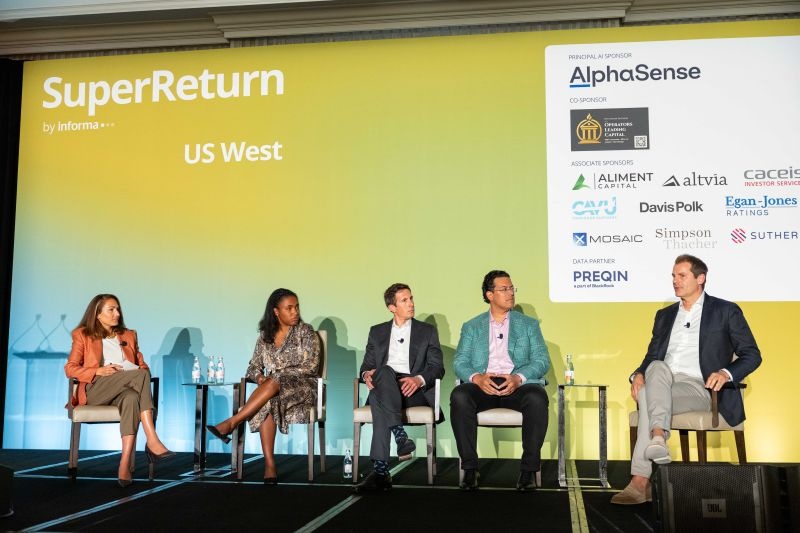
By 2026, Waglay was discussing another way to approach consumer markets: investing in their “enablers.” In a Bloomberg conversation about the beverage landscape, he described looking for a flavor company supplying multiple drink brands. The appeal was straightforward. An investor could participate in the category without having to choose the individual brand that would prevail.
“Investing in enablers allows us to not have to take the brand risk.”
Adam Waglay, discussing beverages on Bloomberg
The idea shifts attention from the front of the shelf to the supplier’s order book. Consumers encounter the drink’s branding. The flavor business can work with several manufacturers. That does not make the investment free of risk, but it changes the question being asked: how many growing businesses need the capability this supplier provides?
In July 2026, Custom Flavors announced a partnership with Butterfly and Graham Partners. The San Clemente company develops liquid and powdered flavors, and the investment platform also included Target Flavors. Custom continued under CEO Alex Wendling, with support from its co-founders. Waglay’s current board roles include Custom Flavors.
This transaction gives the “enablers” discussion a concrete counterpart. Formulation, manufacturing capacity and service times are less conspicuous than an attractive can. Yet they are part of the machinery through which a product reaches a customer. For a food specialist, the less visible business can be a substantial part of the opportunity.
Fresh FoodsThe ingredient
FlavorsThe formulation
Selected Butterfly businesses, shown by function. This diagram does not imply supply relationships between them.
Even the container gets a seat at the table
Butterfly completed its acquisition of ePac in January 2026, its first platform investment in packaging. The business uses digital printing and a technology platform called ePacONE to support production across 14 facilities in the United States and Canada. CEO and co-founder Virag Patel and his leadership team remained in place and retained a significant ownership interest.
The company’s offering includes automated quotations, fast turnaround and production to order. Those capabilities are part of the food business, even when the customer never thinks about them. A packet has to exist before a product can sit on a shelf. Its design may advertise the brand; its production schedule can affect how quickly that brand reaches the market.
In September, Butterfly announced an agreement to acquire Sabert, a food packaging manufacturer operating 13 facilities globally. The transaction remained subject to closing conditions, with completion expected in the fourth quarter of 2026. Founder Albert Salama was to remain a minority investor after closing.
Waglay connected the proposed purchase to changing habits around convenience and where people eat. Packaging, in that account, helps food businesses respond to those habits. The sequence from ePac to Sabert widens Butterfly’s activity in a part of the industry that tends to disappear from view the moment lunch is unpacked.
A longer relationship, and a wider circle
Waglay’s recent work also includes extending relationships already underway. In August 2025, Butterfly closed a $527 million single-asset continuation fund for QDOBA, which it had acquired in 2022. Led by Apollo S3, the transaction provided an option for existing investors to receive liquidity while supporting the restaurant company’s next stage of growth.
For the investor, that arrangement offers another answer to the question of what happens after a business develops under new ownership. A sale is one route. A continuation fund can allow the partnership to keep going with a changed investor base. The decision makes time itself part of the transaction.
There are other circles around Waglay’s professional life. In 2024, he hosted a launch party for his friend Kimbal Musk’s The Kitchen Cookbook: Cooking for Your Community. He also serves on the Butterfly Equity Foundation’s board. In 2020, the foundation raised more than $100,000 in under a week for the Los Angeles Regional Food Bank, an amount the food bank said could provide more than 400,000 meals.
Butterfly added a Midtown Manhattan office in July 2026, bringing investment, operations and investor relations staff into an East Coast hub. Waglay described the expansion as a way to deepen relationships with investors, management teams and partners on both coasts. His field remains food; the circle of people working within it continues to widen.
The prep cook’s career now encompasses financing structures, boardrooms and businesses a diner may never notice. Its recurring subject is still recognizable. An ingredient has to be produced. A product has to be made. Someone has to package it, sell it and serve it. Waglay’s investment career follows that chain, with room on the menu for the container as well as its contents.