A spreadsheet for the planet
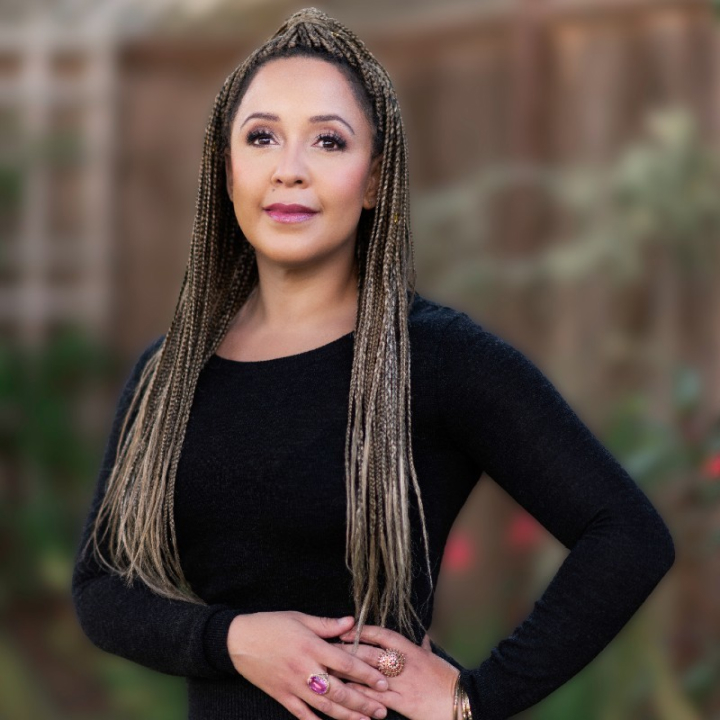
Ask Julia Collins what a granola bar costs and she will not quote you a price. She will quote you a footprint - grams of carbon per unit, traced from the wheat field through the oven to the shrink-wrap. That number is the product Planet FWD sells. Collins founded the San Francisco company in 2019 to do something the food industry mostly avoided: put a defensible, auditable carbon figure on the things people actually buy, then hand brands a roadmap to shrink it.
Planet FWD's software runs life-cycle assessments with AI, builds Scope 1, 2 and 3 inventories that line up with the GHG Protocol and the Science Based Targets initiative, and turns the results into decarbonization plans. The roster of brands feeding it data reads like a grocery run and a shopping spree at once - Cava, Just Salad, Dutch Bros, Kashi, Everlane, Amika, Kroger's Simple Truth. The pitch is unglamorous and exact, which is the point.
"Every product is part of the solution and not part of the problem." That is the whole thesis, and it fits on a snack wrapper.
Before the carbon math, the cheese counter
Collins did not arrive at climate software from a lab. She arrived from food - the messy, perishable, margin-thin kind. She grew up in San Francisco, in a family where food was the center of gravity. Her grandparents came west in the Great Migration from South Carolina, and her grandfather became one of the first Black dentists in the Bay Area. Her mother still lives a few blocks from where Collins would later set up Planet FWD.
She studied at Harvard, earned an MBA from Stanford's Graduate School of Business in 2009, and then did the unfashionable thing for a freshly minted MBA - she went into restaurants. In 2010 she co-created Mexicue, a Mexican-meets-barbecue concept in New York. By 2012 she was a director at Murray's Cheese, learning the unromantic logistics of moving perishable goods. Food was never a metaphor for her. It was inventory, spoilage, and supply chains.
The unicorn with an oven on board
In 2015 she co-founded Zume Pizza with Alex Garden. The premise sounded like a press release written by a robot: pizzas assembled by machines and partially baked in trucks en route to your door, so the pie finished cooking as it arrived. Zume raised enormous sums, and by 2018 it carried a reported valuation of $2.25 billion. That number made Collins the first Black woman to co-found a unicorn - a distinction she earned in an industry that rarely funds people who look like her.
She has been clear-eyed about what that meant. While raising money for her next act, she was visibly pregnant, and she refused to pretend otherwise. She opened pitches by naming it outright rather than hiding a due date behind a blazer.
"The experience of being a black woman on the planet has taught me to walk in my own truth."
It was not a slogan for a deck. It was a working strategy. "I'd rather focus on paving the way for other women," she said, "than limiting my choices to appease the heteronormative patriarchy." She has described the right investors the same way she describes good packaging - make it plain, and the people you want will get it.
From a cracker to a category
Collins left Zume and built Planet FWD around a conviction that brands could not cut what they could not measure. To prove the software worked, she did something most enterprise founders never would: she launched a consumer product to dogfood it. Moonshot Snacks, debuted in 2020, was billed as the first climate-friendly snack brand - crackers made with regeneratively grown ingredients and a footprint calculated by Planet FWD's own engine.
The proof landed in 2023, when Patagonia Provisions acquired Moonshot. It was Patagonia's first acquisition in more than two decades, and a tidy validation of the thesis: a snack designed around climate data was worth buying by the company that practically invented climate-minded commerce. In a detail Collins clearly relishes, the recipe stayed exactly the same after the sale. Only the packaging changed.
What Planet FWD actually measures
Scope 3 - everything upstream and downstream - is where most consumer-goods emissions hide, and where Planet FWD spends its effort.
The AI turn
Life-cycle assessment is famously slow and expensive - the kind of analysis that can take consultants months and price out smaller brands entirely. In late 2023, Planet FWD launched an AI-powered decarbonization platform aimed squarely at that bottleneck. The goal was to make the carbon math fast and cheap enough that a mid-sized brand could actually act on it.
"We leverage AI to deliver our solution at a cost that makes sense to our customers," Collins explained, "at a speed that allows them to accelerate to net zero - and in a way that is consistently and constantly growing and improving over time." The company has pushed past food into beauty, apparel and broader retail, and claims an average reduction of roughly 35% in per-product emissions for the brands it works with.
Three companies. One unicorn. Zero apologies. The throughline is food, and the insistence that it can be measured honestly.
What she is chasing now
Collins frames the mission in terms that are almost stubbornly concrete. Not "save the planet," but ship a Scope 3 roadmap. Not "raise awareness," but cut a number. She sits on boards including the Climate Collaborative and Food for Climate League, speaks at Climate Week NYC and the ReFED Summit, and in 2025 collected the KM ZERO Food Innovation Hub's Global Food Change Maker prize. Newsweek had already named her one of "13 Tech Innovators Helping to Save the Planet" back in 2020.
The aspiration she keeps returning to is a future where regenerative agriculture scales and every product on the shelf carries a footprint heading toward zero. It is a big idea delivered in the least grandiose way possible: as data, as roadmaps, as a number on a wrapper that consumers and brands can finally trust. For a founder who has now built restaurants, robots and software, the constant has never been the technology. It has been food - and the belief that you can hand someone the truth about what their lunch costs the world, and they will choose to do something about it.
Why a number changes behavior
There is a quiet argument running underneath everything Collins builds, and it is about measurement. Brands love to talk about sustainability, but talk is cheap and audits are not. A vague commitment to "doing better" cannot be tracked, reported, or sold to a procurement team. A number can. By forcing the conversation onto verifiable ground - grams of carbon, percentages cut, targets aligned to recognized frameworks - Collins moves climate out of the marketing department and into operations, where decisions actually get made about suppliers, ingredients and packaging.
That insistence on rigor is also a competitive moat. Regulators in multiple markets are tightening the rules around environmental claims, and "greenwashing" has gone from a reputational risk to a legal one. A brand that can show its work - that can point to a defensible life-cycle assessment behind every claim on the box - is insulated in a way a glossy sustainability report never was. Planet FWD sells that defensibility as much as it sells the math.
A founder who keeps choosing the hard version
Look across the arc and a pattern emerges. Restaurants are brutal. Food robotics is brutal and capital-intensive. Climate software for consumer brands is a long, patient sale into an industry not known for moving fast. At every fork, Collins has taken the harder, slower, more structural problem rather than the obvious cash-out. She could have stayed in the orbit of the unicorn she helped create. Instead she walked toward a problem with no clean exit and a planet-sized denominator.
She is, by the accounts of those who have pitched alongside her and interviewed her, direct to the point of disarming - the kind of operator who would rather name the awkward thing in the room than let it fester. That trait shows up in her fundraising, in her hiring, and in the product itself, which is built to surface uncomfortable truths about supply chains rather than paper over them. The through-line from the pregnant pitch to the carbon ledger is the same: tell the truth plainly, and trust the right people to meet you there.