The fashionable story of leadership is ascent: a better title, a larger remit, a more impressive rectangle on an organization chart. Claire Bonilla’s story becomes interesting when the arrow changes direction. After managing global systems, leading a mission-driven organization and sitting at the head of the table, she moved closer to the private moment before a decision. Today her work is less about issuing the answer than helping another leader become honest enough to find it.
Bonilla is the founder and CEO of Ethos, her Redmond, Washington executive-coaching practice, and a CEO peer-advisory chair with Vistage. The title sounds orderly. The work is wonderfully untidy. It lives where ambition collides with obligation, where a confident executive admits uncertainty, and where a strategic problem turns out to contain a personal premise nobody has named.
She has coached more than 50 CEOs and senior executives across industries. That number matters less as a trophy than as evidence of repetition. A leader can be singular; leadership problems are often cousins. Growth strains culture. A founder’s strength becomes a bottleneck. A board asks the tidy question while the business is wrestling with the messy one. Bonilla’s advantage is that she has occupied enough seats to recognize the furniture.
The operator’s education
Her career began in management consulting at Ernst & Young. The assignments included post-merger integration, organizational design, leadership development, human-resources systems and supply chains. It is difficult to imagine a better apprenticeship in the gap between a slide deck and Monday morning. A merger may be announced in one sentence; integrating two organizations requires thousands of small choices about power, process and identity.
Then came Microsoft. Bonilla spent 16 years there, moving through a strikingly broad set of global functions: enterprise sales, partner programs, training, data management, supply chains, governance, risk and compliance, and humanitarian assistance and disaster response. The nouns are corporate. The underlying craft is human: how to make a complex system legible, how to coordinate people who do not report to one another, and how to act when information is incomplete.
Her education had prepared her to notice transitions. She studied economics and German at Willamette University and the University of Munich, then earned a master’s degree at the London School of Economics in political economies of transition and change. Even the degree title reads like a description of an executive’s Tuesday afternoon.
“For me, my higher purpose on this planet, in this time, is to cultivate leaders and organizations that aspire to do better by the world.”Claire Bonilla, on her work with Vistage
Scale meets service
In 2015, Bonilla left Microsoft for SightLife, joining the international nonprofit as chief global officer. Two years later she became CEO. The move was a translation, not a repudiation. The operating fluency developed inside a large technology company could now be applied to an organization whose scorecard began with mission.
Before her promotion, she was credited with driving 60 percent growth in the organization’s work in developing countries. Contemporary accounts also credited strategies under her global leadership with increasing capacity across more than 30 partner institutions and training hundreds of specialists. The lesson is easy to miss: purpose does not excuse operational rigor. It demands it. Good intentions are charming dinner guests and unreliable project managers.
Bonilla spoke publicly about local cultural sensitivity in global work. That detail is a useful window into her method. Scale is seductive because it promises one answer many times. Context interrupts the fantasy. What works in Seattle may arrive elsewhere carrying assumptions its designers cannot see. The operator’s job is not merely to distribute a system. It is to notice where the system must listen.
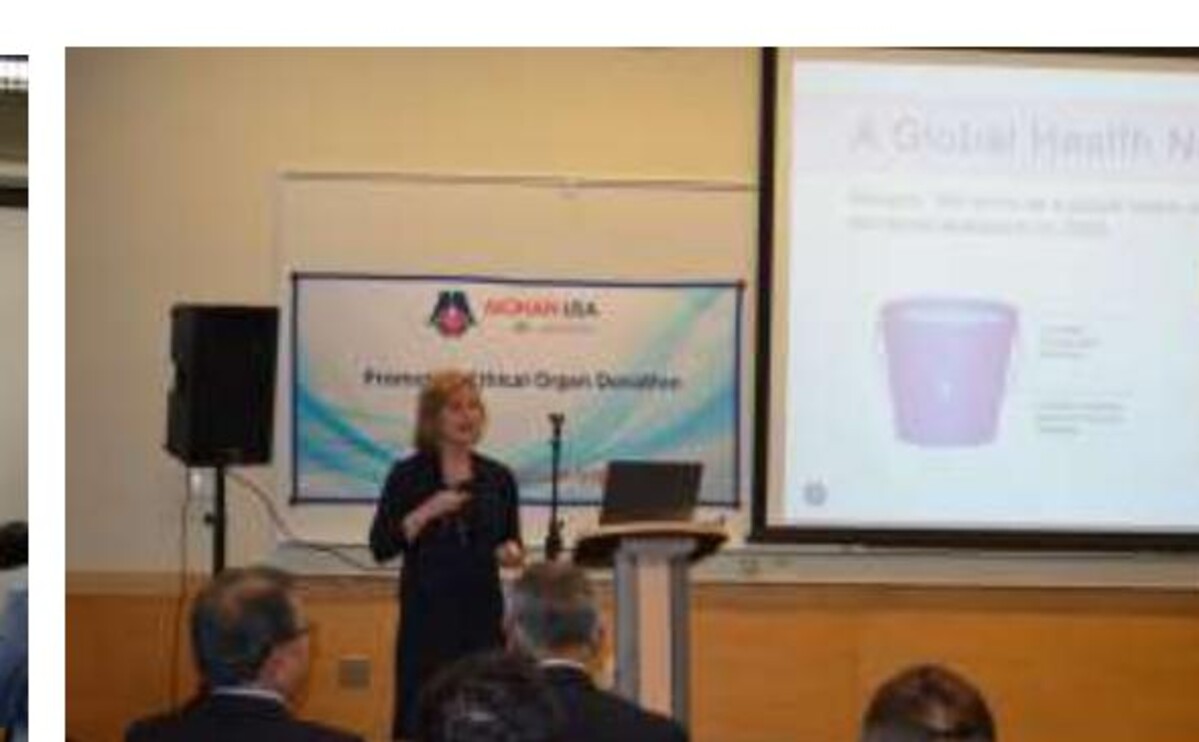
Her leadership also attracted people. When former Microsoft colleague Jim McCorkle learned that Bonilla had become CEO, he sent a congratulatory message on LinkedIn. She happened to need a chief of staff. The exchange became a job, and the job later became a chief operating officer role. There is something pleasingly ungrand about the sequence. A consequential career move began with a note that could have remained a polite notification.
The art of preferment
In 2021, after nearly seven years at SightLife and four as CEO, Bonilla announced her transition. She did not describe the next chapter as retirement. The word she prefers is “preferment,” a term she encountered through Vistage: doing what you want, when you want, with whom you want.
Preferment sounds like leisure wearing a waistcoat. In Bonilla’s version, it is closer to deliberate usefulness. She founded Ethos in 2022 and developed a portfolio around executive coaching, Vistage peer groups, mentoring and board service. The common unit is no longer the organization. It is the leader in relation to an organization: the judgment, habits and unexamined bargains that ripple outward.
The Vistage room is central to that work. Bonilla had been a member before becoming a chair, so she knew the product from the vulnerable side of the table. The promise of a peer group is simple to say and difficult to manufacture: people with comparable responsibility, enough difference to challenge one another, and enough trust to speak without varnish.
Recommendations from leaders she has coached repeat two ideas: support and rigor. She is described as creating openness and accountability, recognizing strengths and blind spots, and bringing levity into demanding work. The pairings matter. Support without challenge becomes expensive reassurance. Challenge without trust becomes executive karaoke: loud, familiar and performed for the room.
Design the conditions for candor before you demand candor. The quality of an answer depends on whether the room can safely hold it.
A portfolio with a point of view
There is another useful idea hiding in the shape of Bonilla’s week. Ethos, Vistage, mentoring and board work are not random additions to a post-CEO calendar. Each role offers a different distance from the same problem. Coaching makes the work personal. A peer group makes it collective. A board makes it institutional. Mentoring stretches the time horizon by investing in leaders who may be years from the corner office.
This is portfolio design as an argument. Bonilla has said that her current work satisfies her intellectual curiosity, lets her give back and places her near transformational leadership moments. Those criteria form a sharper filter than prestige. A role earns its place by being interesting, useful and aligned. The result is a calendar organized around contribution rather than a single employer’s hierarchy.
Her route also complicates the popular advice to “follow your passion.” Passion is present, especially in her commitment to equity and leadership development for women and minorities. Yet the career works because conviction is paired with capability. Global operating experience gives her a way to turn values into mechanisms: a governance practice, a clearer decision, a better-designed team or a conversation that ends with an owner and a date.
That last step is where many thoughtful conversations expire. Insight feels like progress, so everyone leaves pleased with the meeting. Accountability is less flattering. It asks who will act, what will change and when the room will revisit the promise. Bonilla’s peer-work reputation rests in part on maintaining both halves: enough care for candor to emerge, enough discipline for candor to produce movement.
For leaders designing their own next chapter, the pattern is portable. Begin with the problems you still want to think about. Add the people you want to help. Choose formats that let your experience operate at several levels. Then apply one unforgiving test: does the work create a consequence beyond keeping you busy? Preferment, properly understood, is not freedom from commitments. It is the freedom to choose worthy ones.
A second act with receipts
Bonilla’s work has accumulated formal recognition. In 2019, the Microsoft Alumni Network named her an AlumniHERO, an award for alumni applying experience to social impact. Vistage later recognized her among its 2023 Rookie Excellence Award winners. She has also served in board and advisory roles spanning research, global collaboration and leadership development, including the Benaroya Research Institute, WomenLift Health, the Washington Global Health Alliance, CorneaGen and Medical Teams International.
These affiliations sketch a network, but the more revealing connection is thematic. Bonilla repeatedly chooses rooms where expertise must cross a boundary: corporate and civic, global and local, performance and purpose, authority and vulnerability. Her certifications in enterprise risk management and Six Sigma sit beside her advocacy for equity and leadership development for women and minorities. Process and people are not competing departments in this worldview. They are the same work observed at different distances.
The aspiration she states is precise: cultivate leaders and organizations that aspire to do better by the world. “Cultivate” is the slyly important verb. It rejects the keynote fantasy that one brilliant sentence transforms a leader. Cultivation is seasonal, repetitive and occasionally muddy. It needs attention after the applause has gone home.
There is a practical model here for anyone approaching the far side of a long operating career. Do not confuse accumulated experience with a museum collection. Experience becomes useful again when it is indexed, stripped of nostalgia and offered at the right moment. The old job supplied the cases. The new one supplies the questions.
Bonilla’s path from consultant to Microsoft general manager, nonprofit CEO, founder and chair does not form a neat ladder. It forms a loop. She learned to manage complexity, carried that skill into mission-driven work, and now returns it to other leaders as judgment. The corner office was not the ending. It was field research.