There is a strange little thought experiment hidden inside a Cirrus airplane. Imagine the pilot cannot help you. You are still airborne. You have never landed anything more complicated than a shopping cart. What, exactly, should the manufacturer have put within your reach?
Cirrus has two unusually concrete answers: a handle that deploys a parachute for the entire aircraft, and, on equipped models, a button that starts an automated landing. They reveal the company’s central preoccupation. Buying a personal airplane means bringing other people into your enthusiasm. Those people deserve some engineering of their own.
- The aircraft: SR Series piston planes and the single-engine Vision Jet.
- The distinction: whole-airframe parachutes, emergency autoland and training built around the aircraft.
- The business: premium aircraft sales, followed by parts, maintenance, instruction and ownership support.
01 The accident that changed the question
In 1985, Alan Klapmeier survived a midair collision. The other pilot died. Alan brought his damaged aircraft back to an airport. His brother Dale later described the accident as the event that set Alan searching for another way to make flying safer.
The brothers had begun their company a year earlier in the family barn in Baraboo, Wisconsin. Their first project, the VK-30, was a five-passenger kit airplane with a propeller at the back. It flew in 1988. Cirrus subsequently discontinued it and moved toward certified aircraft. The original product was a beginning, rather than the business that endured.
The SR20, delivered to its first customer in 1999, carried the idea that would become the company’s signature: CAPS, the Cirrus Airframe Parachute System. The parachute became standard equipment. The passenger’s escape route did not depend on an owner ticking an extra box.
Developing that answer meant physical experiments. Dale recalled approximately 40 parachute drops with BRS near Kingman, Arizona, testing how to open the canopy at different speeds without imposing unacceptable loads. A simple handle in the cabin rested on a decidedly less simple development program.
02 Give the passenger one job
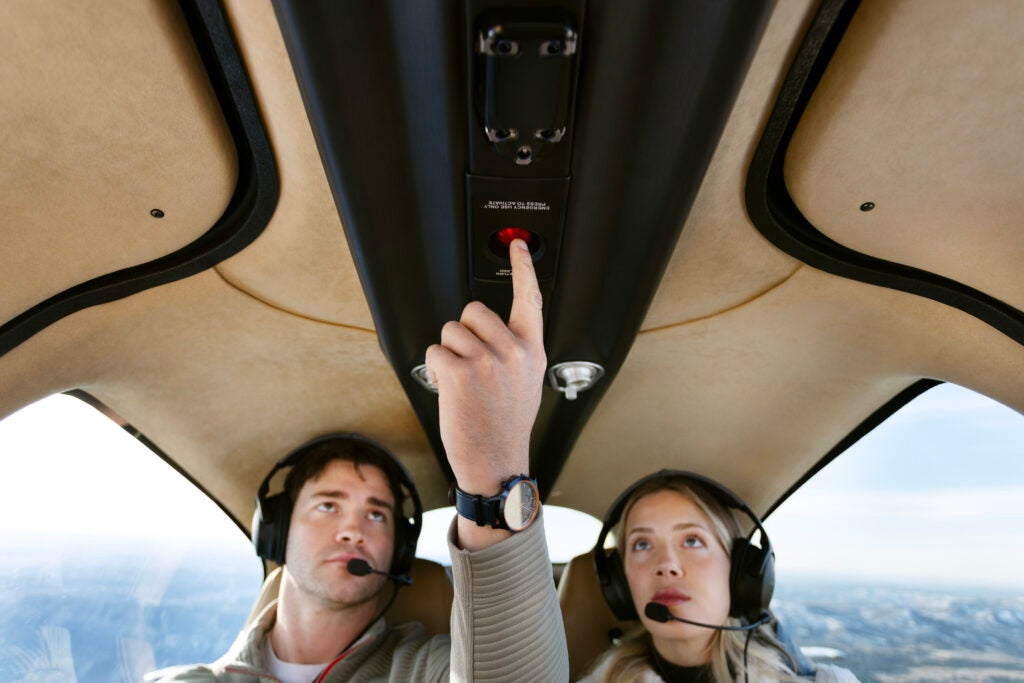
In May 2025, Cirrus brought Garmin’s emergency autoland technology to its SR Series G7+. New SR20, SR22 and SR22T aircraft received Safe Return as standard equipment. Emergency autoland had already reached turbine aircraft, including the Vision Jet. Bringing it to piston airplanes widened the audience.
During pilot incapacitation, a passenger can activate the system. It selects a suitable airport, communicates the emergency, flies the approach, lands, brakes and shuts down the engine. An alarming sequence of unfamiliar tasks becomes one accessible action.
“We like to say that safety is standard at Cirrus.”Ivy McIver, Cirrus executive, speaking to AOPA in 2025
Standard still has a cost. AOPA reported that the broader G7+ upgrade added roughly $40,000 to an SR20 and $70,000 to an SR22T in 2025. Those figures covered an upgrade package with other features, rather than a standalone autoland option. Cirrus’s 2025 US price sheet listed an SR20 Premium at $734,900, before additional options.
Different emergencies. Different tools. Aircraft limitations still apply.
03 A ladder from propeller to jet
Cirrus builds for owner-pilots, families and business travelers who want control over regional trips. The SR20 offers an entry into the range; the SR22 adds performance, and the SR22T adds turbocharging. The Vision Jet provides a single-engine jet step above them. Flight schools and some charter operators widen the customer base.
The convenience is specific: an owner can plan around their own departure and destination instead of an airline timetable. It comes with a different workload. Someone still arranges instruction, keeps the airplane airworthy and makes weather decisions. Cirrus’s support offerings address those chores, which matter well beyond the excitement of a delivery day.
The Vision Jet entered service in 2016 and earned the 2017 Collier Trophy, presented the following year. Its February 2026 G3 update added a redesigned interior, expanded seating options and air traffic control datalink. The proposition combines aircraft capability with attention to the people sitting behind the pilot.
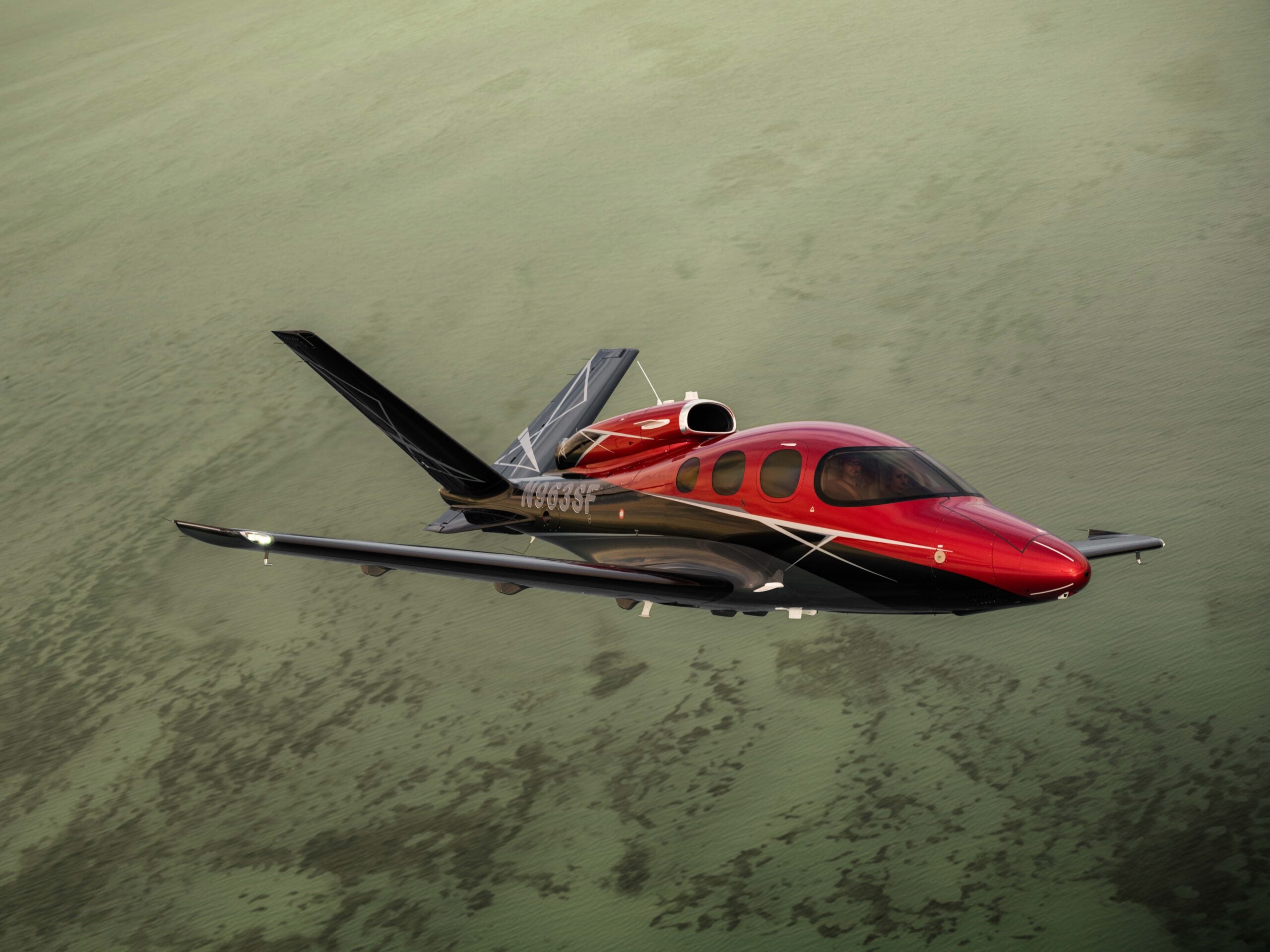
Depending on the mission, alternatives include Cessna and Diamond piston aircraft, Piper and Daher turboprops, and small twin-engine jets. Cirrus’s distinctive combination is the aircraft, its recovery systems and the surrounding ownership experience. A buyer still has to compare payload, runway requirements, range and cost for the trips they actually make.
04 The sale keeps going after delivery
An airplane requires an ecosystem: instructors, maintenance, parts, recurrent learning. Cirrus sells into that continuing relationship through Cirrus Approach, its service network, warranties, connected aircraft tools and management offerings. Its careers page even advertises an employee flying club, giving staff a discounted way into the activity they support.
The numbers show why the continuing relationship matters. Cirrus reported $1.354 billion in 2025 revenue. In the first half of 2026, revenue reached $737 million; approximately $120 million came from Cirrus Services and Other. The public parent listed in Hong Kong in 2024, following CAIGA’s acquisition of the legacy business in 2011.
Rounded figures. Services and other contributed about 16%.
05 The next customer has homework
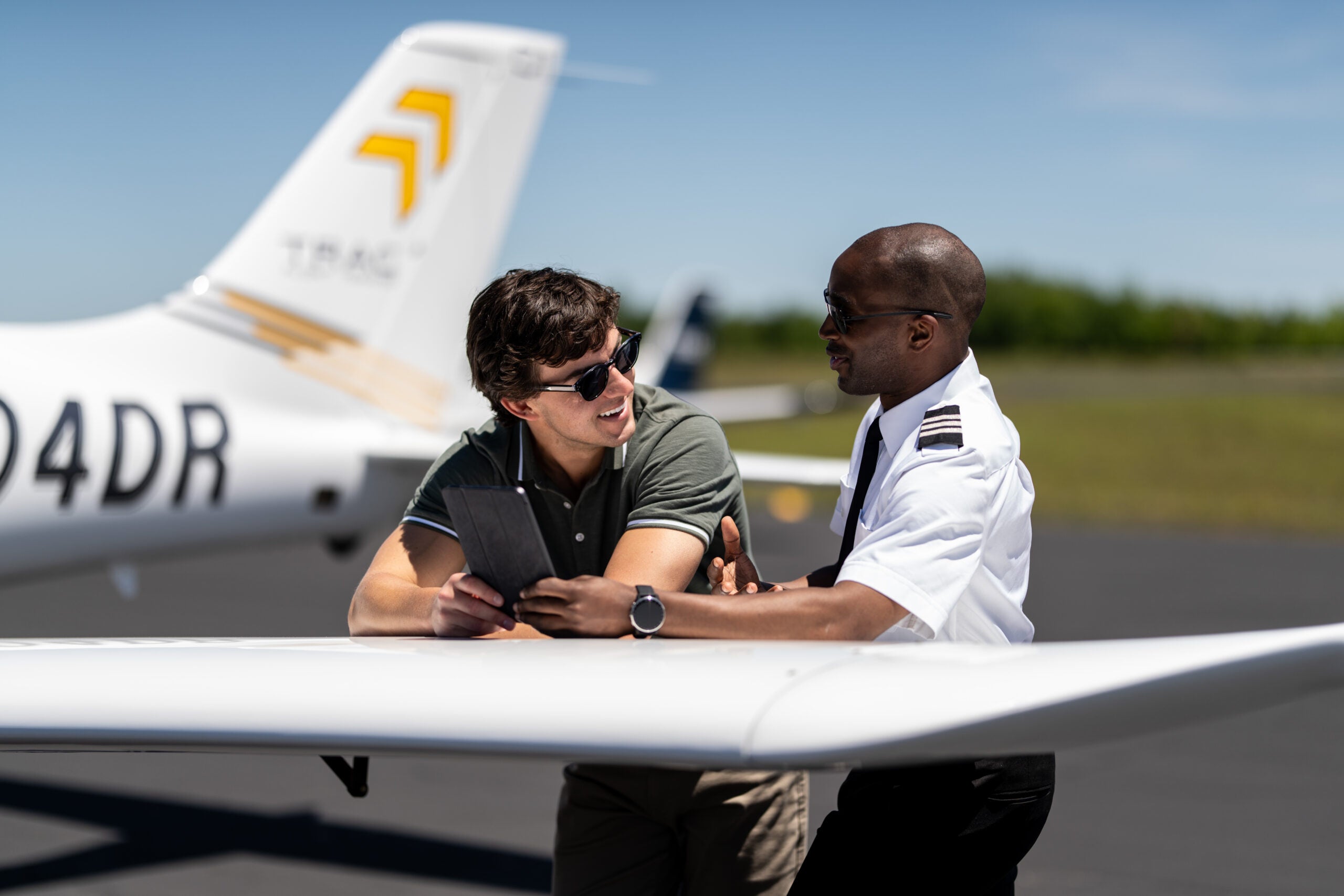
In July 2026, Cirrus introduced the TRAC10, a three-seat professional trainer with a Rotax engine, Garmin flight deck and CAPS. More than 100 aircraft had been ordered by 13 flight schools. US deliveries were scheduled for 2027. Texas Southern University had already received G7+ aircraft in 2025, making universities an existing market for the safety pitch.
The factory needs attention, too. Cirrus acknowledged that the 2024 G7 launch created production challenges and pushed deliveries later in that year. In October 2026, it announced a separate investment of over $8 million in a Duluth engine-testing facility, expected to open in summer 2027.
The transferable idea is to design recovery for the least experienced person involved. Its limits matter just as much. Safe Return assumes functioning aircraft systems; it cannot repair an engine or damaged controls. CAPS has operating limits, too. Training, maintenance and sound decisions remain essential. Cirrus makes that human predicament tangible: someone aboard may need help, and the product should have an answer ready.
Cirrus website ↗ · Aircraft · Learn to fly · Company news
LinkedIn · X · Instagram · Facebook
Watch the aircraft at workG3 Vision Jet launch film ↗
Safe Return flight demonstration + Ivy McIver interview ↗
G3 Vision Jet flight demo ↗
Cirrus on YouTube ↗