Cindy Taff’s daughter got to Sage Geosystems before she did. Brianna Byrd took an internship there in the summer of 2020. Her mother was still at Shell, where she had spent most of her working life. The daughter had questions about the future of energy. Soon, the mother had questions about the daughter’s work. For a family accustomed to an experienced engineer explaining the business, the exchange had acquired an agreeable new direction.
By January 2021, Taff had joined Sage as chief operating officer and employee number four. She brought decades of experience to a company small enough that the employee count could be managed on one hand. It was a considerable change of scale. It also put her back alongside people whose work she already knew, pursuing a resource that had interested her before she left Shell: the heat underground.
The mechanical side of the family
Her father was a geophysicist at Mobil. The family settled in New Orleans when she was about ten, and she went on to Louisiana State University. The energy business was familiar territory, although she chose a different way into it. Rocks were her father’s department. She preferred the machinery.
As a young person, she worked on bikes and cars. Mechanical engineering gave that curiosity a formal education; her public university dates run from 1980 to 1984. In 1985, she joined Shell as a production engineer. The work moved her into petroleum engineering, well construction and the practical business of getting something valuable out of formations that were rarely inclined to make the task convenient.
That distinction matters to her geothermal argument. Taff’s education was in how systems work. Her career taught her what happens when those systems meet an actual well, an actual contractor and an actual bill. A drawing can be elegant at very little expense. A drilling operation demands a more persuasive kind of elegance.
She spent roughly 35 years at Shell, eventually becoming vice president of global unconventional wells and logistics. Her responsibilities covered more than 350 staff and 1,200 contractors in five countries, with annual spending around $1 billion. These are useful numbers for understanding her background: she had experience coordinating people and equipment across operating environments, with the financial consequences arriving in large denominations.
Employee number four
Geothermal had already crossed her desk. At Shell, her team prepared cost estimates for potential geothermal wells. The projects did not progress to drilling. Taff kept returning to the overlap: understanding the subsurface, constructing wells, building facilities, managing projects and negotiating the work. An industry with so much relevant experience seemed well placed to try.
At Sage, two former Shell colleagues supplied a route into that attempt. Lance Cook and Lev Ring brought technical experience she knew from years of working in the same industry. Their connection reached back to the 1990s. Cook contributed ideas; Ring brought mathematical and physical modeling. Geothermal advocate Jamie Beard helped set the conversations in motion.
The move therefore combined an unfamiliar organization with familiar professional relationships. That is a quieter sort of career change than the usual leap-into-the-unknown account. Taff knew something about the people she would depend on. She could judge their work. They could begin with a shared vocabulary, then argue about what needed to change.
She became CEO in 2022. The role required more than repurposing a drilling résumé. Sage had to work out which technical choices could become a business, where to demonstrate them and how to explain a technology that could serve several different purposes. An engineer’s enthusiasm for possibilities can make a company’s message rather crowded. Customers generally prefer to know what, exactly, they are buying.
A reservoir that breathes
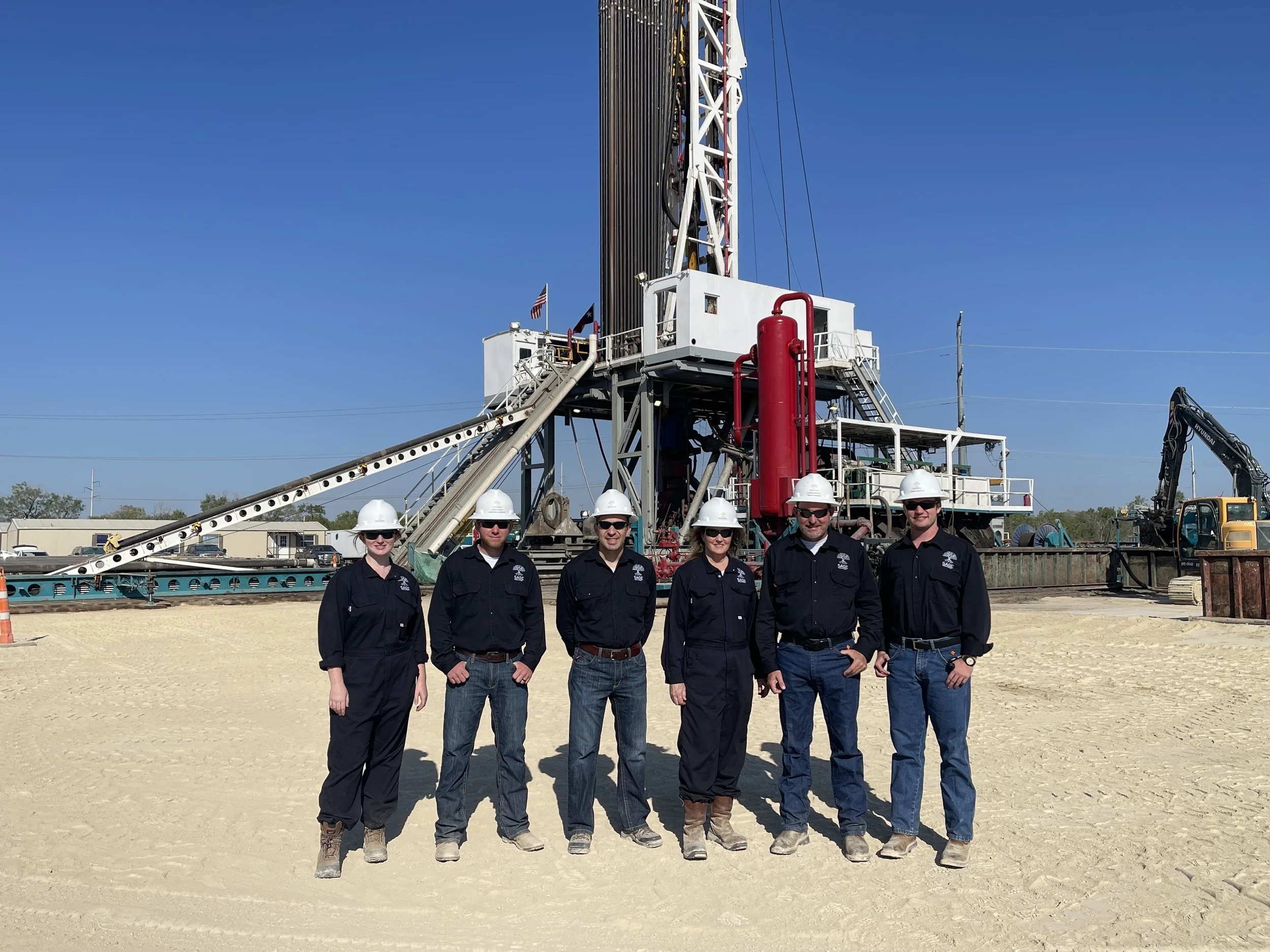
Sage’s early learning came from a South Texas well that had previously been drilled in search of gas. Reentering an existing well gave the team somewhere to test its ideas in the ground. That last phrase is important. Underground behavior has a habit of adding qualifications to a promising model.
The team studied earlier federal geothermal research, including work going back to the 1970s. The recurring problems included losing water into the formation and spending too much energy moving it around. Generating electricity is less useful if the system consumes a large share of that electricity to keep itself running. The customer gets what remains.
Sage adapted a cycling method used in oil and gas, commonly called huff-and-puff. Taff describes its reservoir as operating like a lung. Water enters a fracture network under pressure; the surrounding rock’s tendency to close the fracture helps drive water back toward the surface. The company aims to make pressure part of the useful system, while controlling the fracture and reducing losses.
Storage and generation use related underground ideas for different jobs. Storage takes electricity available at one time and uses it to pressurize water underground, recovering energy later. Geothermal generation harvests heat. Confusing the two makes an earthen battery sound like an inexhaustible socket. Taff has spent considerable time explaining why her company works on both.
In a December 2025 podcast, the setting was a storage facility at San Miguel Electric Cooperative in rural Texas. The attraction was straightforward: renewables can produce electricity at inconvenient times, while users continue to want it at other times. Pumping water underground offers a way to move some of that energy across the clock without needing a mountain and an upper reservoir.
The sequence was deliberate. In 2023, Taff described storage as a first step toward the more involved work of geothermal generation. That approach lets the company learn about the underground system while developing a commercial use for it. It also gives a chief executive a communications job: explaining a technology with several applications without allowing any one of them to swallow the rest of the story.
The people who make the well work
Ask about the machinery long enough and Taff brings the conversation back to the team. Her stated lesson from Shell is to look after people so they can look after the business. That is a practical position for a leader whose plans depend on specialists doing difficult work together. No chief executive can personally supply every answer a well will demand.
Her own account of being a woman in the industry includes both encouragement and resistance. Some men mentored her; others doubted that women belonged in engineering. She has described enjoying the work while dealing with those experiences. There is no need to make the career neater than the person remembers it.
She has also put effort into the next generation. In 2023, she worked with female students at a Houston high school on ways to increase women’s participation in geothermal. Their findings went to industry organizations. She has emphasized reaching students before college, when decisions about school subjects can already be opening or narrowing a route into technical work.
Outside the company, her interests still involve a certain amount of horsepower. She enjoys time at her ranch with horses, four-wheelers and tractors. The childhood fascination with machines appears to have acquired more acreage.
The next test has an address
Recognition has brought Taff to wider audiences. TIME included her in its 2024 climate leadership list. In June 2025, she presented her geothermal argument at the TED Countdown Summit; TED published the video on YouTube in February 2026. A public talk can introduce the idea. A functioning project has to carry the argument further.
In January 2026, Sage announced more than $97 million in Series B financing, co-led by Ormat Technologies and Carbon Direct Capital. Taff’s announcement thanked investors and her team, describing the money as support for the move toward commercial deployment. Capital provides the opportunity to do the work. It also makes the next set of results more consequential.
On September 22, Sage identified Ormat’s Blue Mountain geothermal plant in Nevada as the home of Project Vector. The planned two-well system would supply geothermal heat to an existing power plant. That arrangement gives the project surface infrastructure and a grid connection, allowing attention to concentrate on Sage’s subsurface approach.
The announced schedule called for drilling to begin in the fourth quarter of 2026, first electricity in 2027 and full-scale production in 2028, subject to regulatory approvals. Those are targets. The sequence matters more than an impressive ribbon-cutting date: drill, test, learn how the reservoir performs, then establish what the project can deliver.
“The technical room is easier.”Cindy Taff, reflecting on the difference between engineering discussions and commercial conversations at Climate Week, September 2026
A different sort of power conversation
Her recent public comments describe a change in the questions buyers ask. They want a location, a timetable and a credible counterparty. An explanation that the physics works can only take a conversation so far. This is territory Taff recognizes from a career in which contracts and procurement belonged in the same discussion as engineering.
The growth of AI infrastructure adds urgency. On The Data Center Frontier Show in July 2026, she discussed the limits of talking about total generating capacity when electricity cannot reach the customer who needs it. Transmission, interconnection and the distance between a power source and its load shape the available choices. A megawatt becomes commercially interesting in a particular place, at a particular time.
Taff’s ambition is to build an operating record that makes geothermal a competitive purchase. The work now involves persuading the ground, the equipment, the balance sheet and the customer to agree with one another. Her first career gave her a long education in that kind of negotiation. Her second is putting it to another use.
Follow the work
- Sage Geosystems - projects and company updates
- Cindy Taff on LinkedIn - her public professional profile
- Watch: Taff’s TED talk - filmed at TED Countdown 2025
- Listen: Cleaning Up with Bryony Worthington - a conversation about her career and geothermal
- Read: her September 2026 interview - commercial plans and the Nevada project
- Read: Women in Geothermal’s career profile - fieldwork, leadership and life outside work