At Metaldom, a steel producer in the Dominican Republic, obtaining commercial credit information could take up to 25 days. The company used separate platforms for domestic and international information. Support was another frustration. Consider the awkwardness: a customer wants to buy steel, but the information needed to extend credit is still somewhere else. The sale has reached a waiting room.
- CIAL connects business information to credit and supplier decisions.
- Its regional focus is Latin America and the Caribbean.
- The practical lesson: fix the handoffs alongside the data.
The expensive part was the waiting
CIAL Dun & Bradstreet brought Metaldom’s regional and international research into CIAL360 Credit. In CIAL’s published customer case, the wait fell to 48 hours and credit-investigation costs dropped 90%. Those are reported results from one implementation, rather than a promise for every buyer. They nevertheless explain the appeal better than another database-size boast.
The bottleneck came before the decision. Staff had to obtain enough usable information to make it. Bringing the research together changed what the team could do with its time. A credit limit recommendation became part of a working process, alongside payment history and other risk indicators.
A young company with an old address book
CIAL began in October 2016, when the Cohen family established the business after acquiring rights and data from Dun & Bradstreet. CIAL360 followed in 2017. The much older dates in the company’s history belong to the Dun & Bradstreet lineage. That distinction matters: CIAL built its regional business around an existing information network.
Today, it describes itself as the exclusive Latin American partner of the Dun & Bradstreet Worldwide Network. CIAL reports more than 20,000 customers and coverage across 43 countries in Latin America and the Caribbean. Its proposition combines global company records with regional knowledge and software that moves an assessment from research to approval.

The people are part of that proposition. CIAL says analysts speak directly with business leaders, while data engineers gather information from government records, legal files, chambers and credit agencies. This is information work with both a human and a computational side. The company describes collaboration through the phrase “Juntos Somos Mejores”: together we are better.
A search result still needs a decision
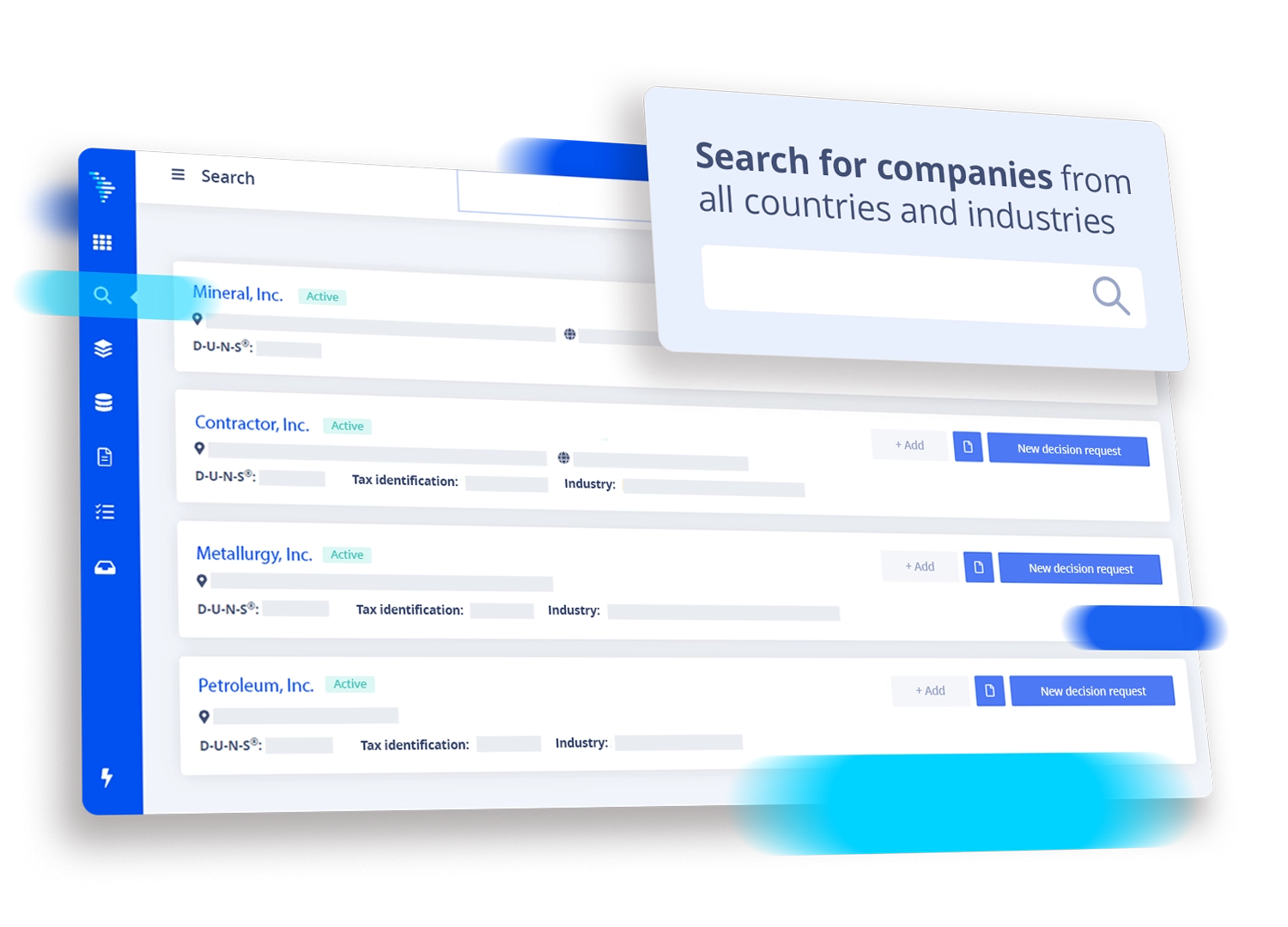
CIAL360 Credit lets finance teams combine customer information with Dun & Bradstreet data, configure assessment rules and organize approvals. Different customer segments can follow different policies. Teams can track the history of an assessment, share information and audit decisions. The product addresses the organizational problem surrounding the score as much as the score itself.
At Refidomsa, the Dominican refinery, credit analysis involved repeated manual work. As analyst Yuleismy Nivar put it in CIAL’s customer story:
“Everything was written from scratch by hand.”Yuleismy Nivar, Refidomsa
CIAL’s case describes automatic indicators and centralized documentation replacing that routine. Refidomsa reported a 102% increase in total credit approvals. That figure measures approvals, not proof that every new exposure performed well. Still, the mechanism is easy to understand: less preparation leaves more room to assess an application.
LeasePlan Mexico offers another illustration. CIAL’s case says credit evaluations had taken more than 14 days before the Decision Engine implementation. They subsequently took four days or less. The point is not simply that a finance team became quicker. A customer waiting for an answer could receive one sooner, while the credit team could examine payment trends and choose its relationships more carefully.
The same question, facing the other way
Credit teams ask whether a customer can pay. Procurement teams ask whether a supplier can deliver. CIAL360 Supplier applies a related approach to supplier evaluation and onboarding: gather documents, assess risk, apply internal criteria and make the approval visible. Its features include supplier dependency information and ERP connections. Supplier+ extends the offering into broader supplier relationship management.
Compliance Intelligence adds screening against sanctions, politically exposed persons and adverse media, together with ownership information and continuing monitoring. Sales teams have a different entry point through D&B Hoovers, which supports company research, prospecting and account planning. The commercial relationship is the common unit; each department brings a different question.
CreditCan they pay?
ProcurementCan they deliver?
ComplianceWho is behind it?
Nine digits are a beginning
The D-U-N-S Number is a nine-digit business identifier. MyCIAL lets businesses manage their commercial profiles and search or verify identifiers. The appeal is mundane and useful: before assessing a company, establish which company it is. Similar names and duplicate records make a poor foundation for a financial decision.
An identifier establishes identity; it does not settle creditworthiness. That requires payment behavior, financial information and judgment about the proposed relationship. Buyers can also bring business information into existing applications through Direct+ API. For a team already working inside an ERP, avoiding another destination can be part of the value.
Buy the process you can measure
CIAL’s business model licenses information and software under customer orders. Its core product pages lead to a demo. A separate free standard D-U-N-S request has a stated delivery window of 30 business days. For an enterprise buyer, the useful cost calculation includes integration work, configuration and staff time alongside the commercial quote.
Alternatives include Creditsafe’s credit information and monitoring, and Coface’s Urba360 risk platform. CIAL’s distinctive case rests on its Dun & Bradstreet relationship, regional expertise and connected workflows. A sensible comparison starts with the actual companies a buyer needs to investigate, then tests information depth and the work required to reach a decision.
The lesson worth copying is specific: time the current process, collect information once, write approval rules explicitly and assign exceptions to a person. Measure turnaround and investigation costs before and after. Automation needs relevant records and usable policies; an obscure counterparty or an unresolved exception still demands attention. CIAL’s terms describe its services as decision-making tools. The responsibility for extending credit remains with the business making the sale.
CIAL website ↗ · Customer stories ↗ · Company blog ↗