There are two kinds of suspense in biotechnology. The first belongs to the laboratory: an experiment works, a signal appears, an idea proves that it is more than an idea. The second arrives later and wears less flattering clothes. Can the process be repeated? Can it survive a larger vessel, a different site, a new shift, a regulatory inspection and the merciless calendar of commercial supply? Christopher Murphy has spent his career in that second act.
He began in quality control at American Cyanamid in Pearl River, New York, then moved through viral-vaccine development and bulk manufacturing. The sequence matters. Quality control teaches a particular form of modesty. Biology is allowed to be temperamental; the operator is not. A batch does not care about the elegance of the presentation that preceded it. It either meets its specifications or it does not.
More than 35 years later, Murphy is chief executive of ElevateBio, a Waltham company built around an unusually broad proposition: put genetic-medicine design, process development and manufacturing within one connected system. He joined in January 2026, after leading Akron Bio and after senior operating roles at Brammer Bio, Thermo Fisher Scientific and Sanofi Genzyme. His title has changed often. The underlying assignment has hardly changed at all: take complicated biological work and make it dependable.
The apprenticeshipA career written in clean rooms
After American Cyanamid, Murphy took responsibility for U.S. contract manufacturing at BioReliance, with a focus on viral vectors and cell banking. At Sanofi Genzyme, his remit widened. He helped develop manufacturing processes and analytical methods for adenovirus and adeno-associated virus vectors, established a clinical gene-therapy facility in San Diego, led commercial recombinant-protein manufacturing in Framingham and eventually ran the Allston Landing biologics site in Boston.
This is not the résumé of a scientist who wandered into management. It is the résumé of an operator who kept being handed larger versions of the same problem. A process must move from bench to plant. A plant must become a system. A system must accommodate people, equipment, air handling, documentation, raw materials and the unpleasant possibility that any one of them will misbehave before lunch.
The operating route
Brammer Bio made the pattern especially visible. Murphy joined in 2017 as chief manufacturing officer, when the company was expanding clinical capacity in Florida and preparing commercial gene-therapy operations in Massachusetts. He later served as chief operating officer, responsible for viral-vector development and manufacturing across four sites. In 2019, Thermo Fisher Scientific acquired Brammer. Murphy helped manage the integration and became vice president and general manager of Viral Vector Services.
“We have great respect and humility for the fact that we are making viruses that are used to create unique and life-changing therapies.”Christopher K. Murphy, on viral-vector manufacturing
The word “humility” is doing serious work there. In an industry fond of heroic metaphors, Murphy's language tends toward flexibility, transferability, quality and confidence. These are not words that sell movie rights. They are words that keep a facility open.
The operating ideaFlexible, but never casual
Murphy has argued that flexible facilities let manufacturers use different technologies, platforms and scales. Flexibility, in this sense, is not improvisation. It is the carefully engineered ability to change without losing control. Rooms must accommodate distinct processes. Equipment must suit products at different stages. Teams must transfer knowledge between development and manufacturing without turning every handoff into a fresh expedition.
That last part is easy to underestimate. A process is more than the written instructions that travel with it. It includes the judgment behind the instructions: which variable is harmless, which noise is a warning and which apparently small shortcut will be waiting several steps later with an invoice. Murphy's years across development, site operations and commercial supply put him repeatedly at that border. His public comments return to the need to test processes near scale, build analytical capability beside manufacturing and think about commercial requirements while a program is still young.
The tension is almost comic. A manufacturer must be ready for many kinds of work while behaving as if every detail has only one acceptable answer. It must be adaptable in design and stubborn in execution. Murphy's career has been a long education in that paradox. At Brammer, it meant multiple vector systems, production platforms and sites. At Thermo Fisher, it meant fitting specialist expertise into a much larger network. At ElevateBio, it means offering partners a range of technologies without allowing range to become fragmentation.
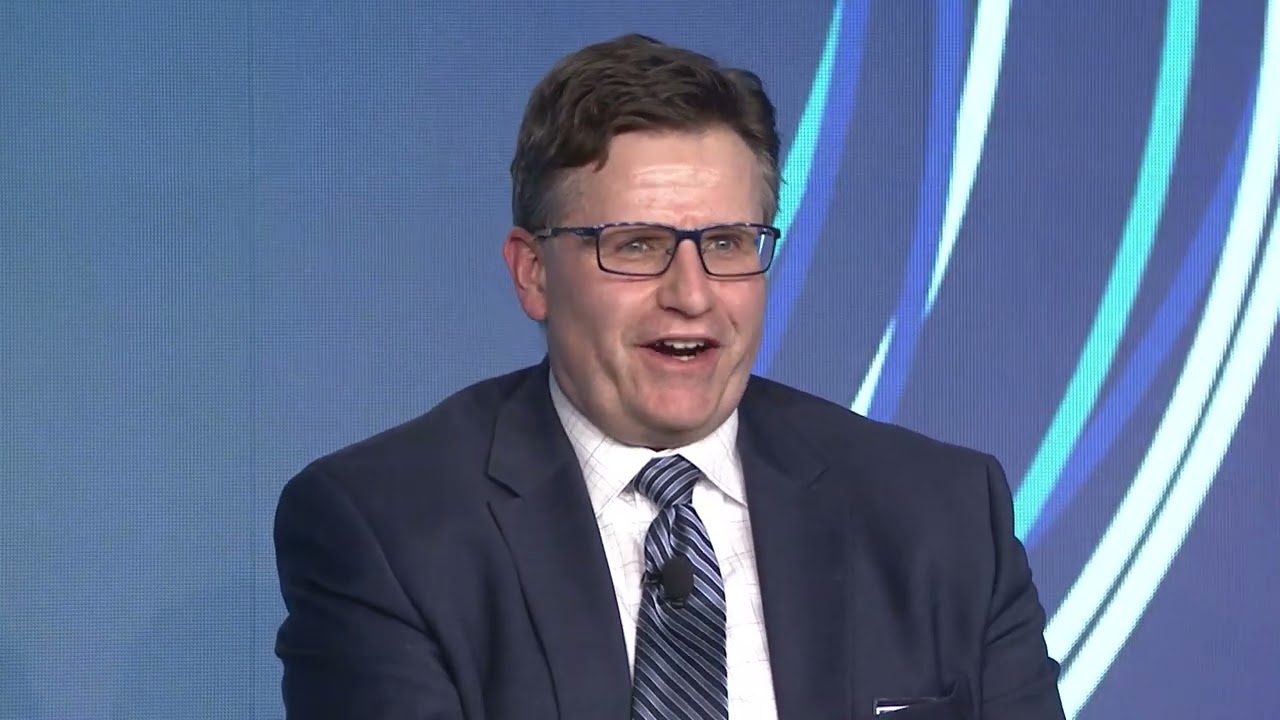
The new briefOne roof, fewer excuses
Murphy's arrival at ElevateBio put him in charge of a business whose structure resembles his career. Life Edit, its gene-editing and research arm, works on the design side. BaseCamp handles process development and cGMP manufacturing. The wager is that keeping those capabilities close can reduce the handoffs at which time, information and hard-won process knowledge have a habit of disappearing.
His stated priorities are equally connected: expand partnerships across manufacturing services and the gene-editing platform, industrialize workflows and help establish new standards. “Industrialize” can sound as if someone intends to put a conveyor belt beside a pipette. The reality is more exacting. Many advanced-therapy processes remain manual, customized and stubbornly difficult to scale. Industrialization means automation where it improves consistency, digital systems where they improve control, and a process designed for its eventual size before the early version becomes sacred.
That strategy now has a physical address in Pittsburgh. ElevateBio's second BaseCamp is a 125,000-square-foot facility under construction at Hazelwood Green, the former site of a steel mill. It is planned to become operational in 2027. The symbolism is almost too tidy: a city famous for making the material of one industrial age prepares to manufacture the intricate products of another.
Murphy has leaned into the comparison, though biology refuses to behave like steel. Cells vary. Viral vectors are fragile. Processes that look sensible at small scale can acquire expensive personalities when enlarged. Pittsburgh's real advantage is not romance but infrastructure: universities, engineering talent, an industrial workforce and a willingness to treat manufacturing as part of innovation rather than the chore that begins after innovation is finished.
A laboratory can prove that a process works once. Murphy's domain begins when someone asks it to work on schedule.
The other infrastructureFactories need futures
Murphy's professional life has a parallel track outside the plant. He spent a decade with the MassBioEd Foundation, including service as board chair, supporting science education and pathways into life-sciences work. He is now board president of West End House, a Boston youth-development organization that serves more than 1,500 young people.
It is tempting to file such work in the polite final paragraph reserved for civic virtue. In Murphy's case, it belongs closer to the operating thesis. Biomanufacturing is limited by equipment, but it is also limited by who has been trained to use that equipment, who can enter the field and whether a region can build a durable workforce. A factory without a talent pipeline is merely an expensive room with excellent ventilation.
The MassBioEd years also reveal a consistent preoccupation with access to technical careers. West End House broadens the canvas: academic support, arts, career readiness and the patient construction of possibility. The connection between youth development and genetic-medicine manufacturing is not direct, nor should it be forced. But both depend on institutions that make complicated futures feel reachable.
The betMaking novelty grow up
ElevateBio hired Murphy at a moment when genetic medicine has accumulated brilliant tools and equally impressive bottlenecks. The field can edit, engineer and deliver with increasing precision. Yet every additional possibility creates another manufacturing question. Which process transfers cleanly? Which measurement predicts performance? Which platform remains flexible without becoming vague? Which cost can be removed without removing control?
Murphy's advantage is not that he has a slogan for each question. It is that he has encountered earlier versions of them at several scales: in quality control, in clinical supply, across commercial biologics, inside a fast-growing specialist company and during an acquisition by a global one. At Akron Bio, he moved fully into the chief executive role. At ElevateBio, the pieces have grown broader again - gene editing, cell therapy, viral and non-viral delivery, RNA, process development and manufacturing, all expected to function as more than a list.
The assignment is to make integration real. That requires commercial partnerships, technical judgment and the unfashionable management of dependencies. It also requires resisting the industry's occasional belief that a difficult manufacturing problem can be solved by giving it a more inspiring name.
Murphy's career offers a sterner and more useful proposition. The miracle is not diminished when it becomes repeatable. It becomes available. And somewhere between the discovery and the loading dock, amid batch records, clean-room choreography and a thousand choices invisible to the finished product, repetition becomes its own form of invention.