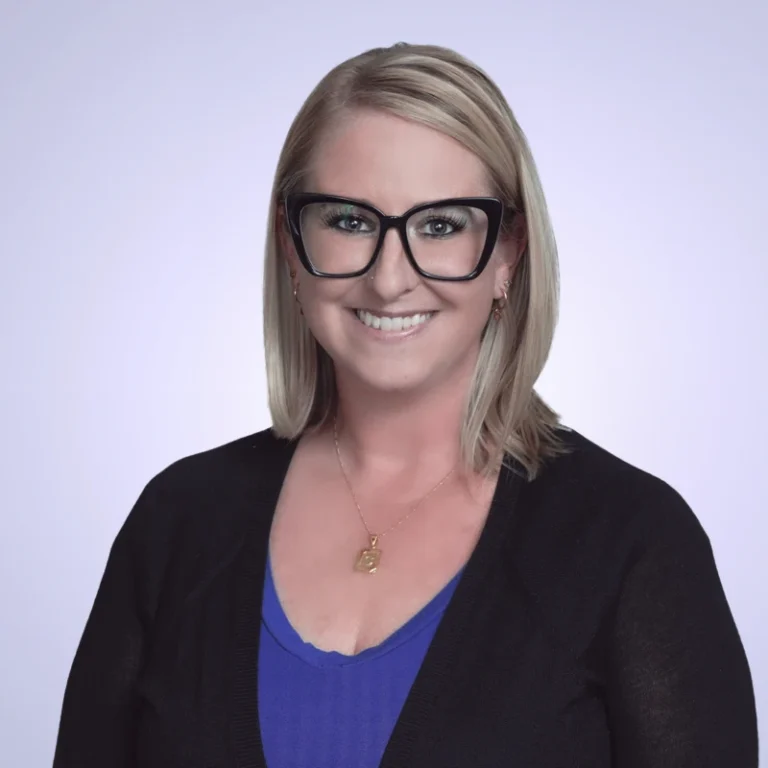
The Clinician Who Became CEO
Most healthcare CEOs inherit a company. Christina Sanders grew one - from the inside, through the clinical trenches. She arrived at Opya in 2015, a Board Certified Behavior Analyst with a Master's in Applied Behavior Analysis from Ball State University and years of hands-on work in the field. By the time she ascended to CEO, she had already rebuilt the clinical infrastructure from the ground up as VP of ABA Clinical Operations.
That sequence matters. When Sanders talks about therapy quality, she is not reciting investor talking points. She is describing a discipline she practiced. When she negotiates insurance contracts or evaluates a clinical acquisition target, she understands exactly what the therapy looks like at 8 a.m. on a Tuesday in someone's living room - because she has been in that room.
Opya operates in one of the most demanding corners of healthcare: Applied Behavior Analysis (ABA) therapy for children under six diagnosed with autism. The early intervention window is narrow. The clinical stakes are high. And the market is flooded with providers who deliver services of wildly variable quality. Sanders built Opya to be the exception - earning the company one of only eight BHCOE 3-Year Accreditations awarded to ABA providers in California.
"Opya strives to be a leading provider of early intervention autism therapy recognized for high clinical quality and exceptional service delivery."
- Christina Sanders, CEO, OpyaThe credential is not honorary. The Behavioral Health Center of Excellence audits providers on clinical outcomes, staff supervision ratios, family satisfaction, and care documentation. Earning it once is an achievement. Earning a three-year designation is a statement about the organization's systems - and a reflection of who built them.
Before Opya, Sanders developed her clinical chops at Trumpet Behavioral Health and the Center for Learning and Autism Support Services (CLASS). She also spent time at the YMCA, working with youth in a different context but building the same instinct: that care, consistently delivered, changes trajectories. When Jonathan Wright founded Opya in 2015 around the idea that "Op" - optimism - belongs at the center of autism care, Sanders was among the early team members who made that principle operational.
Board Certified Behavior Analyst (BCBA)
The BCBA credential is issued by the Behavior Analyst Certification Board and requires a graduate-level degree in behavior analysis or a related field, supervised practical experience, and passage of a rigorous national examination. BCBAs design and supervise behavior-change programs, with particular application in autism spectrum disorder intervention. Less than 50,000 active BCBAs practice in the United States. Christina Sanders holds this credential alongside her M.A. from Ball State University's Applied Behavior Analysis program.
Building a Company Worth Copying
The Series A in August 2021 told a story about who believed in Opya. Panoramic Ventures led the $15.4 million round. SoftBank's SB Opportunity Fund came in alongside the Disability Opportunity Fund - a rare combination of corporate venture capital and disability-focused impact investing. Altitude Ventures and Raven One Ventures also participated. That investor mix does not happen by accident. It reflects a company that could speak fluently to both financial returns and social outcomes - and could prove both with data.
By 2022, Opya had expanded into Southern California's Orange County market, where it offered services with no waitlists - a meaningful differentiator in a sector notorious for long intake queues. Families of children recently diagnosed with autism are navigating one of the most stressful periods of their lives. Waiting months to access evidence-based therapy erodes exactly the intervention window the science says is most consequential. Opya's operations model was designed around closing that gap.
In 2024, Sanders led the acquisition of the Center for Autism Spectrum Therapy (CAST) in Culver City - Opya's first move into center-based care. CAST brought in-center, home-based, and school-based services alongside speech, physical, and occupational therapy. For Opya, which had operated almost exclusively as an in-home provider, it was a meaningful expansion of the care model. Then came the rebrand: Opya became Spectrum Pride, extending services from young children to individuals of all ages across the autism spectrum.
Milestones That Count
From Clinician to CEO
What Early Intervention Actually Means
One in 30 children in the United States receives an autism diagnosis. For many of them, the first years after diagnosis are the highest-value intervention window the neuroscience literature has identified. ABA therapy in that window does not just teach skills - it shapes the neural architecture that makes skill acquisition possible. The stakes of getting it right are hard to overstate. The stakes of getting it wrong are equally clear.
What Opya built under Sanders' clinical leadership is a model that takes in-home therapy seriously as a clinical modality, not just a convenience. Children learn in the environments where they live - at the kitchen table, during bath time, on the playground. Bringing therapy into those spaces means the gains transfer. The family becomes part of the intervention. Caregiver training is embedded in every Opya engagement.
The 2024 acquisition of CAST extended the model into centers - places where peer interaction and group skill-building happen naturally. For older children who have aged out of early intervention's narrow window, and for adults on the spectrum seeking support, the Spectrum Pride rebrand signals that Sanders is not building a niche provider. She is building infrastructure for a long-term relationship with the autism community across California.
The technology stack at Opya - built on tools including WP Engine, React Redux, and Google Apps - is not incidental. Data-driven clinical practice is how you demonstrate to insurers, to families, and to accreditation bodies that what you do works. Sanders has built a company that can prove it.