In 2021, Chris Huang had substantial financing news to discuss. Virogin Biotech, the company he had co-founded six years earlier, announced an $80 million Series D1 round and later a $127 million Series D2. Yet tucked into his account of the year was a less conspicuous development: the company was implementing SAP. Enterprise software had found its way into the founder’s account of progress. Somewhere between the investment committee and the next expansion, somebody had to make the organization work.
That detail provides a useful entrance to Huang’s story. His responsibilities at Virogin cover strategy and operations. The title contains the direction of travel and the business of getting people there. For a company working across Canada and China, both deserve attention. An international footprint looks tidy on a website. Managing it requires decisions about responsibility, records, budgets and the people who must make sense of all three.
Huang arrived at that assignment with a management career already behind him. His career winds through operating companies, senior positions, board responsibilities and financial qualifications. It is an unusually useful prehistory for a founder: years spent dealing with organizations before taking on the task of building another one.
A career before the company
Huang entered Fudan University in 1987 and graduated with a management degree in 1991. His early career began at Shenzhen Southern Pharmaceutical Factory. Over the following years, he moved through deputy general manager and general manager positions within the Sanjiu business network. His duties eventually included directorships and work as a board secretary, with senior responsibilities at Sanjiu Yigong Biochemistry continuing through 2008.
The sequence gives his later founder title some texture. Supply management puts an executive close to the practical dependencies of a business. General management widens the field. Board responsibilities bring another set of obligations. In Huang’s case, the preparation came through a succession of jobs rather than a single dramatic leap. A résumé can make those transitions look effortless. The variety of responsibilities is the more interesting point.
Education continued alongside the career. He received an MBA from Fudan in 1999 and obtained his CFA qualification in September 2012. These are different ways of approaching the same broad problem: how an enterprise uses its resources. Management considers the organization. Financial analysis considers the capital committed to it. A founder who must speak to employees and investors has reason to understand both vocabularies.
After moving to Canada, Huang returned to China in 2014 to work in venture investment. He had experienced established businesses and was now working around the financing of younger ones. In 2015, he became a co-founder himself. The move put his operating and financial experience inside the same project, with the consequences arriving on one company’s calendar.
Fudan University
qualification
co-founded
University of Hong Kong
A partnership with different jobs
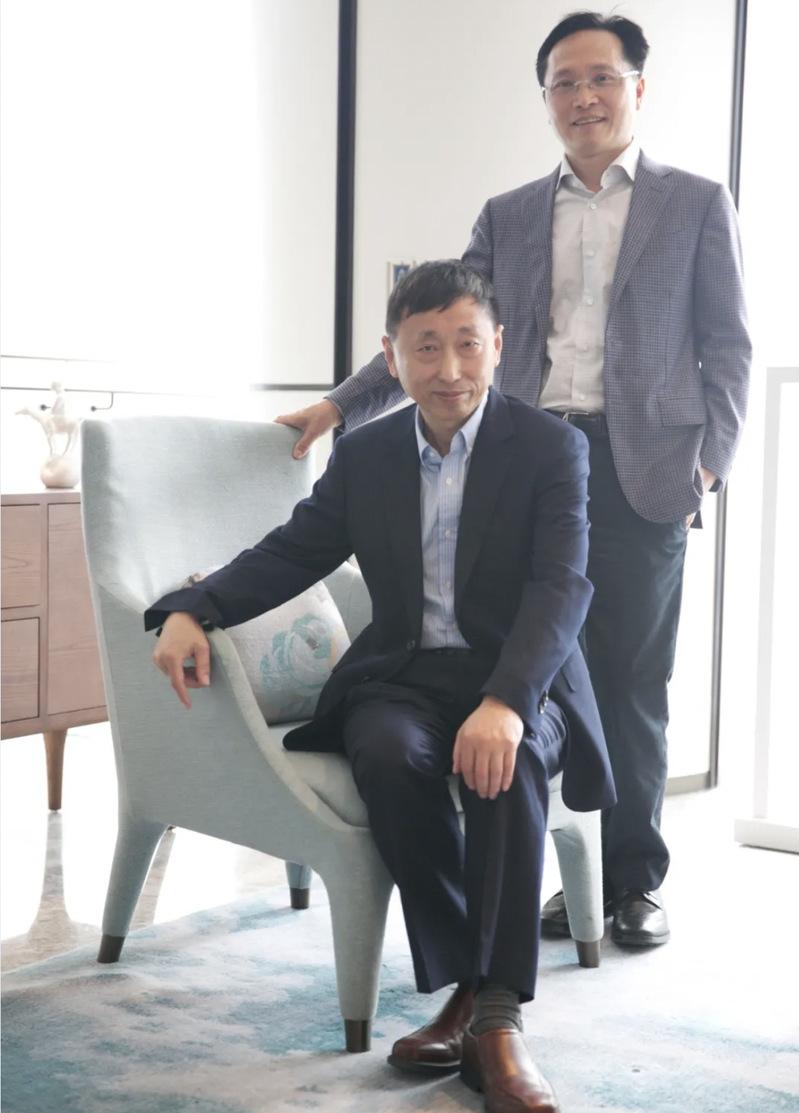
William Jia, Huang’s fellow co-founder, had entered Fudan ten years before him. Their shared university connected two different professional histories. Jia became Virogin’s chief scientific officer; Huang became its CEO. The division is central to understanding Huang’s contribution. His assignment was to help turn the venture into an organization capable of supporting its work, attracting capital and forming the relationships needed for expansion.
Virogin was founded in Canada in 2015. Its research facilities span Vancouver and Shanghai, with contact locations in Richmond, British Columbia, and Shanghai. That geography makes international coordination part of the company’s ordinary working life. A decision made on one side of the Pacific has colleagues, records and consequences on the other. The map becomes a management problem.
Huang also participated in a Vancouver gathering organized around Peking University’s Guanghua alumni community. On a panel about Chinese entrepreneurs developing businesses in North America, he joined other executives discussing local support and investment experience. The subject fits his working territory: building a business across countries requires relationships with the institutions and communities around it. The office lease is only the beginning of becoming local.
In 2019, Virogin announced an agreement to form a joint venture with China National Biotec Group, part of Sinopharm. The proposed company would be based in Nanxiang, Shanghai. The arrangement paired Virogin’s specialist capabilities with a partner’s manufacturing and distribution experience. For Huang, it was another kind of organizational work: deciding what a company should build itself and what it should undertake with somebody else.
The proposed partnership also helps explain why a CEO’s work can extend beyond the company’s own reporting lines. A joint venture has a location and a legal structure, but it also has contributions to coordinate. The 2019 announcement set out complementary responsibilities and capabilities. That is the substance beneath the ceremonial handshake: an agreement about how separate organizations intend to work together. For a founder, choosing that arrangement is part of choosing the shape of the business.
The numbers get larger
The financing sequence soon gave Virogin more resources to work with. A $62 million Series C closed in September 2020, co-led by CMG-SDIC Capital and CDH Investments. The investor group included Korea Investment Partners and several other participants. A financing round brings a company money; a group of institutional backers also brings an audience that will follow how that money is deployed.
In May 2021, Virogin announced its $80 million Series D1. CCT Fund led the round, with participants including Forebright Capital, GP Capital and Panlin Capital. Huang thanked employees as well as investors. That allocation of credit matters in a profile. The announcement carried his title, but his remarks acknowledged the broader organization behind it. A chief executive may sign the statement; the company has to deliver the work.
Announced financing · US$ millions
D2 value follows the December 2021 closing announcement. These are round sizes, not company valuations.
The December 2021 D2 closing announcement put that round at $127 million, led by China Life Healthcare. Among the participants were Shenzhen Capital Group and CMB International Capital, alongside existing investors. The numbers had grown markedly since the company’s earlier $7 million financing in 2016 and $5 million A-plus round in 2017. The scale of the capital available to the organization had changed.
Huang’s account of 2021 placed organizational structure beside financing. He described improvements to the global organization and the start of digital transformation. It is worth reading those items together. Expansion creates more people to coordinate and more decisions to document. Funding gives management choices; those choices create work. The attractive number at the top of a press release has a long administrative tail.
“We’ve further optimized our global organizational structure and initiated digital transformation through the implementation of SAP.”
Chris Huang · December 2021
Those early rounds had their own network of supporters. GP Capital led the 2016 financing. Sangel Capital led the 2017 A-plus round, which also included Furong Capital, an investment and commercialization subsidiary of Fudan University. The alumni connection was therefore accompanied by an institutional link in the company’s financing history. Over time, more investors joined the picture. Huang’s work developed within that widening network of financial relationships.
The software chapter
Virogin’s cooperation with SAP was formalized at a signing ceremony in March 2021. The stated objective was an integrated digital management platform as the business grew more complex. Finance, supply chains and human resources were among the functions involved. These departments seldom appear in founding mythology. They are also departments whose work becomes everyone else’s concern when a company outgrows its arrangements.
Huang has described an eight-month ERP cloud implementation that went live in China and Canada. SAP SuccessFactors also became part of the company’s digital foundation. This was a practical extension of the digital work he had discussed in 2021. A company spanning two countries was putting shared systems beneath its operations. The project gives a concrete view of his operating agenda beyond the financing rounds and their accompanying announcements.
A common system is an attempt to give an organization common records. It asks people to agree on processes and on where information belongs. Cross-border operations make that agreement especially useful. A shared number, a clear responsibility and a record that can be found again are modest achievements in isolation. Multiply the people and the decisions, and they become part of how the enterprise holds together.
There is something pleasingly practical about this chapter of Huang’s career. After years in management and a qualification in financial analysis, he was discussing the systems beneath a growing international business. The earlier experience had an obvious application. Enterprise software supplies few romantic metaphors, though anyone who has chased conflicting spreadsheets may feel it deserves a small love poem.
Buying time is one way to understand the connection between these activities. Capital pays for work that has yet to be completed. Operating arrangements help that work proceed across an organization. Partnerships bring additional capabilities into the plan. Each belongs to the founder’s task of keeping an enterprise equipped for what comes next. Huang’s career gives the financial and administrative parts of that task a visible place in the picture.
Room for the next question
Huang has also described curiosity as a consideration in hiring. It is a useful companion to an operating system: records help people coordinate, while questions help them decide what deserves attention. His management challenge contains room for both. An organization needs dependable arrangements without making every conversation feel like an application for permission.
He kept studying, too. In 2022, seven years after Virogin’s founding, Huang received a doctorate in business administration from the University of Hong Kong. The degree adds another date to a career already full of executive responsibilities. It also makes a quiet ending to this part of his story. The co-founder had a company to run, experience to draw on and another qualification to collect. Preparation, apparently, had remained on the agenda.