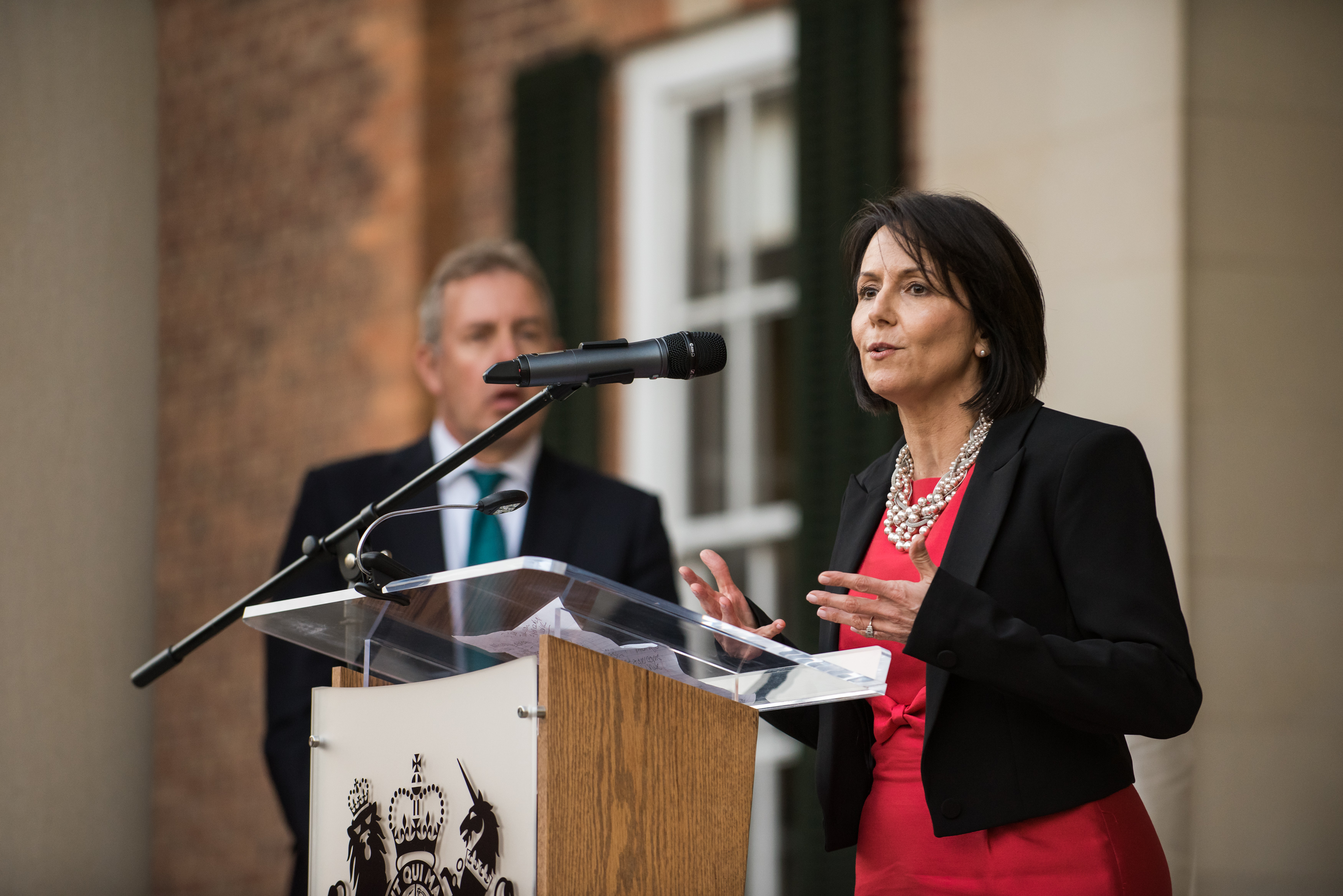
A chief executive can usually explain what a company sells. Ask what it is for, and the answer becomes more interesting. Ask how that answer changes a purchasing decision, an employee’s working day or a difficult quarter, and the conversation finally has somewhere to go. Christa Gyori has made a career of following it there.
The co-founder and CEO of Leaders on Purpose works in the crowded territory between business ambition and public consequence. There are studies, summits, courses and advisory conversations. Behind them sits a fairly demanding proposition: a company’s purpose should influence how it operates. A handsome sentence on the wall has a comfortable life. It never has to negotiate with procurement.
Gyori came to that proposition through corporate work, education and conversations with people who run large organizations. Her career offers a view of purpose from inside the machinery of business, where a decision has colleagues, customers and suppliers attached to it. The practical detail is the point.
The apprenticeship inside the machine
Before Leaders on Purpose, there was Unilever. Gyori spent part of her executive career at the multinational and helped establish its North American foodservice sustainability council. She worked within the company during the period when Paul Polman’s Sustainable Living Plan was reshaping its approach to business.
That experience matters to the argument she later took into executive rooms. A large company contains many different versions of the same ambition. What sounds clear at the top has to become understandable work elsewhere. Sustainability enters the ordinary business of deciding what to buy, how to make it and what to ask of a supplier.
Her professional interests included human-centered design and the factors that encourage people to adopt a behavior and keep it. The last part is particularly useful. Launching a new initiative produces a photograph; sustaining a new habit requires someone to remember it after the launch team has gone.
Another strand of her career supplied a concrete example of resources finding a different use. As chief strategy officer at EALgreen, she worked with an organization that turns surplus products into college scholarships. The connection between waste and educational opportunity gave the larger language of sustainability a visible mechanism: something available here could make something possible there.
She also earned an MBA in International Business at Thunderbird School of Global Management. Her later work in executive sustainability education at Harvard placed her among people examining how leaders could turn these kinds of connections into organizational practice.
An interview is only the beginning
Leaders on Purpose grew out of a research collaboration involving people from business and institutions including Harvard, the World Bank and the London School of Economics. Gyori and co-founder Dr. Tatiana Kazakova, now known as Tatiana Tarnowski, brought different kinds of experience into the same undertaking. The collaboration became an organization connecting executive research with practical leadership work.
The choice of method was revealing. They asked CEOs how their businesses were changing. A succession of studies examined leadership, organizational purpose and the relationship between a company and the wider economy. The work accumulated over years, allowing the team to return to questions that a single conference appearance might leave politely unresolved.
By 2019, Gyori was describing findings that reached well beyond the wording of a mission. Executives were connecting their companies’ prospects to wider environmental and social conditions. They were seeking partnerships across industries. They also needed measures that could make those commitments visible in the way the business was assessed.
Measurement gives this argument its useful edge. A company can describe a responsibility in generous language and still reward behavior that pulls in another direction. Gyori’s account of the research placed purpose alongside structures, processes and purchasing. Those are less glamorous subjects than inspiration, and considerably harder to decorate around.
Her optimism had an economic basis. She saw room for companies to contribute to solving large problems while developing opportunities for their own future. She was willing to address an audience interested in growth as well as one already convinced of the moral case.
“finding growth through the SDGs is really the best business opportunity”
Christa Gyori, on the UN Sustainable Development Goals
That formulation lets a skeptical executive into the conversation. It also places a burden on the idea: the opportunity must eventually become a workable business. Her organization’s mix of research, peer learning and advisory work is an attempt to help leaders make that journey.
In-depth CEO interviews underpin the research led by Gyori.A body of work built over a decade.
- 01AskCEO interviews reveal choices, obstacles and experience.
- 02CompareResearch and peer discussions connect the patterns.
- 03ApplyCourses and advisory work bring the questions into practice.
An editorial guide to the organization’s activities.
Yoghurt, refugees and a better question
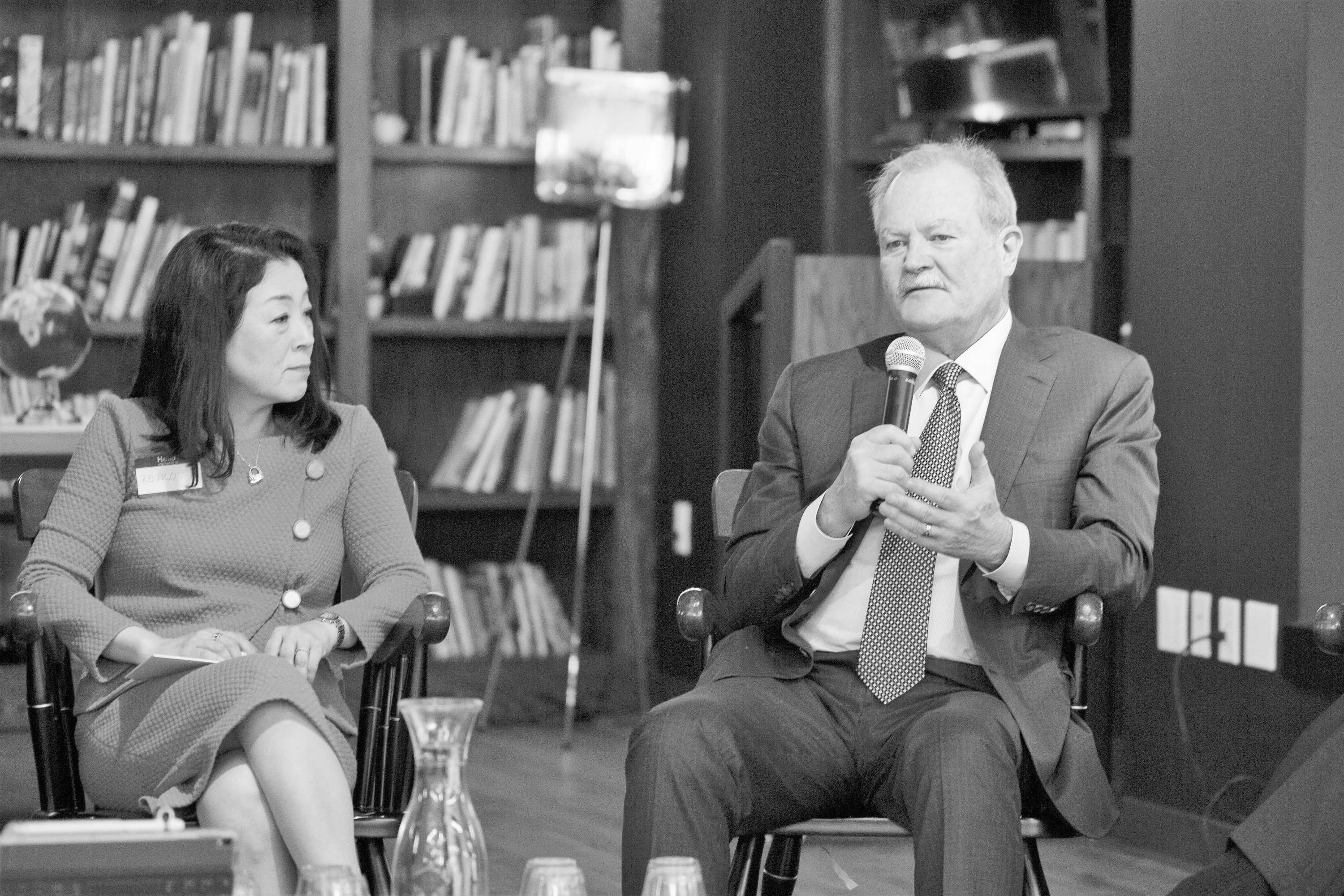
One of Gyori’s conversations makes the approach unusually tangible. At the fifth Leaders on Purpose CEO Summit, she spoke with Chobani founder Hamdi Ulukaya about his company, its culture and its work supporting refugees. The exchange moved from the origins of the business to the choices that shaped life inside it.
Gyori asked how purpose was embedded throughout the company and what happened when circumstances became difficult. Ulukaya’s answers returned to leaders being present, employees watching their behavior and culture taking shape under pressure. The interesting test arrived when business conditions were uncomfortable.
She also asked how a humanitarian approach affected the business itself. The discussion reached purchasing standards, employee ownership and the experience of colleagues working alongside refugees. Each subject gave purpose somewhere specific to appear.
The conversation helps explain Gyori’s role. She brings an expansive claim about business down to questions a person can answer from experience. How did you begin? What do your employees see? What happens when the easy choices disappear? A yogurt company turns out to offer quite a lot to discuss before anyone needs another leadership slogan.
The company beyond the conference
There is a teaching side to this work. Leaders on Purpose runs courses and workshops that bring executive experience into a learning setting. The founders have worked on helping leaders connect their own decisions with changes across an organization. The classroom gives the discussion a different pace from the summit stage.
In a conversation with former BSH Home Appliances CEO Karsten Ottenberg for an accelerator course, Gyori explored why transformation proves difficult. His explanation compared organizational change with music: knowing the theory and possessing instruments does not guarantee a coherent performance. The board and CEO have to take responsibility for how the parts fit together.
It is a useful image for the problem her organization addresses. Businesses can collect tools, experts and commitments without making them work together. A room full of instruments can still produce an expensive racket.
Her relationships also extend beyond established executives. Unreasonable identifies her as a mentor who participated in its 2017 US impact program and has advised more than eleven companies in its community. Space4Girls lists her as a founding advisory board member and mentor, connecting her experience to opportunities for girls and young women in space and STEM.
In 2023, Thinkers50 jointly shortlisted Gyori and Kazakova for its Ideas into Practice Award for Leaders on Purpose. The wording fits the work rather neatly. Their organization had developed from a research collaboration into a setting for peer learning, advice and discussion about the conditions businesses need to change.
Now put the machines in the room
More recently, Gyori has turned toward the choices executives face around artificial intelligence. The subject has changed the vocabulary of her work, while preserving a familiar concern: people still have to decide how an organization will behave.
Her partnership with Dragon Camp brings that concern into a Leadership Intelligence Circle developed with Dragon Camp and Dynex. The program is framed around AI, advanced computing and executive judgment. Its approach includes comparing outputs from multiple AI systems, looking for disagreement and examining the assumptions beneath an apparently persuasive answer.
Gyori has described a concern emerging from her CEO conversations: organizations using similar tools may begin to receive similar strategic answers. The attraction is obvious. So is the question it raises for anyone hoping to do something distinctive. A beautifully presented consensus can leave very little room for surprise.
The relationship has a personal starting point. She first met Dragon Camp’s Craig Hatkoff when he presented her team with a Disruptor Award. Their later work brought her executive community into contact with his interest in innovation and collaborative intelligence.
In March 2026, Leaders on Purpose also welcomed KONUX co-founder Andreas Loy as an advisor. The appointment added experience in building and applying AI systems to the organization’s leadership discussions. Gyori’s explanation connected technology to decisions about strategy, capital and governance.
“Technology is no longer a discrete function within organizations.”
Christa Gyori, March 2026
The implication for her work is straightforward. An executive cannot delegate the entire meaning of a decision to a system that helps produce it. Context, responsibility and judgment remain part of the job. The Circle is an attempt to give leaders a place to examine that responsibility together.
Purpose has to survive Monday morning
The continuity in Gyori’s career is easier to see when the fashionable language is put aside. At Unilever, the problem involved making sustainability part of a large business. At EALgreen, surplus resources could support education. In CEO interviews, the subject became the relationship between commitments and operations. AI now introduces another participant into the decision.
Across those settings, she keeps returning to how an intention becomes something people do. The work calls for conversation, but it also asks the conversation to earn its keep.
That is a demanding standard for a business devoted to purpose. It requires leaders to carry an idea back into organizations with existing habits, incentives and deadlines. The summit can end on a promising note. On Monday morning, someone still has to change the decision.