The paperwork came first. In October 2019, Chris Hart filed the documents to incorporate Creyon Bio. Five years later, looking back as he announced his departure, he remembered the first angel money, hiring his co-founder, and assembling the first employees. He also remembered data architecture and experimental protocols. A company anniversary can invite a little mythology. Hart’s inventory had room for the plumbing.
That is a useful place to begin with him. Hart is a scientist who became a founder after building a functional genomics group at Ionis Pharmaceuticals. His work has taken him through research, teaching, science policy, and executive leadership. Across those settings, a recurring concern becomes visible: how to connect a question, an experiment, the information it produces, and the people expected to make sense of it.
By September 2026, that concern had acquired a new title. ProQR appointed him Chief Data and AI Officer, following his time as a vice president at Eli Lilly. Creyon remains a central chapter in his career, with a beginning and an ending. The work that drew him into it has continued.
A career with several working languages
Hart’s education joined subjects that companies still struggle to place in the same conversation. He earned a bachelor’s degree at Siena College, then a doctorate at the California Institute of Technology. His doctoral training combined biology with computer science applications in biotechnology. Postdoctoral work at Yale followed. The combination helps explain a career spent moving between experimental questions and computational methods.
Before his pharmaceutical industry career, he worked at the Science and Technology Policy Institute, advising the White House Office of Science and Technology Policy. He also researched computational biology at Lovelace Respiratory Research Institute and held a tenure-track faculty position at New College of Florida, where he researched and taught bioinformatics. These were different institutional settings with different audiences for technical work.
There is a temptation to arrange such a résumé as a neat staircase toward entrepreneurship. The more interesting feature is its breadth. A classroom asks someone to explain a method. A policy setting asks what an institution should do with knowledge. A research group asks whether the method works. Hart held roles in all three settings before the founder’s job added hiring, financing, and the practical business of keeping a company moving.
Those distinctions matter because computational work has several audiences at once. Researchers need results they can interrogate. Colleagues need software they can use. Leaders need to understand what an analysis permits them to conclude. Hart’s earlier appointments put him close to those different demands; his later responsibilities would gather many of them under one roof.
At Ionis, somebody had to connect the pieces
At Ionis, Hart built and led the functional genomics group during a seven-year tenure. His responsibilities extended across company-wide genomics and bioinformatics, sequencing assays, and research software. That scope placed him at the junction between producing information and interpreting it. It also made the infrastructure itself part of the scientific job.
A sequencing experiment does not arrive as a polished answer. There is experimental work, processing, software, analysis, and the question of what to do next. Hart’s remit covered the development, running, and processing of sequencing assays, alongside informatics. The range is significant: a computational leader overseeing that much of the chain has to think about how its parts depend on each other.
This is the less photogenic side of an AI career. Algorithms fit nicely into a keynote slide. Research software and assay processing tend to receive smaller type. Yet the latter determine much of what the former can use. Hart’s Ionis role provides a concrete background for his subsequent emphasis on building data deliberately rather than treating it as something conveniently waiting to be collected.
Two founders, then a company
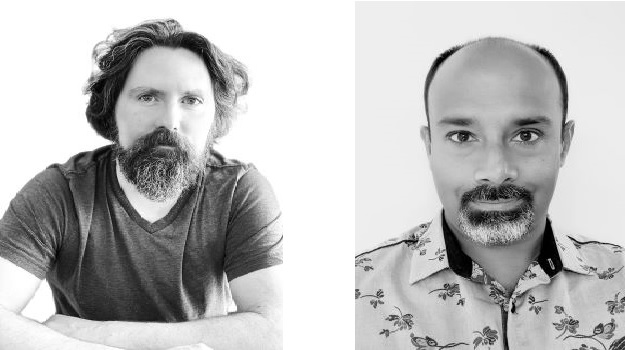
Hart left Ionis to establish Creyon in 2019. His co-founder, Swagatam Mukhopadhyay, also came from Ionis and brought a background in theoretical physics and quantitative biology. Hart became the founding president and CEO; Mukhopadhyay became chief scientific officer. Their partnership brought two computationally minded scientific careers into the same young business.
In his later account of the founding, Hart put the first angel investments before the hiring of his co-founder. The first employee team followed in 2020. These details give the beginning a human scale. Before a financing announcement can introduce a leadership roster, someone must secure the initial money and persuade other people to join an unfinished undertaking.
Creyon’s public launch came on March 8, 2022. It announced more than $40 million in seed and Series A financing, led by DCVC Bio and Lux Capital. Casdin Capital, Alexandria Venture Investments, and BioBrit also participated. The funding supported further work on its platform and expansion of the team. The public debut arrived after more than two years of company building.
Hart’s launch-day message gave considerable attention to the people doing that building. He described colleagues being strengthened by one another and working beyond their individual expertise. It is a revealing emphasis in a company associated with machine learning. The model occupied the technical story; the ability of specialists to work together occupied his account of the culture.
“What really excites us is that the platform is generic.”
Chris Hart, 2022
The dataset was part of the design
Creyon’s proposition put purpose-built datasets near the center of the business. It described using those datasets to train machine learning models and identify design rules. In Hart’s account, the ambition reached beyond a single program. The company was trying to build a platform whose underlying methods could be used repeatedly.
That choice gives data generation a different status. An experiment can answer an immediate question, and it can also contribute to a body of information from which a model learns. The design of the experiment influences both. Creyon’s launch materials described active learning, with models refined as additional information became available. The feedback between computation and experimental work was part of the plan.
For a reader outside the laboratory, a useful analogy is a map made for a particular journey. A large pile of directions may contain plenty of information while leaving the important junctions unclear. Deliberately collected data aims to illuminate the turns that matter. The analogy explains the appeal of the approach; its value still depends on the experiments and the evidence they yield.
Hart returned to the engineering theme in public conversations, including a BIOS Builders interview with Mukhopadhyay in 2023. Appearing together let the two founders discuss the company as a shared technical undertaking. By then, the story had grown from incorporation and early hiring into an organization with a platform to explain and a working method to defend.
Each round gives the next question a better starting point.
Five years, and a farewell
The organization expanded into laboratory spaces in San Diego, North Carolina, and India. Hart’s retrospective placed those moves beside the data architecture, protocols, and algorithms the team developed. That pairing is telling. A scientific company grows through physical space and people as well as through technical work. A new location adds another set of relationships to maintain.
In October 2024, Hart announced that he had parted ways with Creyon. His message marked its fifth anniversary and thanked current and former employees, investors, and partners. He used the team’s name for itself, “Creyoneers.” It gave a formal career transition a small trace of company life: even a technically ambitious startup needs a word for the people inside it.
The departure closes an important stretch of the story without resolving the entire career. Founding a business and holding its chief executive role are distinct facts. Hart remains a co-founder of Creyon; his term leading it ended. Keeping both facts in view makes the next chapter easier to understand.
- 2019Creyon incorporation in October
- 2020First employee team assembled
- 2022Public launch with more than $40M in financing
- 2024Departure announced on the fifth anniversary
A new title, a familiar assignment
Hart subsequently served as Vice President of Data Science and AI/ML in Eli Lilly’s Genetic Medicines team. ProQR announced his appointment on September 23, 2026. His new remit joins proprietary data, computational models, and experimental capabilities. It is an executive assignment with a recognizable connection to the work he had been doing before founding Creyon.
The same announcement introduced Hugging Face co-founder Thomas Wolf as a prospective board member and strategic AI advisor. ProQR’s account of its expanded team also describes Wolf working directly with Hart’s group on data, models, and infrastructure. The pairing brings a scientist with experience inside experimental organizations into contact with a builder from the wider AI ecosystem.
Hart explained the attraction in terms of the people and their different capabilities: “Frontier AI expertise, academic rigor, and inside-the-pipeline execution, all pulling on the same thread at the same time”. It is a description of coordination. The individual skills matter, and so does the possibility of having them work on a common problem.
His career now contains a research group built within an established company, a startup assembled from its first financing onward, and a new leadership role connecting data with experimental work. The scale and ownership have changed along the way. The practical question has stayed close: how do you organize people and information so that the next experiment teaches you something useful?
Hart’s fifth-anniversary inventory offers a grounded answer. Hire people. Build protocols. Make the software work. Open the laboratory doors. Give the data a structure that other people can use. There is plenty to do before the algorithm gets its entrance. Hart has spent a considerable part of his career on that opening act.