The call list was not promising. It consisted of people who had considered buying windows and doors, then failed to do so. In sales dialect they were “unsold leads,” a phrase with all the romance of a warehouse inventory sheet. Most businesses treated the names as residue. Chris Bache saw a conversation that had stopped halfway through.
Bache and his eventual Hatch co-founder, Bill Violante, arranged a sequence of text messages, emails, and voice outreach using data from Salesforce. They contacted roughly 100 customers and asked a useful question: why did you not move forward? Ninety-five replied. Almost 60 explained the obstacle, usually price or some part of the experience. The company took those answers back to its sales team and closed another $400,000 in business in less than 30 days.
The surprise was not that people could be persuaded. It was that they would talk. A supposedly dead database turned out to be crowded with articulate customers who had objections, timing problems, and unfinished questions. The fashionable part of sales had always been acquisition, the grand chase for the next lead. Bache had found value in the untidy aftermath.
A product discovered inside the work
Hatch did not begin as a pristine software platform. It began as a service that contacted old leads and tried to sell to them. The daily work was dreary in a clarifying way. The team left voicemails that no one returned. Manual emails consumed hours. Mass emailers found spam folders. The CRM, theoretically the source of order, was too cumbersome for much of the staff. So they connected several imperfect tools and kept going.
This was field research conducted with a quota. The system reduced cold-calling time, raised engagement, and gave the sales team a day that felt less like punishment. Bache and Violante realized that the improvised machinery was more valuable than the service wrapped around it. The internal tool became Hatch: one place to run outreach and keep conversations across text, email, phone, and, in its early telling, social channels.
“If our customers aren’t selling, we aren’t happy.”Chris Bache, writing about Hatch’s early mission
That line is useful because it strips away the usual software fog. Hatch was not proposing engagement as a spiritual condition. Its customers sold expensive, considered purchases. A delayed answer or an absent follow-up had a dollar value. Bache, who had worked in sales and at Comcast before founding Hatch, understood the indignity of being told to live inside a system that was not designed around the actual conversation.
His public style carries some of the sales floor with it. Product announcements arrive “PUMPED,” “FIRED up,” and decorated with more exclamation points than a cautious editor would permit. Yet the operating philosophy underneath the capital letters is methodical. Bache’s advice to new businesses is to get one job, then the second, study the mistakes, and look for the process that can be repeated.
There is a second clue in how he talked about hiring. During an early growth period, Bache called the company’s state “cautious hypergrowth,” a phrase that puts one foot on the accelerator and the other near the brake. Hatch looked for passion, curiosity, and coachability. The list favored people who could revise their answer over people who merely arrived with one. For a company learning its market in live customer conversations, that was less a culture slogan than a product requirement.
His own route combined formal business training with practical sales experience. Public biographies list a business administration degree in management and strategy from the Isenberg School of Management at the University of Massachusetts Amherst. The sharper education came later, in organizations where a salesperson could see the gulf between the CRM as designed and the work as performed. Hatch lived in that gulf. Bache and Violante did not ask sales teams to become amateur systems engineers. Their early promise was a learning curve measured in seconds and a coach who stayed until the customer made a first sale.
“Do little things, experiment, learn from them, iterate.”Bache’s compact rule for earning scale
The accelerator and the hinge
Hatch entered Y Combinator’s Winter 2019 batch, an improbable address for a company rooted in Richmond and the home-improvement trades. It raised seed capital, then an approximately $11 million Series A in July 2021. The outside money gave the company room to expand, but its real education continued to come from contractors and service businesses.
Bache and Violante co-found Hatch and begin with hands-on lead re-engagement work.
Hatch joins Y Combinator and sharpens the case for communication software built around sales work.
The product expands beyond texting as service businesses move rapidly toward remote customer communication.
An approximately $11 million Series A finances a broader product and company.
Yelp completes its acquisition, then deploys new voice technology through Hatch.
The hinge came in 2020. Trade shows and regular flights vanished. Remote work became ordinary. Bache spent hours on video calls listening to customers explain what had changed. Businesses needed to answer web leads immediately, work with fewer resources, and keep the pre-sale and post-sale conversation intact. Hatch widened beyond “just” a texting platform. It connected with web forms, lead sources, chatbots, email, and voice.
The pandemic did not invent the communication problem. It removed the padding that had concealed it. A contractor might sell a project in September and install it in November, leaving a long silence in between. A new web inquiry could sit for two days while the staff handled payroll, jobs, and the ordinary emergency of operating a business. Bache’s point was gently damning: companies took communication for granted because everything else was on fire.
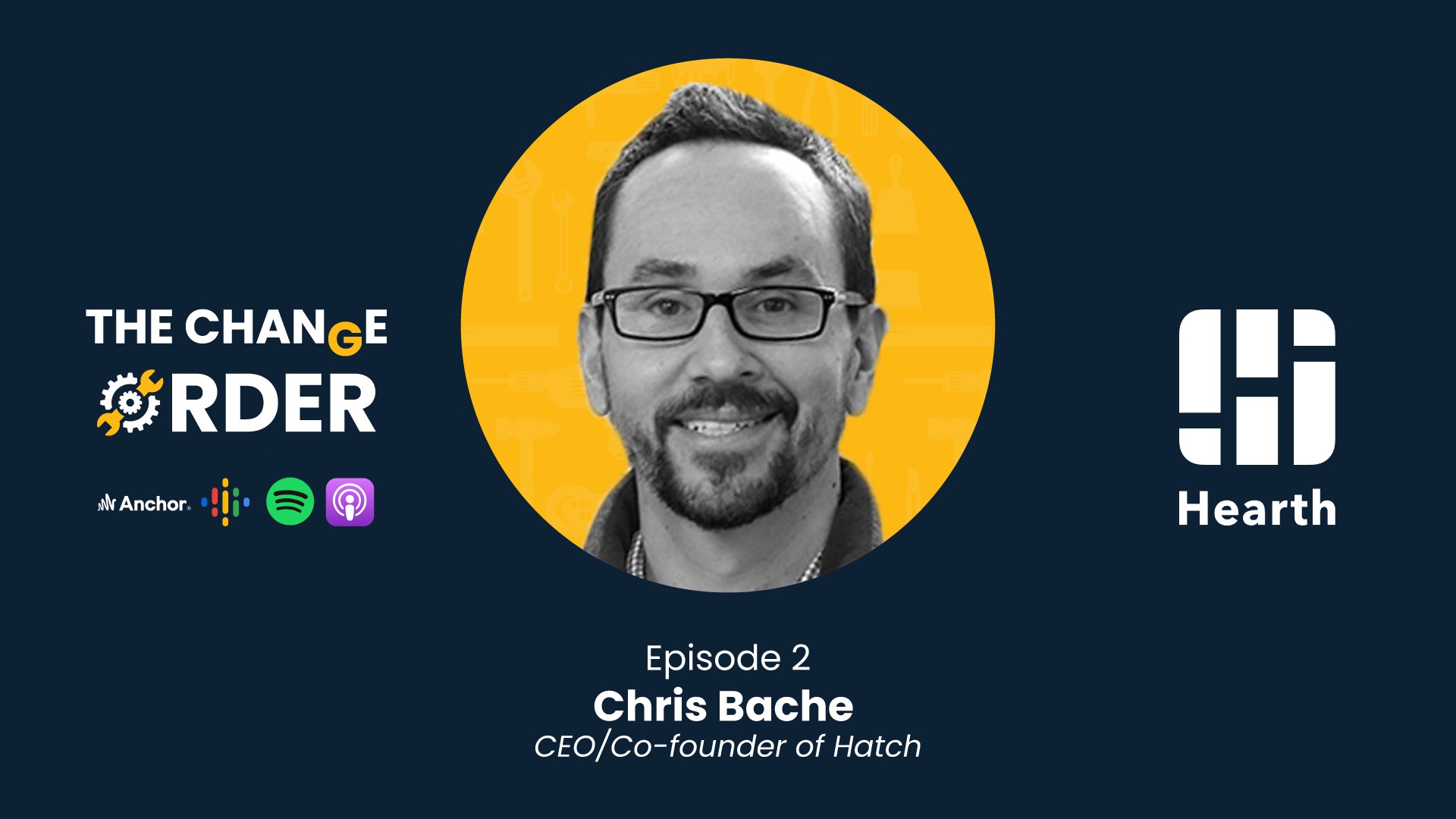
When the inbox learned to speak
Generative AI eventually gave Hatch a more ambitious way to act on the same old insight. The platform’s agents could respond over SMS and email, answer and place voice calls, qualify a lead, schedule an appointment, update a customer record, and transfer a conversation to a human. Bache’s enthusiasm for the technology has come with one practical caveat: people remain in the loop.
That matters because a home-service call rarely follows a laboratory script. The customer interrupts. A dog barks. Someone in the room supplies a measurement. Frustration appears before the word “frustrated” does. In September 2026, Yelp and Hatch announced that they were among the first products to deploy OpenAI’s GPT-Live-1 voice model. Its full-duplex design could listen and respond at the same time, accommodate overlapping speech, detect tone, and switch among languages. The technical leap served a familiar commercial demand: answer naturally, and do it now.
The distance from a patched-together rehash campaign to a multilingual voice agent is considerable. The job description is nearly unchanged. Recover the conversation before the customer wanders away.
A company large enough to be heard
Yelp reported approximately $25 million in annual recurring revenue as of November 2025, up 70% year over year. The 2024 figure is derived from that reported growth rate.
A large price for ordinary silence
By November 2025, Hatch had reached approximately $25 million in annual recurring revenue, growing 70 percent year over year while running at modestly negative cash flow. Those figures attracted a buyer with its own long history of connecting local customers and businesses. In January 2026, Yelp agreed to acquire Hatch for approximately $270 million in cash, with another $30 million set aside for employee retention over two to three years. The transaction closed in early February.
Acquisitions invite a tidy final paragraph. Bache declined the tidiness. He told customers that Hatch was not disappearing and told his team that the milestone validated years of work. His public thanks named co-founder Bill Violante, the employees, investors, Y Combinator, and the people who had backed the company when it was much smaller. To Yelp, he offered the founder’s most durable sentence: let’s build.
The strategic logic is easy to see. Yelp has consumer attention, local-business relationships, and demand arriving at the digital front door. Hatch has machinery for what happens next: the reply, the qualification, the booking, the reminder, the follow-up, and the rescue attempt when the first sale does not happen. Yelp shifted its services lead-management focus toward Hatch after the acquisition.
Bache’s achievement is not the invention of follow-up. Every shopkeeper in history understood that customers appreciate an answer. His contribution was to notice how frequently growing service companies fail at this simple act, then turn the failure into a sequence, the sequence into software, and the software into infrastructure. There is wit in the outcome. The business world spent years celebrating new leads while a valuable company was built among the old ones.
The story now sits in an interesting middle. Hatch has had its exit, but Bache still speaks like an operator preparing the next release. Voice agents can handle more of the call. Humans can take over when judgment is needed. Yelp can carry the system into many more businesses. Somewhere, inevitably, a lead has just gone quiet. The next chapter begins where the first one did: with the decision to write back.