A television producer earns his living making decisions for strangers. This face, that camera, this statistic, now a commercial. Charlie Ebersol grew up close enough to the machinery to understand its appeal. Years later, he helped put a rather impolite option into a football broadcast: the viewer could switch some of the producer’s decisions off.
In July 2023, Chelsea supporters watching their club play Wrexham through the team’s app could choose among graphic overlays, statistics and match events. They could revisit highlights. They could also clear away the embellishments. The company behind the technology was Tempus Ex Machina, where Ebersol was co-founder and CEO. A career spent attracting attention had arrived at a product that could make itself less visible.
Getting there involved a South African documentary, reality television, two generations of football experiments and a company that spent its early years keeping its chief executive out of the spotlight. The sequence resists the polite straight line of a corporate biography. Ebersol has had jobs where the whole point was to hold the camera, and jobs where the useful thing was to let somebody else take over.
A camera before a company
At Notre Dame, the future executive was already practicing the art of asking people to buy an idea. In 2003, he ran for student body president with Lauren Meagher. His major was Film, Television & Theatre. The campaign promised practical changes to student life. A campus questionnaire supplied a less solemn detail: given one dining-hall food forever, he chose waffles, so he could look at the Notre Dame emblem.
There are worse preparations for a career in entertainment than learning to offer a straight-faced answer to a silly question. His campus years also involved work with a camera. Ebersol produced and edited Ithuteng, a documentary about students at a school in Soweto, South Africa. His younger brother William directed it. A February 2005 campus screening brought Charlie back to explain the project.
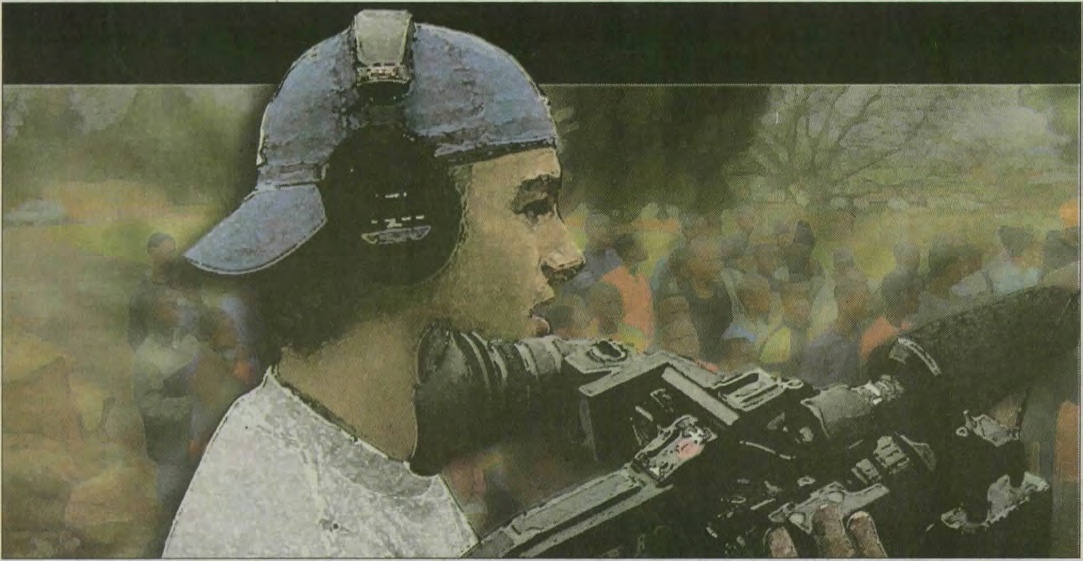
The photograph from that period is wonderfully occupational. Headphones on, cap backward, camera against his shoulder: he is occupied with something outside the frame. The students’ lives, rather than the producer’s surname, were the subject. That distinction mattered for someone whose family already had a substantial presence on screen and behind it.
His mother is actress Susan Saint James. His father, Dick Ebersol, built his career in television and led NBC Sports. Charlie described growing up around the Olympics and working in television young. He also understood the awkwardness of choosing the precise field in which a parent had already established a reputation. In 2013, he compared following his father into live sports production with Michael Jordan’s son choosing basketball. The comparison suggests he had given the family business some thought.
He found room in producing stories. His credits included NFL Characters Unite, which connected football figures’ personal experiences with young people facing difficulties, and The Profit, the CNBC series built around Marcus Lemonis and small businesses. Football supplied personalities and access; the program still needed a human reason to keep watching. A famous name might open a conversation. It could hardly fill every minute of the show.
An unusually close view of failure
In 2017, Ebersol directed This Was the XFL for ESPN’s 30 for 30. The original XFL had been launched in 2001 by his father and Vince McMahon, joining NBC’s broadcasting machinery to WWE’s promotional instincts. It lasted one season. The film returned to the people who had assembled it, including the two partners at its center.
For Charlie, this was family material as well as football history. He had watched the experiment close up. The documentary could look at the distance between the confidence of a launch and the speed of a collapse, with the added complication that one of the principal characters was Dad. Most filmmakers have to negotiate access. Ebersol also had to consider what happened after the interview, when the cameras were packed away.
The subject carried a question that would become less comfortable with time: what survives an unsuccessful league? A business can fail while leaving behind relationships, production ideas and useful knowledge. A film can arrange those remains into an ending. A founder has to decide whether there is enough left to begin again.
Eight teams, then an empty schedule
In March 2018, Ebersol and football executive Bill Polian announced the Alliance of American Football. Its planned format was specific: eight teams, a ten-week regular season and a four-team playoff. CBS would carry the opening games. The launch brought recognizable football names into the venture, including Troy Polamalu, Jared Allen and Justin Tuck. Dick Ebersol would sit on the board.
The proposal mixed the familiar pleasures of a league with alterations to the experience around it. There would be fewer commercial breaks, a shorter play clock and free streaming with integrated fantasy play. For a television producer, the opportunity was unusually expansive. Rather than shape a program around someone else’s competition, he could help shape the competition itself.
The AAF began playing on February 9, 2019. On April 2, it stopped operations, eight weeks into its first season. Bankruptcy followed. The unfinished schedule is an essential part of Ebersol’s story. Players, coaches, employees and supporters had committed to an organization that could no longer continue. An interesting app did not make the league financially durable.
Afterward, Ebersol met technology lead Erik Schwartz, operations executive Annie Gerhart and other colleagues at The Creamery in San Francisco. The gathering was a postmortem with an unresolved question: should their technology work continue? The coffee shop was a considerably smaller setting than a football stadium. It was large enough for the next decision.
Giving every angle the same clock
Tempus Ex developed around a problem that sounds modest beside launching a league. A sporting event generates pictures and information from different systems. To use them together, you need to know which pieces describe the same moment. Synchronizing them as they are created gives the people building applications something more dependable to work with.
FusionFeed was the company’s way of supplying that common foundation. Before the 2021 NFL season, Tempus Ex installed equipment throughout the league’s stadiums, including high-resolution cameras to supplement other views. The work involved servers, venue infrastructure and real games. The NFL’s football operations staff became users of the resulting tools.
There was also a change in Ebersol’s public behavior. During the company’s early development, he largely stayed out of its announcements. He explained that making himself its public face would have distracted from the team’s work. For a producer who knew the value of a recognizable character, stepping back was a consequential editorial choice.
“Our technology ultimately is infrastructure.”Charlie Ebersol, April 2023
Ebersol’s explanation of the business often reached for Google Maps. A useful platform can make room for applications its original builders did not anticipate. That puts a particular demand on a founder: persuade customers to value the foundation before anyone can list every building that might stand on it. It also requires accepting that other people may have the interesting ideas.
Schwartz led the technology vision; Gerhart led operations; Ebersol handled the external business. That division helps explain the apparent career jump. His contribution was connected to the work he already knew: understanding partners, finding an audience for a proposition and getting people into a room. The engineering required colleagues with a different set of skills.
A fan with a choice
Chelsea gave the proposition a visible test. The club and Tempus Ex entered a seven-year partnership in 2023. Match View X arrived for the US preseason tour, beginning with the Wrexham match in North Carolina on July 19. Through Chelsea’s app, supporters could adjust the information placed around the action. The technology had acquired a public demonstration you could hold in your hand.
The range of choices mattered as much as any individual overlay. One fan might want player tracking and statistics. Another might prefer an uncluttered pitch. A producer could offer both without insisting that everyone agree about the ideal broadcast. For a business built around shared events, accommodating different tastes is a practical challenge. Everyone watches the same match; they bring different interests to it.
One shared event. Different amounts of information. An illustration of the viewing choice, using no live match data.
There are limits to what an attractive demonstration proves. Preseason streaming and regular-season broadcast rights are different matters. After the debut, the company acknowledged that distinction while considering how the product could develop. Software can give a viewer more options only within the permissions of the people supplying the pictures. The remote control has a legal department somewhere behind it.
The business after the broadcast
In August 2023, Tempus Ex acquired Biocore, and the combined enterprise took the name Infinite Athlete. Ebersol remained CEO. The broader company joined synchronized video and data capabilities with another specialist business. The change made its corporate name more visible, while the foundational question remained how other organizations would use what it supplied.
On October 30, 2025, Exos announced the acquisition of Infinite Athlete and Biocore. Both would operate under the Exos brand, with Dan Burns leading the organization as CEO. Ebersol described the transaction as a way to extend the technology to Exos clients. In a later public post, he credited Infinite Athlete president Mark Bednarski with helping prepare and complete the deal. The acknowledgment placed another colleague inside a story easily reduced to one founder.
By April 2026, Ebersol was also talking about entrepreneurship education. He offered a household example: his daughter’s cotton candy business had to account for renting the machine. It is a compact lesson in the distance between sales and profit, delivered to someone who might reasonably have preferred to count the cash first.
That is an apt place to leave a career containing cameras, a league, software and an acquisition. Ebersol’s work has repeatedly involved the gap between an appealing experience and the business required to deliver it. The audience sees the match. Someone has to connect the feeds, negotiate the rights and pay for the equipment. Even the cotton candy machine sends a bill.
Keep the conversation going
Infinite Athlete · LinkedIn · X · Instagram