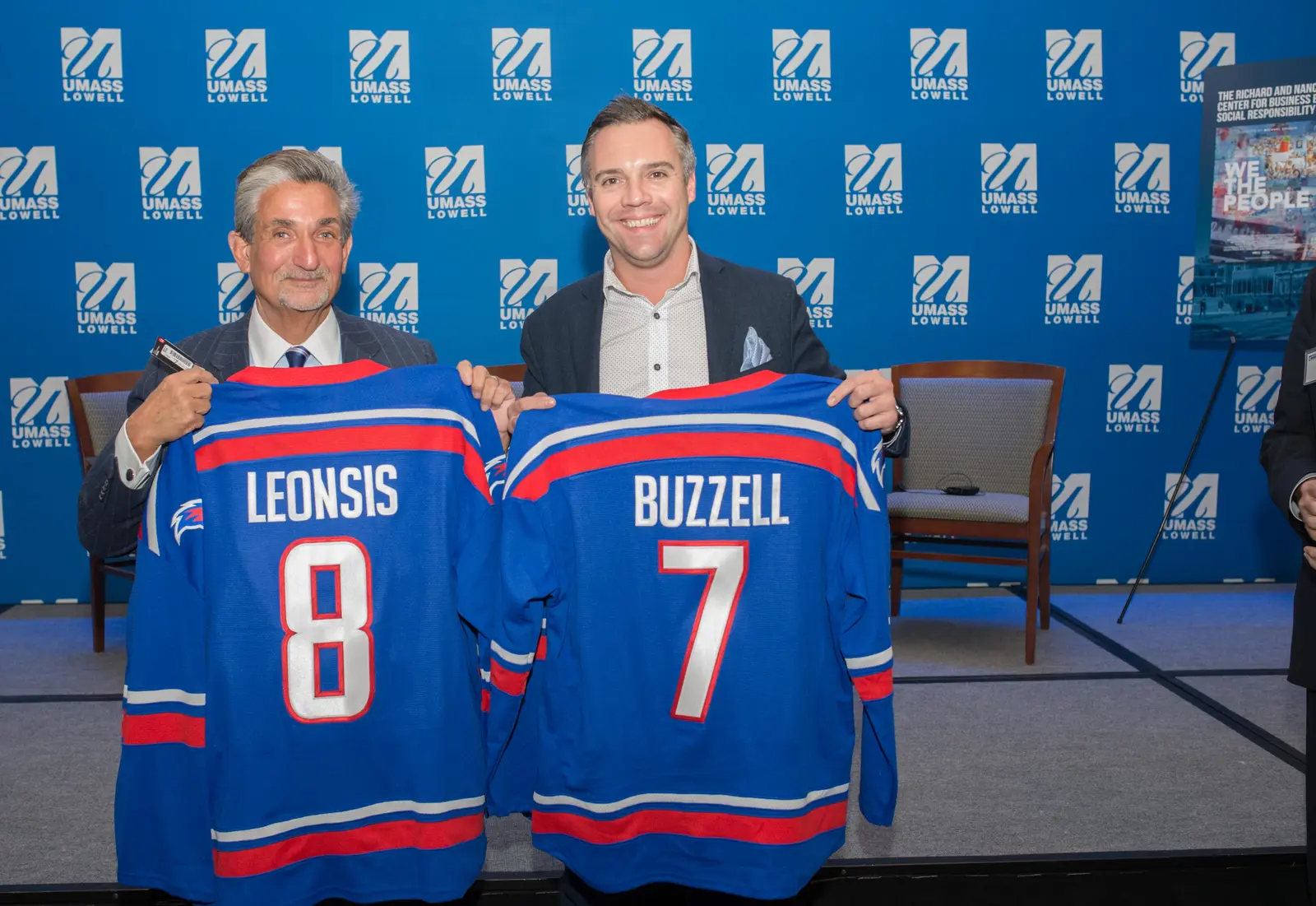
Nick Buzzell and Ted Leonsis are holding up hockey jerseys. The names on the backs are their own. In the photograph, taken at UMass Lowell in 2017, Buzzell looks pleased with the souvenir. He has come to talk about a grocery store. More precisely, he has come to talk about a film about people who cared enough about a grocery store to stop shopping there.
The occasion is a screening of We the People: The Market Basket Effect, which the two men co-produced. Its subject is the 2014 boycott that helped bring ousted chief executive Arthur T. Demoulas back to the supermarket chain. Customers, employees, ownership, loyalty: here was a business story with enough human feeling to fill a cinema.
Buzzell’s later work would take him toward another junction of people and purchases. As co-founder, chairman and CEO of NBTV, he has helped build streaming channels where viewers can buy products within the programme. A bottle can become an order. A golf glove can travel from a demonstration to a shopping cart. The remote gets an additional responsibility.
The connection is less peculiar than it first appears. Buzzell has spent his career working out how to make people care about what is happening on a screen. Commerce gives that old production problem a measurable next step. First, though, there has to be something worth watching.
A producer before the purchase button
Buzzell’s appetite for making things started early. At fifteen, he started his first production company. During college, he interned on David Letterman’s show. He graduated from Pace University with a communications degree and honours, then accumulated experience across the television business, including MTV and CBS.
These are useful places to acquire an unromantic understanding of entertainment. Somebody has to arrange the production, make the schedule work and get the finished programme out. The audience sees the performance. The people responsible for delivering it have a rather longer list of things to think about.
At NBCUniversal’s Digital Studios, Buzzell ran production operations. His credits included executive-producing Watch What Happens Live with Andy Cohen. He later became vice president of operations at Big Fuel, working in social media and branded entertainment. The route joined television’s production discipline to the developing habits of people watching online.
In 2008, he and his father, Mike Buzzell, founded NBTV. The studio made films, television, commercials and branded series. Clients included Marriott, Walmart and Coca-Cola. Each assignment could have its own setting, talent and production demands. Underneath, a familiar commercial request kept returning: make a story that people want to watch, and help the business sell something.
That request would eventually change what he built. Making the programme was one part of the job. Deciding what should happen when the viewer became interested offered another business entirely.
- 2008Nick and Mike co-found NBTV.
- 2017The Market Basket film brings Nick to UMass Lowell.
- 2019Spirits Network launches.
- 2022Golf Nation soft-launches in December.
The grocery store that became a film
The Market Basket documentary offers a useful pause in a career often described through platforms. It concerned an existing place, a family-owned company and a dispute that moved employees and customers to act. The film asked viewers to understand why an apparently ordinary shopping relationship could matter so much.
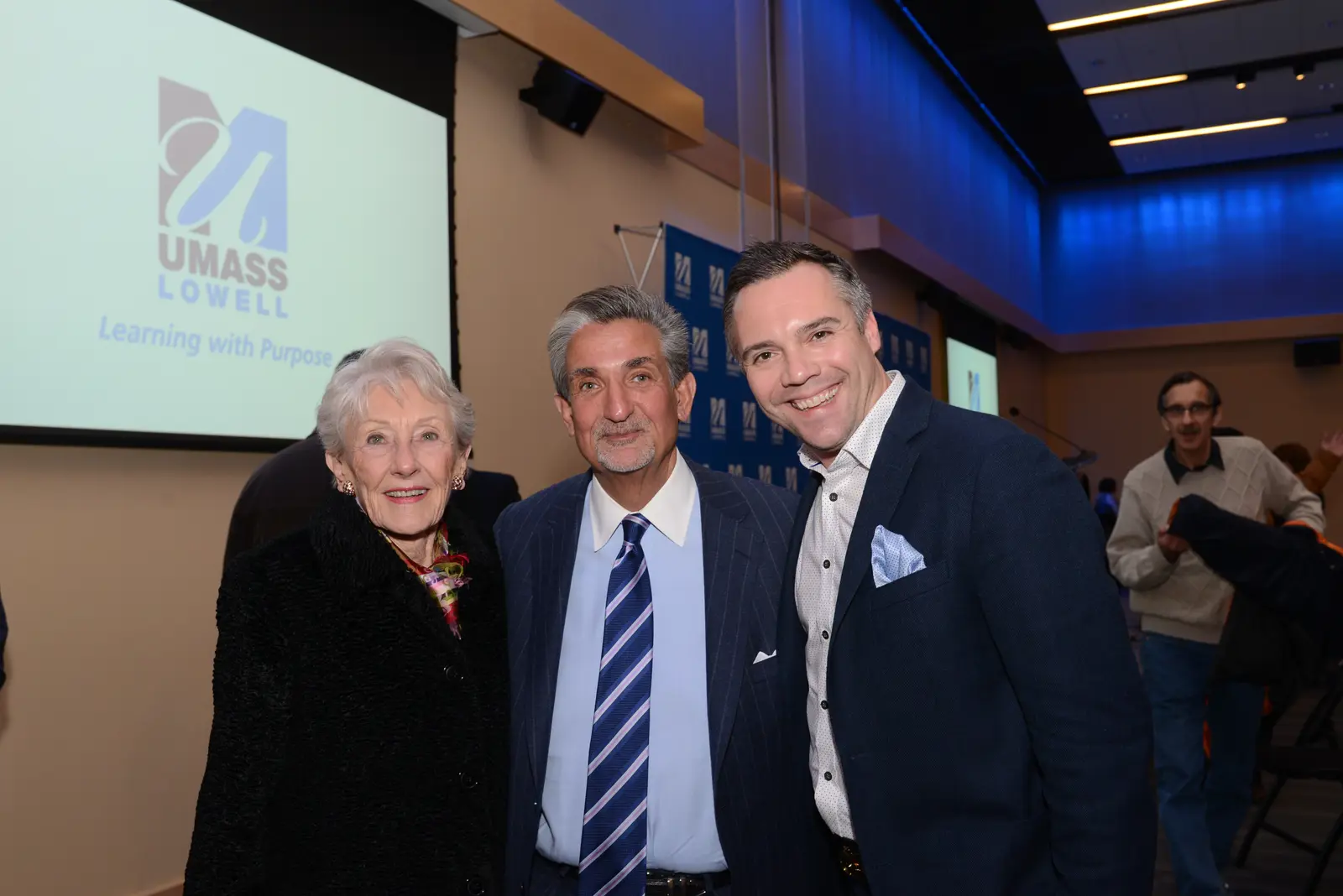
On December 13, 2017, Buzzell joined Leonsis for a screening and discussion at UMass Lowell. The event helped launch the university’s Donahue Center for Business Ethics and Social Responsibility. A production credit became a conversation about how a company treats people, and what those people will do in return.
It would be too tidy to make one film explain everything that followed. It does show the range of Buzzell’s work. Alongside commercial productions, he had helped turn a supermarket dispute into a documentary people gathered to discuss. Business supplied the subject; the people gave the audience a reason to stay.
His father built the machinery
NBTV is also a family business with a specific division of expertise. Nick brought production experience. Mike brought software knowledge and became the company’s chief technology officer. Nick credits his father with inventing the technology behind the Buy Bar, the purchasing interface used in NBTV’s viewing experience.
That detail changes the usual founder photograph. There is a producer thinking about what belongs on the screen and a software specialist working on what the screen should let somebody do. Their partnership puts those questions inside the same company. The engineering is part of the programme’s commercial possibilities from the beginning.
By 2018, Buzzell was publicly discussing a direct-to-consumer channel that would combine video and commerce. He was also expressing irritation with the industry’s language. The term OTT, short for over-the-top, struck him as a poor description of the opportunities in interactive streaming. His joking alternative was DTCISMP. Even television’s future apparently needed an abbreviation nobody could say over lunch.
The joke carried a serious preference: describe the experience people could have, rather than only the distribution system delivering it. A channel could be a place to discover, learn and purchase. NBTV’s next venture put that proposition in front of a particular audience.
From a bottle to a fairway
Spirits Network launched in 2019. It offered programming for people interested in spirits, with the ability to purchase within the viewing experience. A category with producers, places, techniques and strong opinions gave Buzzell plenty of material. The product came with a history somebody could tell.
He later described working with small producers as well as familiar brands, bringing their stories into formats viewers could return to. The underlying attraction is easy to understand. A bottle on a shelf gives you a label. A film can give you the maker, the setting and the decisions behind it. Interest has a little more room to develop.
For a small producer, the footage has a working life beyond its first showing. Buzzell has talked about creating assets that a brand can reuse on its website, YouTube and Instagram, and about building formats that different makers can participate in. A production budget buys material for more than one appearance. That is a recognisably practical producer’s concern: how much useful work can come out of a shoot? It also helps explain why he keeps the studio and the distribution business close together. The camera has to earn its keep after everyone goes home.
“For me, it’s really about story first and then sales second.”
Nick Buzzell
Golf Nation soft-launched in December 2022. The same idea moved into another set of enthusiasms: equipment, travel, personalities and the game’s social life. Its programming included Ambush with David Feherty, bringing hidden-camera mischief to golf courses. There are only so many solemn ways to discuss a fairway. Feherty offered an alternative.
The move also made the company’s logic more visible. Spirits and golf have their own experts, vocabulary and objects of desire. Each gives a producer ways to make useful or entertaining programming, and a retailer reasons to offer a relevant product. The audience has interests before it has a cart.
In that arrangement, a purchase button has a supporting role. It needs the context around it. A glove shown during golf programming arrives with a reason to be there; the same object dropped randomly into a programme would have to work much harder for attention.
A conceptual sequence, rather than a chart of sales results.
A bigger screen, a wider shop
Over time, Buzzell’s ambitions extended beyond operating his own channels. By 2025, he was discussing licensing the Buy Bar to other streaming services and television manufacturers. A production company could make the content. A channel could gather an audience. The purchasing technology could also have a life inside somebody else’s viewing environment.
His newer platform, klyq, extends the shopping destination across categories. Pronounced “click,” it has been described by Buzzell as a television shopping hub. He has announced its availability on Samsung TVs in the United States. The ambition is to let the television carry a viewer from discovery to an order using the remote.
The attraction of this proposition is its ordinariness. People already notice things while watching programmes. Buzzell wants a practical action to sit close to that moment of interest. Making the action convenient still leaves the familiar work of choosing useful products, producing watchable material and persuading people to return.
His public writing makes another preference clear: brands should build direct relationships with audiences. He has urged marketers to invest in destinations and customer connections they control, rather than rely entirely on the changing terms of social platforms. For a producer who went on to operate channels, ownership is a practical concern. It determines where the next conversation happens.
The other call he answers
Buzzell lives in Rhinebeck, New York, and volunteers as a firefighter. He began call firefighting when he was younger in Hampton Beach, New Hampshire, then took a break after moving to New York City. Returning to the work gave him another connection to the place where he lives.
His interests also include live music and forest management. Asked for a favourite film or television show, he chose Ferris Bueller’s Day Off. The producer who has spent years thinking about how people use their time has some affection for a character devoted to taking the afternoon off.
The local work gives his story a scale a streaming footprint cannot supply. There is the business he built with his father, the productions with their crews and credits, and the town where he volunteers. His career keeps returning to the problem of getting people involved. Sometimes that means a film, sometimes a channel, and sometimes being available when a neighbour needs someone to turn up.
Keep the conversation going
Visit NBTV, Spirits Network, Golf Nation and klyq. Follow Nick on LinkedIn or explore his film and television credits.