A television picture can fail in wonderfully small ways. The mouth moves before the words arrive. A caption hangs around after its speaker has left. A frame freezes, granting an actor an expression they might prefer to keep private. The programme may have cost a fortune. The mistake has excellent timing.
Sunil Jain works in the part of the business assigned to these inconveniences. As co-founder, president and CEO of Interra Systems, he leads a company making software that examines media files, watches streams and helps engineers investigate what went wrong. Its customers work behind the picture; their audience generally has other plans.
That makes Jain an interesting figure in a medium associated with personalities. His route into it runs through electrical engineering, Bell Laboratories and semiconductor design software. Follow the career, and the glamorous screen gives way to a much more particular subject: the tools people need to make complicated systems behave.
01 / THE ENGINEER BEFORE THE EXECUTIVESeven years before the founder’s chair
Jain studied electrical engineering at the Indian Institute of Technology in Kanpur and earned a master’s in electrical and computer engineering at Lehigh University. His first employer was AT&T Bell Laboratories in Murray Hill, New Jersey. He stayed seven years, moving through roles of increasing responsibility and becoming a manager.
Cadence Design Systems came next, with a director of engineering role. Before Interra, he also co-founded Software & Technologies and served as its vice-president of engineering. The eventual chief executive had already worked inside an established research organization, directed engineers and helped start a business.
Each position added a different responsibility to the technical work. A manager coordinates other people’s efforts. A director has to make decisions across a team. A founder must turn the resulting software into something customers will adopt. Jain’s career passed through all three jobs before the company for which he is now known.
- AT&T Bell LaboratoriesSeven years · progressed to manager
- Cadence Design SystemsDirector of Engineering
- Software & TechnologiesCo-founder · Vice-President of Engineering
- Interra SystemsCo-founder · President and CEO
02 / BEFORE THE STREAMThe chip-design chapter
In February 2004, the customer was Cypress Semiconductor. It had selected Interra’s MC2 memory development system to automate work on embedded memories, standard memory products and network search engines. The application was far removed from a viewer choosing a programme, but familiar territory for someone with Jain’s background.
Cypress was using the system for memory compilers and register files on 130-nanometer and 90-nanometer technologies. Jain described the customer’s priorities as shorter development time, reuse and faster migration between processes. The software’s value rested in helping a design team repeat difficult work with less effort.
The Cypress application also involved creating derivatives from proven memory designs. Reuse mattered because a team could carry established work into another variation instead of repeating every step. In that setting, the buyer was judging the tool against a development process, including what could be preserved as requirements changed.
That early business deserves a place in his story. Today’s media products can make Interra look like a company that began and ended with broadcasting. Its semiconductor work supplies another view of the founder’s career: engineering software for people whose own products impose demanding technical constraints.
In February 2016, Sankalp Semiconductor announced that it had completed the acquisition of Interra’s design services business. The transaction covered memory design, system-on-chip verification and ASIC/EDA automation services. Jain’s comment singled out the people moving with the operation: “They are receiving incredible talent.” It was a sale of a defined business unit, with engineers at its center.
03 / A PRODUCT NEEDS COMPANYCustomers need a person within reach
Between those two semiconductor milestones, another part of the chief executive’s job appeared in public. In November 2013, Interra expanded its sales operations in North America, Latin America, Europe and Asia. Its media lineup already included BATON for file quality control, VEGA analyzers and ORION monitoring.
Jain explained the appointments in terms of access. As the installed base grew, customers needed the team to be easier to reach. The hires included Penny Westlake for Europe, Brad Lilian for the northeastern United States, Juan Mejia for the southeastern United States and Latin America, and Kanishka Tongya for Asia Pacific.
“current and new customers need easy and timely access to our team.”
SUNIL JAIN · NOVEMBER 2013
A product may travel around the world more easily than the people supporting it. Questions still arrive during someone’s working day. A sales organization gives a technical company people who can understand local customers, explain what the software does and maintain a relationship after the demonstration.
The expansion also brought Jain’s engineering background into contact with another discipline. Ashish Basu, who joined Interra in 2003, led global sales and business development. Building the company required both functions: people who could make the tools and people who could bring them into customers’ operations.
04 / AUTOMATION MEETS THE OPERATORRoom for an operator’s judgment
By 2017, Jain was describing Interra’s streaming offering as a combination of quality control, monitoring and analysis for live and on-demand content. It addressed several jobs along a delivery chain. A file could need inspection before release; a running service needed observation; an encoded stream might require a deeper technical examination.
One product decision that year gives the strategy a human dimension. BATON added a way to combine automated findings with manual checks. Operators could see checks specified in a test plan, review the software’s results and add errors to a content timeline themselves.
Basu explained the need to deal with problems automation could miss, as well as false positives and negatives. A tool that accommodated those limits gave the operator a defined place in the process. The person at the screen retained work to do, and a better place to record it.
The hybrid platform supported mixed workflows, including standard definition, high definition, UHD and 4K. It was designed to integrate with media servers, transcoders, asset management and archiving systems. Those connections put the checks alongside the surrounding work, where a result could be reviewed before material moved on.
For Jain’s company, that meant selling a working arrangement between software and its users. An alarm without a useful next step leaves the difficult part untouched. A finding attached to the right moment in a programme gives an engineer somewhere to begin looking.
05 / THE WORK AT FULL SIZEThe evening stretches across nine countries
The scale of that responsibility becomes tangible in Millicom’s Tigo ONE TV service. In April 2025, Interra described an ORION deployment covering nine countries, carried out with systems integrator SDT. More than thirty virtualized and bare-metal hosts supported the installation, which monitored thousands of transport streams and HLS services.
The project included management software on virtual servers and monitoring probes inside the content network. Custom reporting had to fit existing data aggregators. This is the customer’s world after a product presentation: machines already in place, established processes and a requirement that the new system work among them.
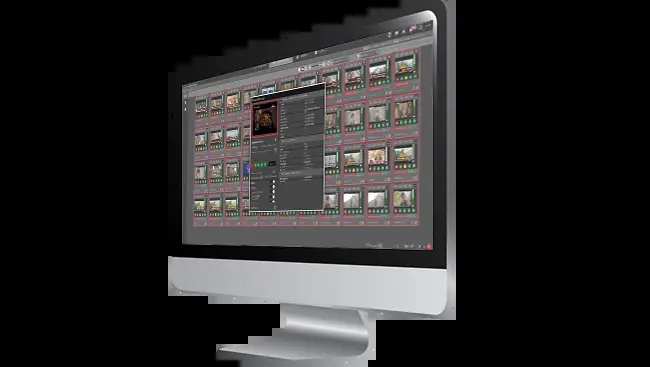
The Millicom workflow received a 2025 NAB Show Project of the Year award in Distribution. ORION with multiviewer received a separate Product of the Year award in Monitoring and Measuring Tools. The recognition belongs to the project and product, including the teams and partners that delivered them.
The ORION multiviewer also made live feeds available through a browser. An operator could inspect them remotely, rather than being physically present in an operations center. For the company, the interface and the monitoring belonged in the same offering: pictures to look at, tests to interpret and information to help investigate.
For a profile of Jain, these details show the scope of the organization he leads. They also keep achievement attached to actual work. A company can announce international reach in a sentence. Putting monitoring into service across nine countries requires a rather longer conversation.
Elsewhere, Norway’s public broadcaster NRK described using BATON to check finished high-resolution programmes and the adaptive-bitrate file sets prepared for publication. Even after a programme is finished, its delivery versions have examinations of their own. The credits may be ready to roll; the engineering department still has a list.
06 / THE NEXT FAULT TO FINDMore intelligence, useful answers
Interra’s 2026 announcements bring AI into the same practical setting. Its NAB plans emphasized streaming quality, monitoring and captioning. For IBC, the company described further work on detecting video corruption, reducing false alarms, explaining incidents and helping captioning teams handle timing, placement and multiple languages.
The IBC preview included BATON 9.5 M1, further audio and video checks, and an assistant called Maestro in BATON Captions. The naming adds a little theatrical flair to a practical assignment. A captioning tool still has to handle such unromantic details as text truncation, export settings and overlap with words already visible in the picture.
Caption comparison was another addition in the IBC preview, allowing teams to identify differences between localized versions. The list of changes also included controls for broadcast exports. Such details give the AI announcements a useful setting: the output still has to pass through an established delivery process.
Those plans were articulated by vice-president of product management Anupama Anantharaman. They describe the company’s direction under Jain’s leadership, with colleagues speaking for their areas of work. The responsibilities have spread well beyond the founder’s early engineering roles.
The continuity is easier to see at the user’s desk. At Cypress, a design team needed to reduce repeated effort. In a media operation, a team needs to find and understand errors across files and streams. Different material, different customers, the same requirement for a tool that earns its place in somebody else’s day.
Jain’s career has carried that work from laboratories to engineering departments to an international media software business. Most viewers will encounter its purpose through a simple result: the words match the mouth, the captions keep pace and the picture moves on. They can return their attention to the story.
Follow the work
- Career & companySunil Jain’s management biography ↗
- LinkedInSunil Jain ↗
- WebsiteInterra Systems ↗
- 2004 / Semiconductor workCypress selects the MC2 memory development system ↗
- 2013 / Customer accessThe international sales expansion ↗
- 2016 / Design servicesSankalp’s acquisition announcement ↗
- 2017 / Manual & automated checksBATON’s hybrid quality-control workflow ↗
- 2017 / StreamingJain on QC, monitoring and analysis ↗
- 2025 / Deployment & awardsORION, Millicom and the NAB Show awards ↗
- 2025 / At the broadcasterHow NRK uses BATON ↗
- 2026 / Product directionInterra’s IBC technology preview ↗
- Watch / Company interviewInterra Systems at NAB Show 2025 ↗
- YouTube / Company channelProduct demonstrations and conversations ↗