In 2011, Charles Chocolates had a problem no confectioner could solve with better ganache. The company stopped operating after a dispute with an investor. Its founder, Chuck Siegel, had spent seven years turning it into a business with roughly 400 retail accounts around the country. Then the shelves went quiet. You could still remember the taste. You could not buy the chocolate.
Siegel did what seems, in retrospect, almost too literal for a chocolatier: he bought the name back. He reclaimed key assets, turned to Kickstarter, and opened a new kitchen and shop in San Francisco in March 2013. The comeback makes a good story. The more useful question is why anyone cared enough to bring this particular chocolate back.
- Charles Chocolates makes small-batch confections, bars, covered nuts and edible chocolate boxes.
- It sells to individual buyers, business gift senders, specialty retailers and hospitality customers.
- Its central bet is that chocolate should be made and shipped like fresh food.
- After a 2011 shutdown, Siegel raised more than $53,000 from about 400 Kickstarter backers and reopened.
A piece is only as good as its worst ingredient
Siegel is self-taught. He began making chocolates in 1987 with his first company, Attivo Confections, sold it in 1995, worked as a consultant, and founded Charles Chocolates in 2004. Those dates matter because they explain why the company's philosophy sounds less like a pitch than a kitchen rule. He has had enough years to discard ideas that look clever and taste indifferent.
His rule is blunt: every chocolate is equal to the worst ingredient that goes into it. The company says it uses fresh cream and butter, herbs, fruit and nuts, without preservatives or artificial flavors. It makes confections by hand when ordered and aims to deliver them within days of creation. In a 2006 interview, Siegel described roasting nuts from scratch and choosing different chocolates for different products. A cacao percentage alone, he argued, says remarkably little about the way a chocolate tastes.
“I view every chocolate I make as equal to the worst ingredient I put in it.”Chuck Siegel, founder
This is also a commercial decision. Freshness narrows the room for lazy fulfillment. The company schedules routine shipments from Monday through Wednesday; overnight orders and some Northern California deliveries can go out Thursday. Fridays are excluded so boxes do not spend a weekend in transit. In warm weather, packaging and shipping speed become part of the recipe. A customer buying a gift is paying for chocolate, certainly, but also for a small choreography of making, packing and arriving.
The package becomes dessert
If the philosophy sounds stern, the products are mischievous. There are Peanut Butterflies, peanut-praline bonbons whose name earns its place; chocolate bars with nuts and citrus; pavés; caramels; and nuts coated by panning. The signature edible box is an especially tidy joke. Open the decorative chocolate lid, eat the confections inside, then eat the container. No ribbon can compete with that.
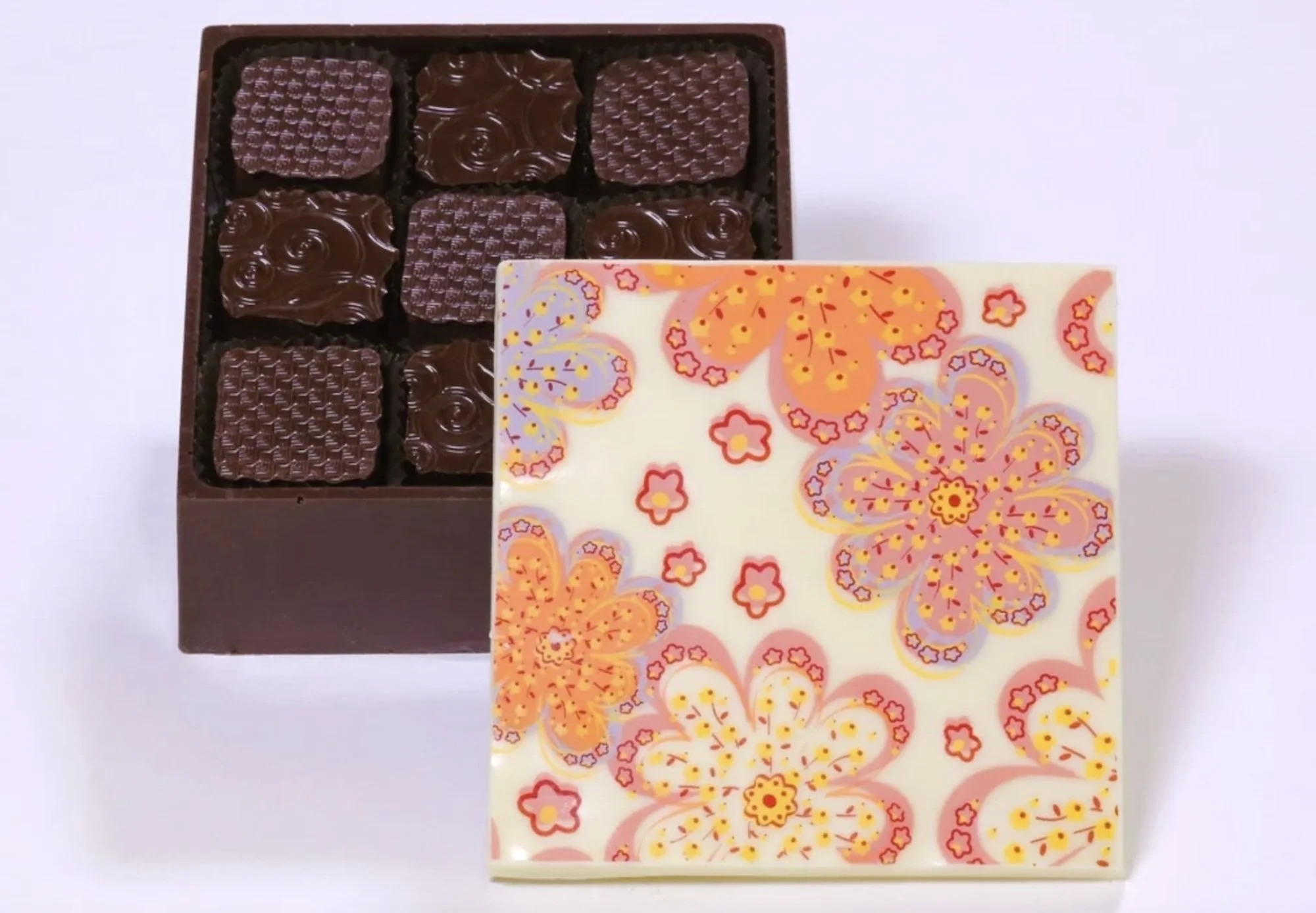
Siegel's experiments have limits. In an interview with The Chocolate Professor, he said far more kitchen combinations fail to make the catalog than reach it. His test is pleasure rather than novelty for its own sake. That distinction puts Charles in the premium confectionery aisle alongside other Bay Area makers, yet gives it a sharper position: familiar flavors, careful construction, and presentation that occasionally makes the wrapping part of the meal.
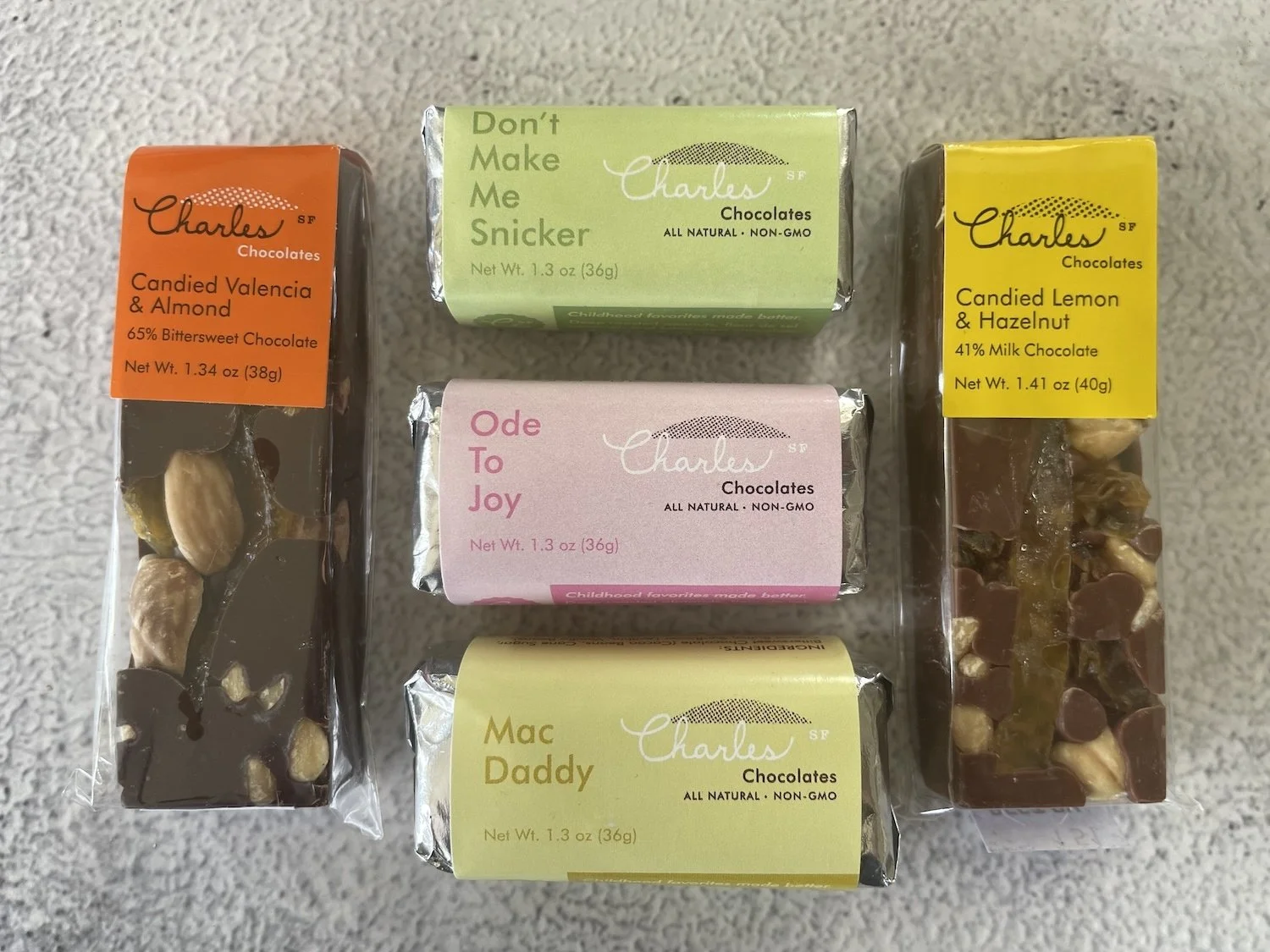
A business with several doors
A single customer can buy a box online. A business can send gifts to many clients or employees, choose a shipping date, and ask for concierge help with a larger list. Specialty food shops, food-service operators and hospitality venues can buy packaged or bulk chocolates through wholesale accounts. The present catalog also includes a Chocolate Club combining products from Charles's San Francisco kitchen with truffle fudge and other chocolates from John Kelly Chocolates in Los Angeles.
The club's standard box is listed at $79 with ground shipping included, with contents described as about $90 at retail. Members can choose monthly or less frequent deliveries. Its assortment changes, which solves a specific problem for a small kitchen: one-off batches and new releases can reach an audience before disappearing. The partnership gives subscribers two makers' work in one parcel without requiring either kitchen to imitate the other.
The economics behind a beautiful gift remain less romantic than its photograph. Fresh products have short clocks. Heat changes the shipping method. A large corporate order needs recipient lists, timing and enough lead time for the kitchen. The company's current gift service makes these steps visible: smaller sends can be managed online, while larger or more complicated orders can be coordinated with a person. That is a practical answer to the problem of gifting at scale, not merely an upsell.
What the shutdown changed
Contemporary reporting put the 2011 closure at the intersection of an investor dispute and bankruptcy. By then Siegel had a known name and a wholesale network, but neither kept the operation open. The 2012 Kickstarter helped finance the return and, according to KQED, helped him buy back vital assets. The reopened Florida Street space exposed the production process through windows so shoppers could watch the work. It was a way to make the labor legible as well as a way to sell chocolate.

The episode is sometimes told as a triumph of persistence. That leaves out the hard part. A retailer quoted by SFGate warned that competitors had claimed shelf space while Charles was absent. The founder had to regain distribution and rebuild production with less capital. Even in chocolate, a comeback is made one account and one order at a time.
For another small food maker, the copyable lesson is less dramatic than a Kickstarter campaign. Decide which ingredient standard you will defend, show the customer how that standard changes production, and design delivery around the product's actual life. Make ordering easy for an individual and manageable for a buyer with fifty addresses. If your product cannot survive the trip, your gorgeous box becomes an apology. If the craft survives the trip, the box may even be dessert.