The first thing a fundraiser learns is that money has a personality. It can be shy, vain, impatient, restricted, inherited, budgeted by committee or waiting for someone to ask the right question. Changing Our World has built a consulting business around the awkward social fact behind all of this: the people who need money and the people who control it often speak different dialects.
The firm works as translator. On one side are nonprofits planning capital campaigns, repairing development operations or trying to turn a list of names into durable donor relationships. On the other are corporations deciding what social problem fits their business, which nonprofit can deliver, how employees should participate and what success should mean. Most advisers choose a side. Changing Our World made the border its address.
The tiny office and the useful ceiling
Michael Hoffman and Chris Watson started the company in 1999 in a four-room suite above Grand Central Terminal. The premise was unusually broad for the time: one shop would offer fundraising, nonprofit management and corporate social-engagement strategy. Three years later, Hoffman thought the independent firm had reached its ceiling. The founders did not need a prettier brochure. They needed distribution, adjacent expertise and introductions.
In 2002, Changing Our World joined Omnicom. The sale price was not disclosed. Hoffman later said the firm tripled in size over the following three years and that half its business arrived through the Omnicom connection. One introduction placed the firm on a ten-agency project for the UN World Food Programme, which became a major client. The acquisition worked because the buyer supplied reach without flattening the specialist practice.
What the firm actually sells
“Fundraising consulting” sounds like advice about asking wealthy people for checks. The actual menu is more infrastructural. Changing Our World tests campaign feasibility, audits development programs, analyzes donor behavior, builds major-gift strategy, coaches boards, supplies interim staff and manages campaigns. Its newer Jumpstart service begins before a senior development officer starts, inspecting the systems and expectations that can make a promising hire fail.
The corporate practice runs the mirror image. It interviews stakeholders, benchmarks competitors, studies community needs, designs signature programs, selects nonprofit partners, creates employee volunteering and giving plans, sets measurement frameworks and turns results into stories. The same evidence crosses the aisle. A nonprofit learns what makes a corporate proposal usable. A company learns what its community partner can realistically execute.
The translation loop
The campaign that changed its argument
The Beyond Sunday campaign in St. Louis is a neat example of the method. It began with a $100 million goal to support Catholic education. During feasibility work, the team found the first idea - essentially, increase scholarship support - was too narrow. Tuition assistance could improve access without solving the school system’s strategic problem.
So the campaign widened. Parishes would keep 40 percent of what they raised for local priorities. And a corporate-facing program called SOAR! made a different pitch: stronger Catholic schools produced measurable educational and regional economic value. Those companies were not conventional diocesan donors. The case had to fit corporate policy and quantify an employer-relevant return. By August 2017, the main campaign had passed its goal by nearly $5 million; SOAR! had raised more than $3 million.
What it costs, and what the number misses
Changing Our World does not publish a rate card. Public Form 990 filings offer a partial window, though they mix very different jobs. One dataset covering 2019 through 2024 identifies 33 engagements and about $5.9 million in client-reported fees. Among examples with both money raised and a fee disclosed, assignments ranged from a $53,000 fee attached to $100,000 raised to a $240,000 fee alongside $10.3 million raised.
| Reported assignment | Year | Funds raised | Fee |
|---|---|---|---|
| CARE campaign counsel | 2020 | $10.3M | $240K |
| America 250 solicitation | 2023 | $3.0M | $298K |
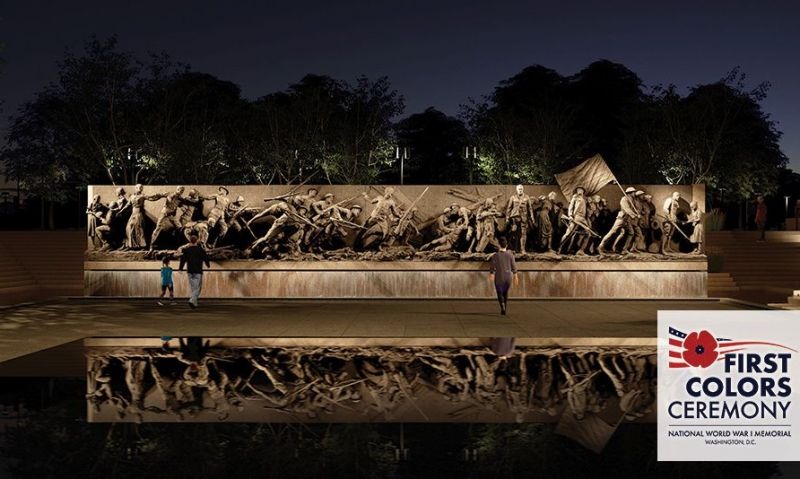
| WWI foundation counsel | 2024 | $852K | $276K |
| YWCA campaign support | 2021 | $823K | $150K |
These are filing snapshots, not price quotes. Fees can include campaign expenses and scopes differ sharply. A feasibility study, an interim executive and outsourced development counsel are not interchangeable products.
The first thing to fail is usually inside
The firm’s public casework keeps returning to an unglamorous finding: campaigns expose operational gaps before they create momentum. At St. John’s University, the planning study examined whether internal processes could support a sustained engagement effort. The work combined income projections, giving and engagement analysis, environmental mapping, interviews and surveys. The resulting plan segmented outreach by age, gender, industry and geography and strengthened the advancement office’s capacity.
That is the transferable part. Before announcing a number, inventory the institution: usable data, leadership time, board appetite, a credible case, donor concentration and enough staff to follow up. Then interview the people whose support matters. If their answers puncture the original idea, change the idea while it is still inexpensive.
Audit people, systems, donor history and the competitive environment.
Put the proposed priorities in front of stakeholders before publishing a goal.
Frame the case in the audience’s language - mission for some, economic or employee value for others.
Fix capacity gaps, assign owners and create the operating rhythm.
Track money, participation, relationships and outcomes, then adapt.
Where it fits - and where it does not
Changing Our World competes with large campaign firms such as CCS Fundraising and Graham-Pelton, specialist CSR advisers, communications agencies and the option every cautious executive considers first: doing the work in-house. Its strongest argument is integration. It can take a client from research to strategy to implementation while borrowing communications and branding capacity from the wider Omnicom network.
That breadth is not automatically an advantage. A small charity needing a grant writer for ten hours may be better served by a specialist. A mature corporation with a strong internal impact team may only need evaluation expertise. And no consulting model works when leaders withhold data, refuse to revisit a beloved idea or expect the adviser to substitute for an absent executive sponsor.
Copy this, with conditions
- Study readiness before setting the public target.
- Translate the same social need for each stakeholder without changing the truth.
- Design corporate partnerships around shared value, not a logo exchange.
- Do not use external counsel as a replacement for internal ownership.
The company’s name is grand. Its work is procedural: interviews, spreadsheets, board meetings, prospect lists, facilitation and follow-up. That contrast is the point. Institutions rarely change the world in one cinematic act. They change it after someone gets the mission, the money and the machinery to stop arguing in different languages.
Keep exploring