At CF Industries’ Donaldsonville complex in Louisiana, the interesting new addition is a machine for getting rid of something. In July 2025, the company started equipment that dehydrates and compresses carbon dioxide so it can be transported underground. The investment cost about $200 million. Its job: prepare a byproduct of making ammonia for permanent storage, rather than release it into the atmosphere.
- The engine: nitrogen products for agricultural and industrial buyers.
- The change: capture emissions; sell lower-carbon versions of familiar products.
- The test: earn enough from customers and incentives to justify the extra capital.
That apparatus offers a useful way into a company whose products rarely come with a consumer-facing label. CF makes the nitrogen that helps crops grow. It also makes ingredients that help clean diesel exhaust. Now it wants ammonia to find work in energy markets. The intriguing question is how far an established chemical business can travel without changing its central molecule.
First, solve the fertilizer problem
CF began in 1946 when nine Midwestern farm cooperatives formed Central Farmers Fertilizer. The purpose was dependable supply for their members. Manufacturing followed; Donaldsonville began producing ammonia in 1966. In 2005, the cooperative became a publicly traded corporation. Its customers’ original problem, however, remains recognizable: fertilizer must arrive when crops need it.
Today, CF sells to cooperatives, retailers, distributors, traders, wholesalers, and industrial users. Farmers are often the ultimate users rather than the direct buyers. CHS, a cooperative and equity partner, accounted for approximately 13% of 2025 sales. This is a business conducted through purchasing desks, storage tanks, and delivery schedules.
The product list is compact. Ammonia can be sold directly or converted into granular urea, liquid urea ammonium nitrate, and ammonium nitrate. Granular urea contains 46% nitrogen; UAN generally contains 28-32%. Different forms suit different application equipment and practices. Diesel exhaust fluid takes urea into another market, helping selective catalytic reduction systems reduce nitrogen-oxide emissions.
The advantage is in the journey
There is little romance in a commodity price sheet. CF competes with Nutrien, Koch Fertilizer, Yara, LSB Industries, CVR Partners, and overseas suppliers. Its advantage rests heavily on production economics and delivery. The company says natural gas, both feedstock and fuel, accounts for approximately 70% of ammonia manufacturing cost. Access to North American gas therefore matters enormously.
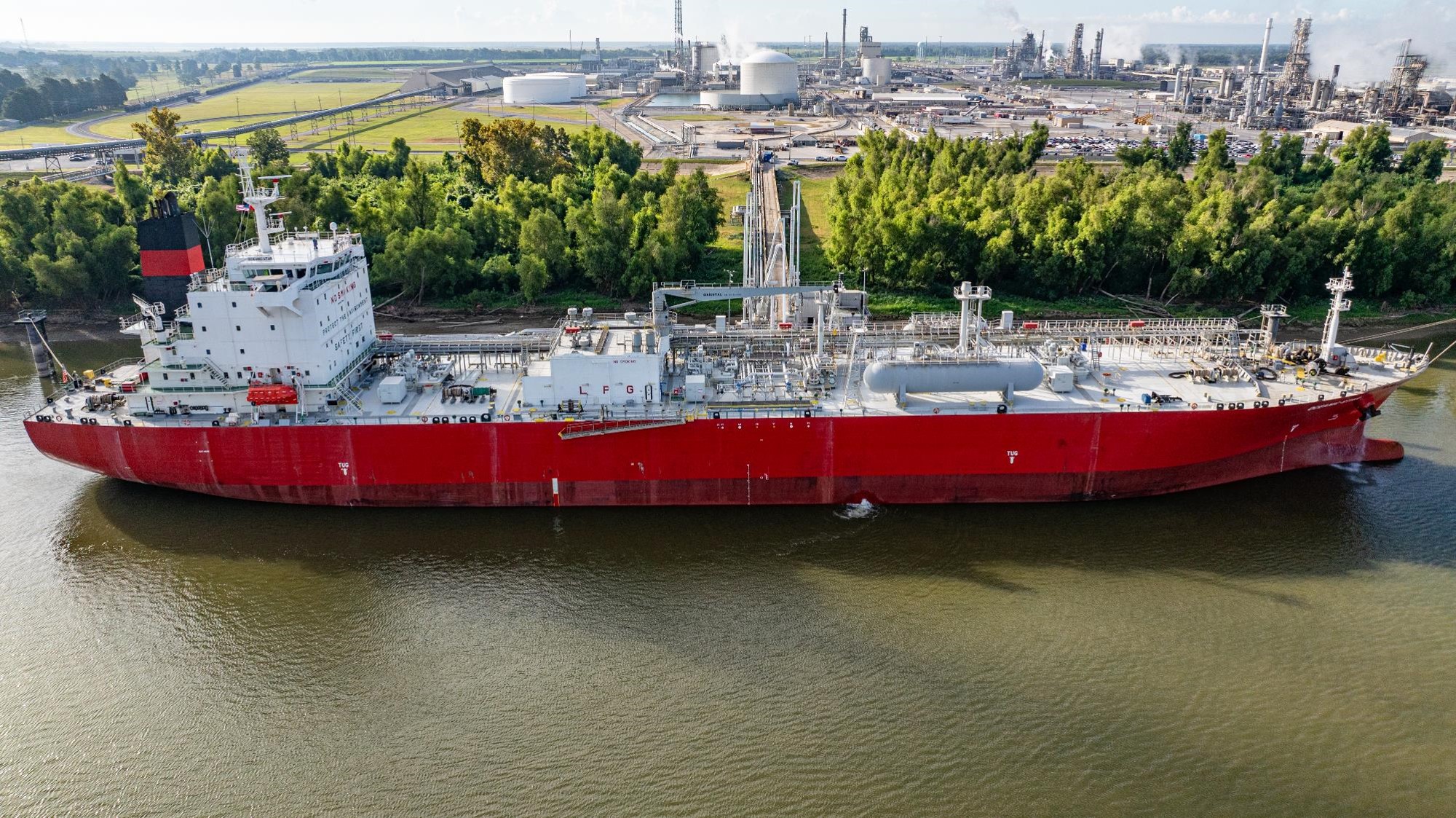
So does the route out of the plant. CF uses pipelines, barges, rail, trucks, and ocean vessels. It says its network can shift which product it maximizes, urea or UAN, within hours. That flexibility gives managers room to respond when prices and demand change. Buyers can also book forward deliveries, giving CF advance cash and greater production visibility.
The business earns its money from selling physical tons, with margins exposed to gas costs, fertilizer prices, and freight. Lower-carbon versions create another possible source of value: customers willing to pay for a different emissions footprint. The economic argument begins with those customers, rather than with the adjective attached to the product.
The distinction shows up in the numbers. In the first half of 2026, CF reported $4.21 billion in net sales, compared with $3.55 billion a year earlier, even as sales volumes declined 11%. Higher prices outweighed fewer tons. A manufacturer can run efficiently and still depend on market forces outside its gates; customers purchasing fertilizer face the other side of that same price movement.
Two projects. Two different answers.
Donaldsonville’s capture equipment enables storage of up to two million metric tons of CO2 annually. ExxonMobil handles transport and sequestration. CF’s startup announcement disclosed an interim arrangement using enhanced oil recovery while dedicated storage awaited permits. That detail matters: the route underground is part of the product’s environmental story, alongside the equipment inside the factory fence.
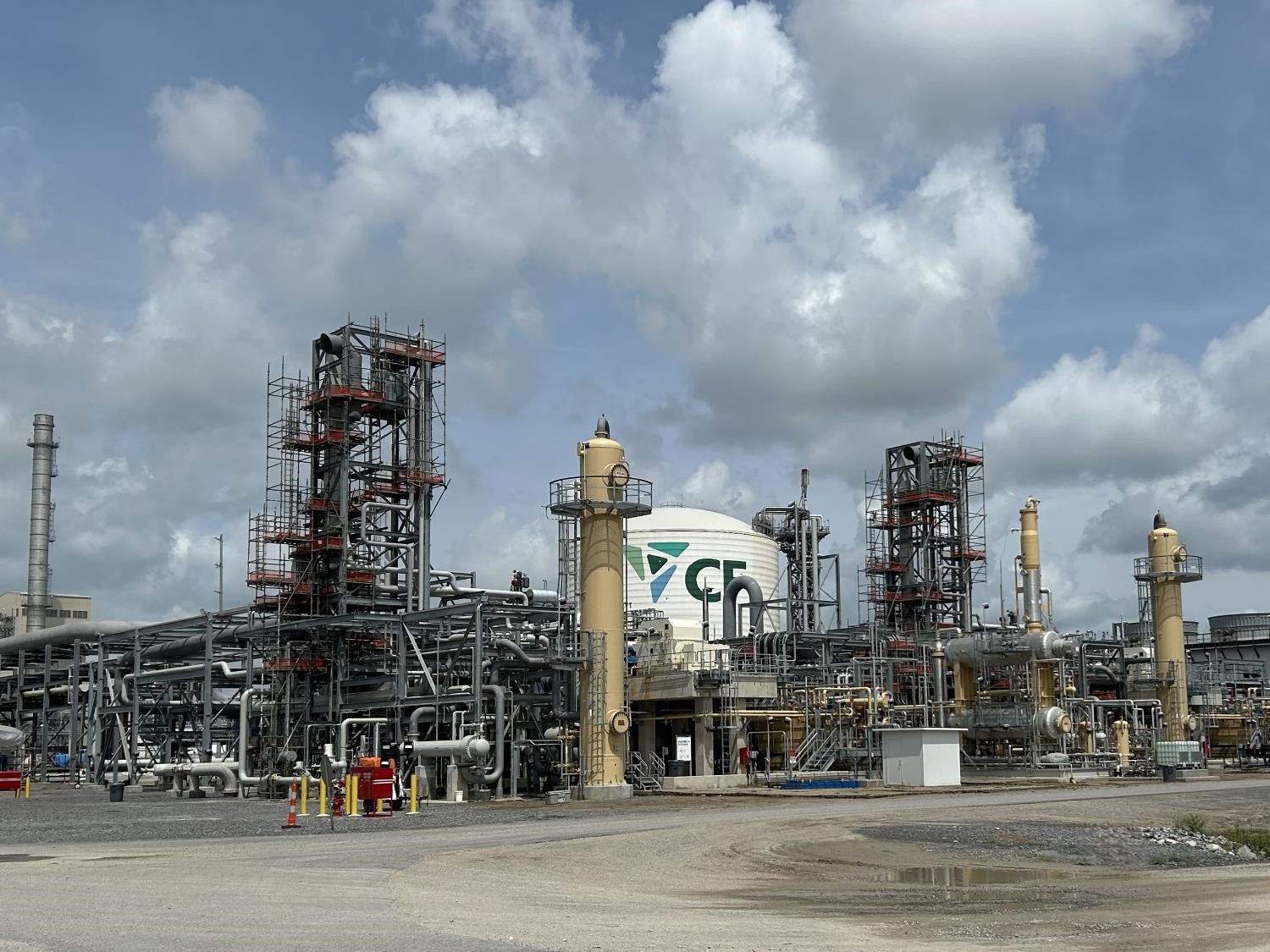
A separate Donaldsonville project encountered a harder answer. Commissioning of a 20-megawatt electrolyzer was suspended after an issue in late 2024. In December 2025, management reviewed the additional investment and operating expense required to finish it. The returns were unacceptable. CF stopped the incremental investment and recorded a $51 million impairment, favoring carbon capture’s economics.
That sequence is more useful than a tidy technology prediction. A commissioning problem came first. A return calculation determined what happened next. Businesses considering similar investments can copy the discipline: reassess completion costs and operating costs together, even after money has already been spent.
The buyers help build the plant
Blue Point One takes that commercial logic into a new Louisiana ammonia plant. CF, JERA, and Mitsui broke ground in August 2026, targeting production in 2029. CF owns 40%, JERA 35%, and Mitsui 25%. Each partner takes product in proportion to its ownership. Future demand therefore has representation at the investment table.
Separate investments. August 2026 announcement.
The plant’s announced investment is $3.7 billion, plus CF’s separate $550 million infrastructure commitment. Linde will spend more than $400 million on an air-separation unit. Planned ammonia capacity is 1.4 million metric tons annually. Splitting responsibilities across specialist partners distributes capital requirements; it also makes execution depend on several connected projects arriving together.
Ammonia’s energy applications also demand patience. CF is pursuing uses in power generation and marine shipping, alongside its established fertilizer markets. Those opportunities require customers to develop the equipment and supply arrangements that make consumption possible. An ammonia manufacturer can prepare export capacity and secure project partners, but a completed factory alone cannot guarantee that a new fuel market will arrive on schedule.
Start with a potato
The nearer-term customer story is pleasantly ordinary. In April 2026, CF announced a commercial agreement with PepsiCo for certified low-carbon UAN reaching Frito-Lay potato growers through fertilizer retailers. Donaldsonville combines carbon capture with nitric-acid plant emissions abatement. Farmers get a familiar fertilizer with a different production footprint. Adoption requires less adjustment at the field than inventing a new crop-input category.
“We put safety first”
CF Industries / corporate values
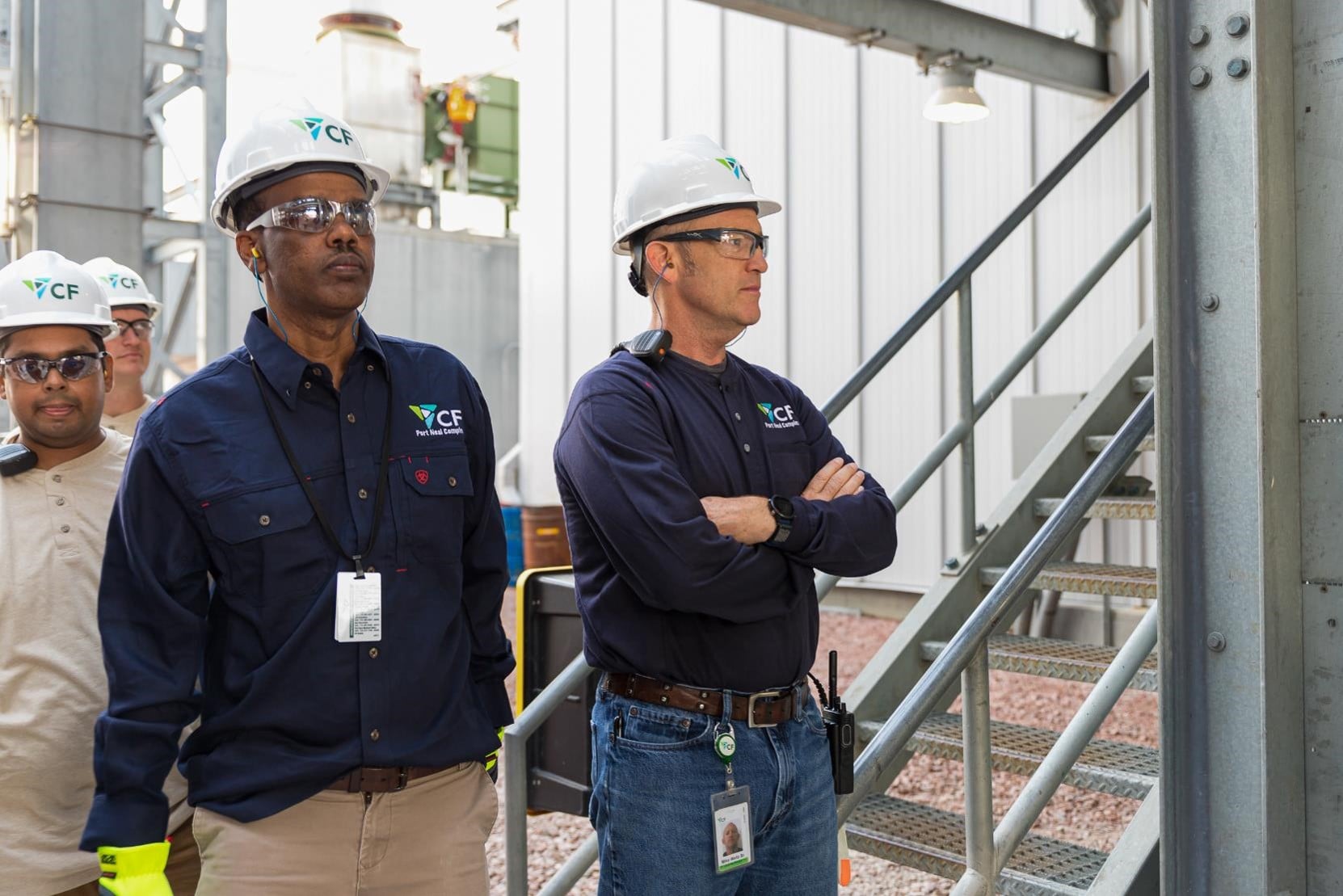
Execution still governs the outcome. Despite its stated safety priority, CF reported an extended Yazoo City outage following a November 2025 incident; its August 2026 update expected production to resume in the first half of 2027. Equipment availability can interrupt an investment thesis long before a new market matures.
The broader conditions are equally concrete. Low-carbon premiums need willing buyers. Capture projects need storage, permits, and favorable economics, including applicable tax credits. Capturing production CO2 does not erase upstream emissions or fertilizer’s impacts after application. CF’s most persuasive proposition is the modest one already being tested in potatoes: improve the manufacturing footprint of something customers know how to use.