A sheet of glass enters a First Solar factory. About four hours later, it leaves as a solar module. Somewhere inside that interval is the explanation for a company that has survived a remarkably unforgiving industry. The interesting invention is the panel. The more consequential invention may be the sequence of machines that makes it.
- The bet: cadmium telluride thin film, rather than crystalline silicon.
- The buyer: developers and power producers ordering for large solar projects.
- The lesson: design the factory, installation and eventual recycling together.
First Solar manufactures photovoltaic modules: equipment that converts sunlight into electricity. Its customers buy the ingredients of power plants, often years before those plants are finished. They need predictable deliveries, understandable warranties and an energy yield they can put into a financial model. A clever semiconductor helps. A credible promise matters, too.
The factory is part of the product
Most familiar solar panels use crystalline silicon cells. First Solar deposits a thin semiconductor layer onto glass, using cadmium telluride, or CdTe. Its integrated process brings the manufacturing steps together under one roof. That architecture avoids the conventional silicon chain of polysilicon, ingots, wafers, cells and module assembly spread across suppliers.
This is more than a chemistry preference. Controlling the process gives the manufacturer a tighter view of materials, quality and traceability. It also requires owning expensive equipment and making that equipment work repeatedly. First Solar’s expertise lives at the intersection of semiconductor science, glass handling and industrial production. Laboratory progress must survive the factory floor.
The ancestry fits. Harold McMaster, a glass entrepreneur, founded predecessor Solar Cells, Inc. in 1990. True North Partners acquired a controlling interest in 1999, the year First Solar dates its founding. Michael Ahearn and John Walton supplied an important part of the company-building chapter. The origin is less garage software than glass, patient capital and difficult machinery.
A panel has to get along with its neighbours
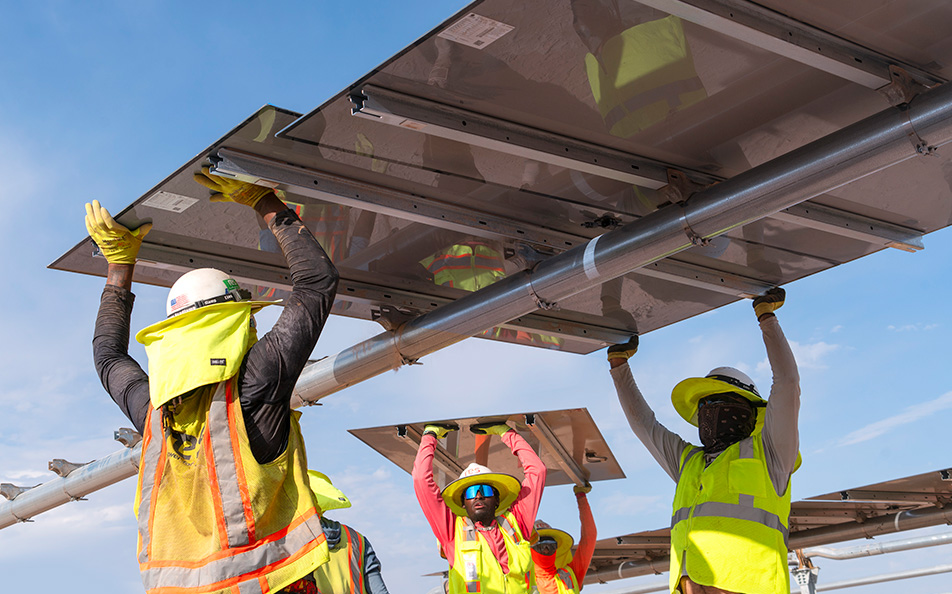
The Series 6 family and Series 7 are the commercial expression of that machinery. Series 7 TR1 uses a larger format and a steel backrail designed for mounting. First Solar says it developed the product with engineering, procurement and construction firms, plus structure and component suppliers. Installation belongs in the design conversation from the beginning.
Why care about the back of a panel? Because somebody has to attach thousands of them to a structure. Labour, mounting hardware and handling can turn a promising module into an awkward project. An improvement that saves time across an entire field can matter as much to a buyer as a better number on a laboratory chart.
CdTe has useful performance characteristics, particularly in heat. A US Department of Energy assessment describes favourable energy yields per rated watt, partly because of temperature behaviour and spectral response. But its assessment also identifies weaker bifacial performance than advanced silicon technologies. The right comparison is electricity produced across a particular site and lifetime, including installation costs.
The customer buys years ahead
Consider Lightsource bp and bp. In November 2021, they announced orders for up to 5.4 gigawatts of First Solar modules, including approximately 4.4 gigawatts of firm orders and another gigawatt in options. Scheduled deliveries ran from 2023 through 2025. This is procurement as choreography: factories, construction schedules and capital have to arrive in step.
First Solar earns revenue primarily by selling modules under supply agreements. It also offers recycling services and post-sales support. Its current contact page is unusually direct about the boundary: the company does not develop or construct solar projects, or provide project operations and maintenance. Those activities belong to other businesses. Buyers get a manufacturer with a defined job.
“pricing and delivery certainty”Mark Widmar, CEO, describing a customer priority in the 2025 results
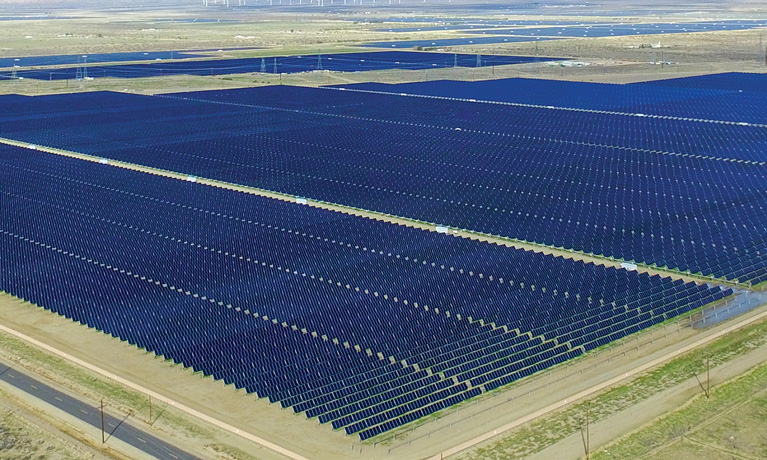
The numbers show both scale and friction. First Solar reported about $5.2 billion in 2025 sales. At June 30, 2026, contracted backlog stood at 45.1 gigawatts. Backlog is promised future volume, not cash already earned. Construction delays, customer changes and contract terminations can interrupt the conversion from an impressive order book into recognised revenue.
An expensive education in demand
The business did not arrive here by making every bet correctly. In April 2012, deteriorating European market conditions prompted First Solar to announce the closure of German manufacturing and the idling of four Malaysian production lines. Approximately 2,000 jobs were affected, about 30 percent of its workforce. The announced restructuring charges were expected to reach $245 million to $370 million.
What gave way was the assumption that the existing manufacturing footprint still matched the market. First Solar’s filing cited insufficient policy support for European utility-scale projects. Technical capability could not manufacture demand. The response was a painful adjustment of capacity and geography. That episode makes its later emphasis on contracted demand easier to understand.
A second adjustment narrowed the business itself. In 2021, First Solar agreed to sell its US project development business to Leeward. The approximately $261 million announced purchase price included modules and other equipment, so it should not be mistaken for a clean valuation of the development operation. Manufacturing became the clearer centre of gravity.
The billion-dollar roof over the idea
Owning the process remains expensive. First Solar inaugurated its $1.1 billion Louisiana manufacturing facility in November 2025. At full ramp, the announced annual nameplate capacity was 3.5 gigawatts. Nameplate capacity describes potential output; it does not guarantee production or sales. Buildings and tools arrive before the revenue that must justify them.
Industrial policy is part of the economics. The company’s July 2026 outlook assumed $2.10 billion to $2.19 billion in Section 45X manufacturing tax credits for the year. Those credits are not customer sales. They help explain why evaluating the business requires looking beyond panel technology to the rules supporting domestic manufacturing.
Plan the return trip
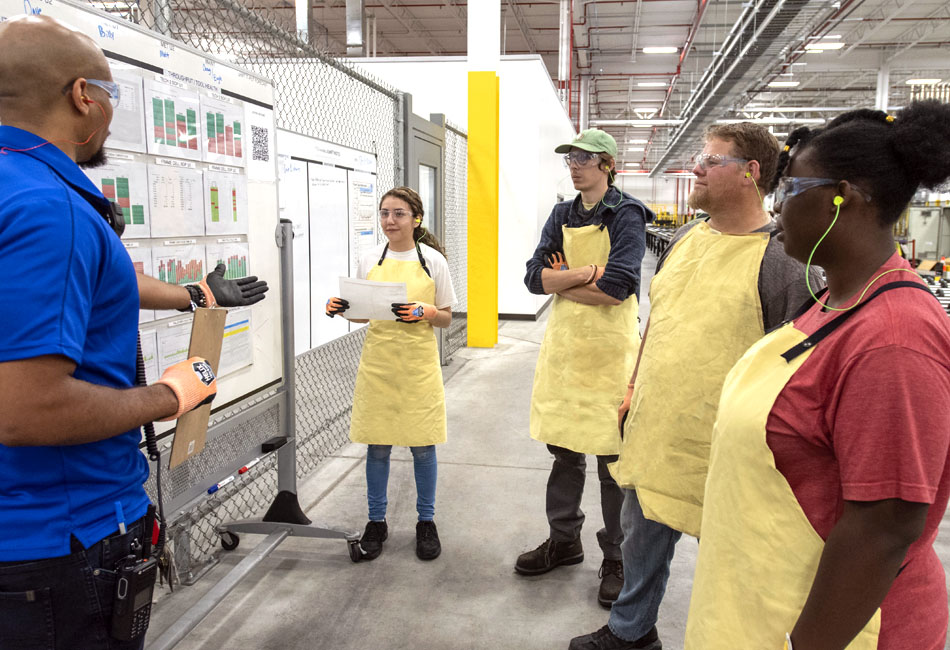
First Solar also operates module recycling facilities. It reports recovery of roughly 90 percent of glass and more than 90 percent of semiconductor material through its established process. Those are recovery rates for material processed, not proof that every panel sold comes back. Collection, transport and the economics of returning old modules remain practical problems.
There is a useful idea here for anyone building a physical product: make the handoffs part of the design. Ask the installer about mounting. Ask procurement about traceability. Ask what happens when the product wears out. First Solar ties those questions to one manufacturing system, giving customers several reasons to consider it beyond the panel’s rated wattage.
The approach has conditions. A space-constrained roof, a site that rewards silicon’s bifacial performance, or a buyer seeking the lowest available module price may favour alternatives from companies such as LONGi, JinkoSolar or Trina Solar. First Solar’s proposition becomes persuasive when lifetime output, delivery, sourcing and domestic production carry enough value to pay for the factory behind the glass.
Follow the current
Explore the products, meet the people and watch the process.