The invitations arrived after Carolyn Rodz had sold the company. There were conferences to speak at, people to meet, circles to enter. A whole apparatus of help seemed to materialize once she had demonstrated that she could manage without it. For someone who had already closed one business, the timing was difficult to admire.
She knew what the earlier version of herself would have done with those introductions. That entrepreneur had questions about hiring, money and where to spend the next working hour. She had contacts in banking, her former profession, but few fellow founders to call. By the time the entrepreneurial welcome committee appeared, she had sold her second business to a client.
That sequence became the problem she wanted to work on. Hello Alice, which she co-founded with Elizabeth Gore, connects small business owners with funding opportunities, business resources and networks. Beneath the technology sits a personal grievance with a surprisingly ordinary shape: useful information has a habit of reaching people who already know where to look.
Rodz could have treated her invitations as the agreeable dividend of a successful exit. Instead, she kept returning to the entrepreneur who had needed them earlier. The question was how to make an introduction arrive before its recipient had collected the credentials to deserve one.
Cookies before capital
Long before banking, there was a bakery. During childhood summers in Bolivia, Rodz watched cookies travel along the conveyor belt at her grandparents’ business. It supplied shops across the country. Entrepreneurship had a visible output, and a particularly persuasive smell.
She grew up in Spring, Texas, with another example close at hand: her father ran a business. Her own early ventures included raking neighbors’ lawns, selling things door to door and babysitting. The appetite for starting something preceded any polished theory about how businesses should work.
She studied finance at Texas A&M University, earning a B.B.A., and worked as an investment banker at JPMorgan from 2001 to 2005. It was a respectable route with an intelligible ladder. Entrepreneurship offered considerably fewer signs telling a person where to stand.
At 25, she left that route to launch a luxury home and gift business. The products included stationery, gift wrap and fragrances. A biography records distribution in more than 400 stores, including Neiman Marcus, Harrods and Bloomingdale’s. Those are names an entrepreneur can mention at dinner without having to explain very much.
But a recognizable stockist cannot do the work of a cash-flow forecast. After two years, the company closed. The contrast matters because it complicates the tidy startup fable in which customers discover a product and everything thereafter is merely a question of keeping up.
The booth at the back
One episode captures the problem. At the National Stationery Show, Rodz had a booth so far back that she worried buyers would never find it. Then buyers from department stores began turning up deliberately. Her products had won a best-new-product award; she had been too occupied in her corner to discover it.
The welcome was real. So were the less photogenic jobs waiting behind it: managing inventory, winning repeat orders, training salespeople and paying for production before the money came back. She was packing boxes and writing thank-you notes herself. Beautiful packaging had acquired an expensive supporting cast.
This is where her story becomes more useful than a simple account of nerve. Training in finance had not automatically prepared her to run a small retail company. The scale, the sequence of decisions and the available help were different. Knowing how a large company raises money does not tell a solitary founder whom to call on Tuesday.
Rodz returned to work and paid down debts. She later founded Cake, a digital media and marketing business, which she sold. The second attempt gave her both a different outcome and a way to examine the first. The person was the same; the experience, information and relationships around her had changed.
“I really wanted to prove to myself that I could make it as an entrepreneur.”
Carolyn Rodz
She speaks about the failed venture without polishing it into a charming inconvenience. Starting again was an opportunity she was fortunate to have. That distinction gives her work an edge: a founder’s ability to recover should not depend entirely on whether she can afford another attempt.
A useful circle, with room to enter
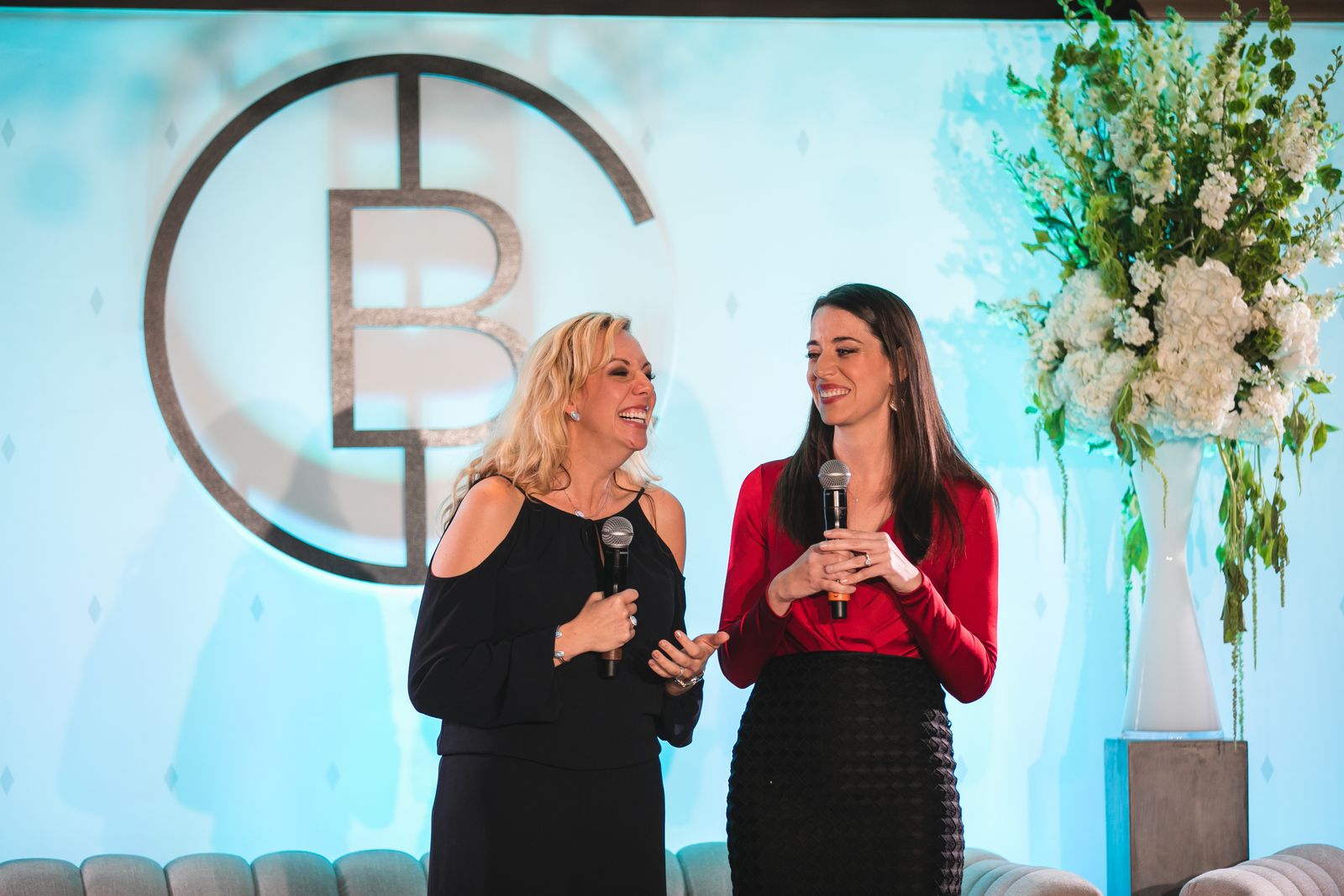
Rodz began connecting women entrepreneurs with the help she had wished for. Circular Board, her virtual accelerator, offered a way to work on a business without first moving to a startup hub. For a mother in Houston, a program requiring months in California or New York was a substantial logistical request.
That design choice carried an argument. A founder’s address and family arrangements should not determine whether she can meet an adviser. A virtual program could bring the conversation to her. Geography was something to accommodate in the product, rather than an inconvenience the customer had to solve.
Gore brought experience from Dell, where she was entrepreneur-in-residence, and an interest in making support reach more owners. The two met at an entrepreneurs’ gathering in Utah in 2015 and stayed up through the night discussing the possibilities. Their partnership joined Rodz’s experience of running businesses with Gore’s work building institutional connections.
There was also an event, Circular Summit. The first took place in Houston in April 2016, bringing founders, investors and mentors together. The point of making help available online was never to abolish the pleasure or usefulness of meeting another person. It was to make the circle easier to enter.
Rodz carried that thinking into public policy, testifying before the House Small Business Committee in 2017. She later became co-chair of Houston’s Women and Minority Small Business Task Force. The progression is telling: the obstacles she had encountered inside a business had become questions she was prepared to bring into public rooms.
A rabbit, an engineer and a long commute
Alice made its public debut at Dell EMC World in May 2017. The name came from Alice’s Adventures in Wonderland, a reasonable literary companion for anyone who has tried to build a company while the rules keep changing.
The early working arrangements were more domestic than the technology launch might suggest. With support from Dell, Rodz went to Pivotal Labs in San Francisco to build the platform. She took her children, moved in with Gore in the North Bay and commuted into the city. Her development team included herself and one engineer.
The scene offers a useful antidote to the effortless origin story: two households making room, children in tow, hours on the road, software to build. A business devoted to removing friction required its founders to live through a fair amount of it.
What emerged broadened the accelerator idea. A structured program can admit a cohort; a digital platform can keep helping people who never secure a seat in one. The task became matching an owner’s circumstances with an opportunity that might be useful now. The familiar question from Rodz’s first business, what should I do next, had become a product problem.
She wants the numbers to work, too
There is a temptation to describe this entirely as an exercise in generosity. Rodz keeps bringing it back to the business underneath. In 2021, as Hello Alice raised a $21 million Series B, she spoke about profitability and the importance of having strong fundamentals before putting more capital to work.
That preference is consistent with what she learned in retail. More activity can make a company look successful while leaving its underlying problems intact. Raising money introduces another obligation: the money needs a job. A funding announcement is a milestone, but it is a poor substitute for an operating plan.
In April 2024, Hello Alice announced a Series C and a $130 million company valuation. QED Investors and Mastercard participated, alongside backers including Guy Fieri. The company reported a community of 1.5 million small business owners. By November that year, its grant programs had crossed $50 million since 2020.
April 2024
November 2024
Company-reported milestones. Community size and grant funding measure different things.
Those figures describe the scale of the operation; they do not promise an outcome for any individual owner. The interesting test remains smaller and more demanding. Did someone find a relevant opportunity? Did the introduction come while there was still time to use it? Rodz’s original frustration supplies a useful standard against which to judge the machinery.
Her ambitions now include more personalized guidance through artificial intelligence. The challenge is familiar even when the technology changes: help has to fit the business receiving it. A founder does not gain much from a magnificent directory if finding the useful entry becomes another unpaid occupation.
The next invitation
Rodz’s public writing stays close to those working concerns. Her articles address funding decisions, tax refunds, the experiences of Hispanic business owners and ways women technology founders can secure capital. These are subjects with paperwork attached. They suit someone whose account of entrepreneurship includes the boxes as well as the branding.
She also describes herself as an optimist. In conversation, that optimism is tied to looking for something she can change. It is an active habit, grounded in the possibility of another move. Her earlier businesses give that position some weight: she has experienced both the closing down and the starting over.
The child watching cookies move through a Bolivian bakery could see what a business produced. The adult building Hello Alice is concerned with something harder to spot: the advice, timing and introductions that help production continue. She knows the difference an open door can make. She would prefer it to open while the person outside still needs to get in.