When Carol Fishman Cohen was ready to return to her career, the company she had left was no longer there. Drexel Burnham Lambert had collapsed in February 1990 while she was on maternity leave with her first child. An investment bank had managed to make the return-to-work decision unusually straightforward: there was nowhere to return. The harder decision was whether to look for another job. She decided to wait.
Eleven years later, with four children and a professional past that could look very distant on paper, she joined Bain Capital’s Sankaty Advisors. That could have supplied a tidy ending: the banker returns, the gap closes, everyone gets on with the spreadsheet. Cohen stayed about a year. She was becoming interested in the journey itself, including the people who wanted to make it and the employers who were unsure about letting them try.
Today, her work has a name: career reentry. The company she co-founded with Vivian Steir Rabin, iRelaunch, brings returning professionals and employers together. But the revealing part of Cohen’s story sits before the company, before the conferences and the TED talk. It is the moment when getting her old professional life back ceased to be a sufficient answer to the question of what she wanted to do next.
A return requires homework
Cohen had studied economics at Pomona College, graduating in 1981, and earned her Harvard MBA in 1985. Her early working life included manufacturing at Flextronics and corporate finance at Drexel. Those experiences gave her something substantial to return with. They also left a practical problem: business had continued happening while her attention was elsewhere.
Before her return, she worried she would bring up companies that had disappeared through takeovers, bankruptcies or name changes. She resubscribed to The Wall Street Journal and read it closely for months. She reviewed financial concepts and refreshed her software skills. The work was specific, repetitive and rather less cinematic than a comeback montage. No swelling orchestra can teach a spreadsheet.
The Harvard Business School case about her return, published in May 2003, treats the transition as a set of decisions. Networking. Résumé preparation. Interviews. Expectations at work. Parenting responsibilities at home. There is something useful about seeing these matters put on the same page. A job offer does not rearrange a household by magic, any more than a household automatically explains an applicant’s professional abilities.
The case ends with an offer from Sankaty. Her life continued beyond that ending. A successful search could establish that she was employable without settling which work would fit. In that distinction lies much of the usefulness of her example: returning can be an experiment with results, including results that send a person in another direction.
- 1990Drexel closes.
A break begins. - 2001Back to finance.
A question takes shape. - 2007A book.
Then a business. - 2026Akraya acquires
iRelaunch.
The book came before the business
Cohen’s next undertaking paired her with Rabin, another Harvard MBA who had returned after a career break. Their book, Back on the Career Track, appeared in 2007. Its subtitle addressed stay-at-home mothers who wanted to return to work. Its seven-step approach made room for assessing options, updating skills, networking, preparing for interviews and getting family support. The contents read like a sequence of tasks someone could actually begin.
Their research took them into conversations with more than 100 women who had returned to work, as well as recruiters, employers and academics. One interview brought them to the chambers of Supreme Court Justice Sandra Day O’Connor in March 2005. O’Connor had taken a five-year break to raise her sons. For a project seeking examples of what might follow a pause, a Supreme Court chambers visit offered a fairly persuasive answer.
The authors were also finding that other institutions wanted their help. Lehman Brothers asked them to present and screen candidates. Dartmouth’s Tuck School sought focus groups and presentations. Cohen has described the company as an outgrowth of those unsolicited requests. They had set out to write a book; organizations were offering to pay for the expertise behind it. iRelaunch was founded in the same year the book appeared.
There is a pleasing lack of entrepreneurial choreography here. A difficult personal experience led to investigation. Investigation produced a book and relationships. Those relationships produced work. The business could begin with questions that real people were already asking, rather than questions invented to fill the last slide of a presentation.
An internship with a longer backstory
Cohen became associated with an idea that sounds faintly mischievous on first hearing: the midcareer internship. Her 2012 Harvard Business Review article was titled “The 40-Year-Old Intern.” The title put the age assumption in plain view. An intern, conventionally, is someone near the beginning. A returning professional may arrive with years of experience and still need a supported route into a new workplace.
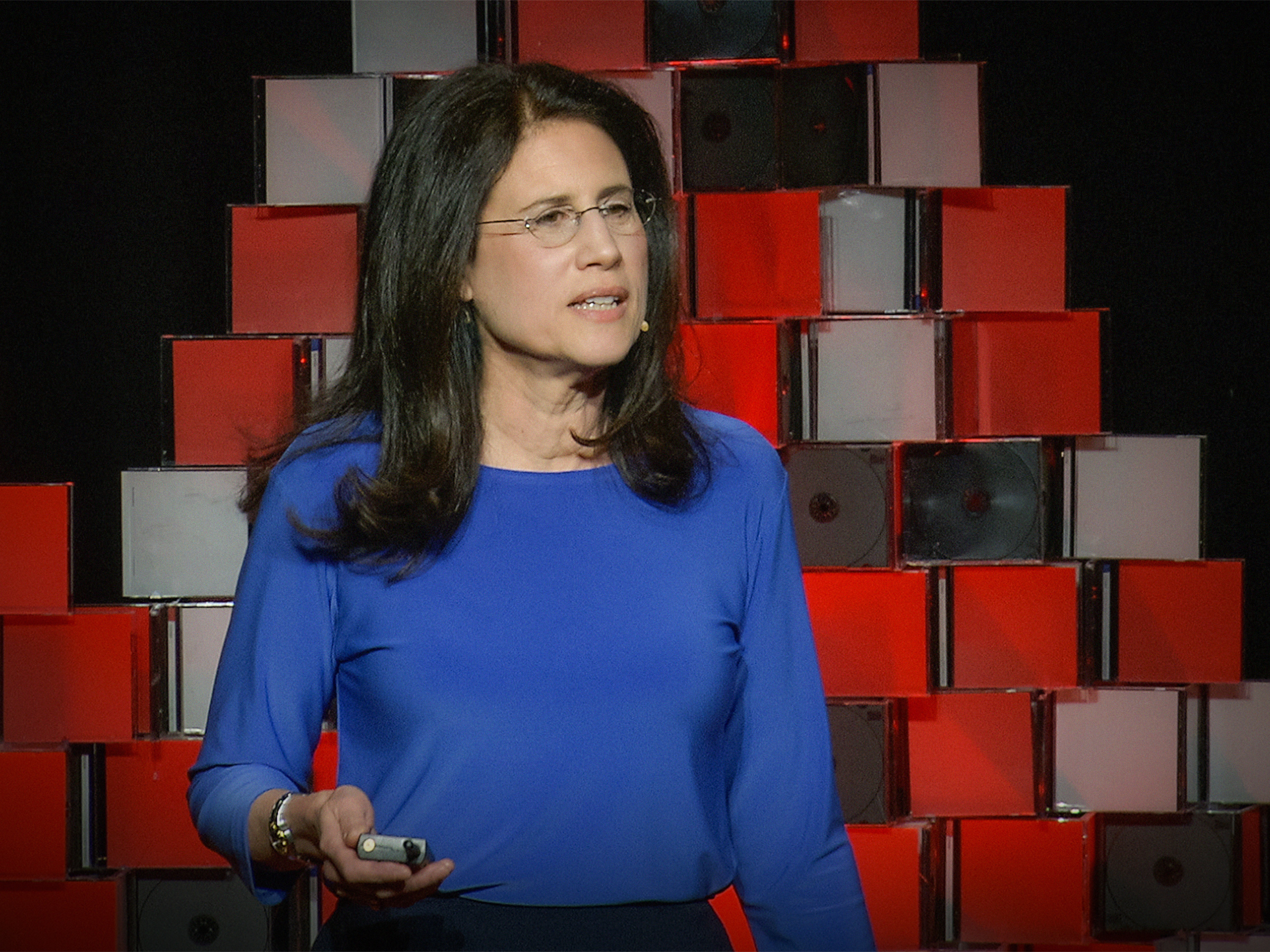
Her TEDxBeaconStreet talk, filmed in November 2015, took the argument to a wider audience. She asked people considering a return whether they would consider an internship. She also addressed the employer’s hesitation. A period of work gives a manager something to assess beyond an old job title and a conversation across an interview table. It gives the returning professional a chance to demonstrate current ability.
The idea rearranges the significance of the blank space on a résumé. A program designed for returners needs applicants who have taken time away. The very experience that can make conventional applications difficult becomes part of eligibility. That is a consequential change in the first question an employer asks, even though the candidate still has to meet the requirements of the job.
“People don't lose their ability to be high performers simply because they take a career break.”
Carol Fishman Cohen
Cohen’s argument also accommodates direct hiring with transitional support. The destination need not always be an internship. A company can hire someone as an employee from day one and still provide mentoring and a structured introduction. The common task is to make the return workable. Keeping a particular program format alive is a smaller ambition than getting experienced people into paid work.
From a finance problem to an engineering experiment
The work spread beyond finance. In 2015, iRelaunch and the Society of Women Engineers established the STEM Reentry Task Force. Its purpose was concrete: help employers build programs to recruit, onboard, support and retain returning professionals, with technical roles in the mix. Participating companies could learn from one another as they developed their own programs.
Across the initiative, iRelaunch reports 44 participating employers and 34 launched programs. It also reports more than 1,000 participants, with an 85 percent hire rate after completion of the employer programs. These are figures for that initiative, rather than a prediction for every applicant. They make an abstract argument about overlooked experience easier to examine: organizations created routes in, people used them, and employers made hiring decisions.
participated
launched
program completion
For Cohen, that work connected the personal return with institutional design. One person can refresh skills and practice an interview answer. An employer can decide how to assess that person, who will help them settle in and whether a manager has prepared meaningful work. Both sides have practical responsibilities. Encouragement is welcome; a prepared hiring manager is useful on Monday morning.
Enough specificity to start a conversation
Cohen’s advice to individuals can be disarmingly precise. In conversations about career transitions, she asks people to identify the work they want to do. A broad wish to return to finance gives a contact little to act on. A defined area of interest gives direction to study, conversations and applications. Specificity makes it easier for another person to recognize a possible fit.
She also encourages returners to reconnect with former colleagues. The Stanford account of her approach describes a helpful asymmetry: someone who remembers your good work may retain that impression even when you feel far removed from it. A long absence can loom larger in your own explanation than in a former colleague’s memory. Reopening the conversation gives that earlier work a chance to count.
Her 3,2,1 iRelaunch podcast supplies many versions of the return story, rather than asking one biography to carry the whole argument. Listening to other people describe their choices makes room for different jobs, different breaks and different destinations. Cohen’s own path qualifies her to ask questions; the guests keep extending the range of answers.
There is an everyday person inside the career expert, too. Asked about an unusual talent in a 2009 interview, she singled out parallel parking while confessing to a poor sense of direction. It is a good small joke from someone whose professional life is devoted to helping people work out where to go. Arrival, apparently, presents fewer problems than navigation.
Another transition, this time by choice
In July 2026, Akraya announced its acquisition of iRelaunch. The combination brings Cohen’s company together with Women Back to Work and adds sourcing, staffing and onboarding capabilities to its community and program work. The announcement reported a community exceeding 125,000 professionals and relationships with more than 350 employers. Those numbers describe reach, while the next stage concerns what the combined organization can do with it.
The integration has a named leadership arrangement. Tami Forman will lead iRelaunch as executive director. Cohen says she will work closely with Forman and Akraya co-founder Sonu Ratra over the next three years. Her stated goal remains the normalization of career breaks. There is still work to do between declaring experience valuable and making it straightforward for an employer to hire the person who has it.
Cohen’s first return took her back into a field she knew. The work that followed required her to investigate a question she had experienced but could not answer for everyone else. She kept asking it in interviews, classrooms, conferences and company meetings. A résumé compresses all of that into dates and titles. Her career makes a case for leaving enough room to read what happened between them.