The decision arrived beside a dishwasher. Around 1999, nine years into a career break, Carol Fishman Cohen was loading plates when a sentence surfaced with none of the diplomacy that often accompanies a life change: “I got to go back to work.” She was not finished with parenting. She was finished with this particular arrangement of her days. The distinction would eventually become her subject, her company and, in a quiet way, her rebellion against the straight-line résumé.
Cohen had left Wall Street without planning an exit. In February 1990, Drexel Burnham Lambert collapsed while she was on maternity leave with her first child. The institution disappeared, the job disappeared, and hundreds of colleagues scattered. She and her husband expected more children, so she did not pursue another demanding role. Part-time work followed for a couple of years. Three more children followed too. From 1990 to 2001, home, school and community became the full geography of her working life.
There were annual reminders of the world she had left. Former colleagues gathered at a Christmas party, careers accumulating around the room. Cohen stayed in touch with people, but time developed its peculiar asymmetry: professional knowledge can age quickly even when professional capacity does not. By the kitchen revelation, nobody had handed her a return map. So she began making one.
“I got to go back to work.”Carol Fishman Cohen, recalling the moment her relaunch began
Chapter 01The useful work of becoming current
Cohen approached the return like an analyst. Her target was finance, so she reopened old finance books, reviewed transactions she had worked on and called former colleagues to ask what had changed. Which acronyms had appeared? Which products now mattered? How did the pieces fit together? Confidence, in this account, was less a mood to summon than a result of preparation. She was rebuilding fluency one technical noun at a time.
She also learned the arithmetic of networking. Many conversations lead nowhere; a few lead somewhere; the only way to reach the few is to have the many. This is not romantic advice, but it is mercifully actionable. In 2001, after 11 years away from full-time employment, Cohen joined Sankaty Advisors, then a Bain Capital division, in a financial analysis role. The firm hired the person standing in front of it rather than the blank years behind her.
The return lasted about a year. That brevity was not failure. Cohen had become absorbed by a larger question forming around Harvard Business School: what would it take for experienced graduates to re-enter professional life? Her own transition became a case study in 2003. She wrote her story as if it might be a magazine feature. Professors suggested a book. An individual career had begun turning into a field of inquiry.
Chapter 02Two authors who had never met
Vivian Steir Rabin entered the story through a mutual friend. Rabin, an HBS graduate one year behind Cohen, had taken a seven-year break and was researching a book about professional return. She interviewed Cohen by phone. Later, after Cohen decided to explore a book of her own, the two reconnected. They still had never met. They nevertheless agreed to write it together.
Their research was broad enough to resist the easy inspirational anecdote. Cohen and Rabin interviewed more than 100 women who had returned after breaks of different lengths. They spoke with recruiters, employers, academics and families. They sat down with Sandra Day O’Connor, whose own legal career included five years at home raising her sons. The point was to study the mechanism, not merely applaud the outcome.
Back on the Career Track appeared in 2007. The title promised movement, but the research complicated the old metaphor. A track suggests a train running in one direction on a fixed schedule. The people Cohen studied were changing speed, switching lines, stopping and re-entering. Their lives looked less like derailments than a transport system that employers had failed to map.
Chapter 03The company hidden inside the questions
iRelaunch began in the same year as the book, though a startup had not been the plan. Employers and business schools started making unsolicited requests. Could Cohen and Rabin present to a new program? Could they screen candidates? Run focus groups? The questions kept arriving with checks attached. A company was already behaving like a company before its founders had formally decided to build one.
When several people ask you to package the same hard-earned knowledge, pay attention. Repetition is often the first draft of a product.
The business expanded from conferences into consulting, training and employer program design. Cohen became the host of the 3,2,1 iRelaunch podcast. The company’s community grew past 125,000, and its work reached more than 350 clients. Cohen herself addressed more than 1,500 audiences. A Stanford business-school case examined iRelaunch, giving her story an appealing symmetry: first the comeback became a case; then the institution built from it did too.
Her public voice remained precise. She did not argue that time away automatically makes someone more skilled. She argued that it does not erase the ability to perform. When people ask whether parenting skills should lead their pitch, her advice is to focus instead on the work they want and the current expertise it requires. The relauncher deserves a fair test, not a sentimental exemption.
Chapter 04A work sample beats a blank stare
The practical device at the center of Cohen’s work is the returnship: a paid, time-bound, mid-career work experience. Its elegance lies in replacing projection with evidence. A manager who worries that an experienced candidate has become rusty can observe fresh work. A returning professional can update skills, learn a culture and demonstrate range without pretending the intervening years never happened.
The returnship changes what gets judged
Cohen noticed internship-like re-entry arrangements emerging by 2010. Her analysis became the 2012 article “The 40-Year-Old Intern,” a title supplied by editors and sharpened by its faint absurdity. Internships had been culturally reserved for the young. Here were accomplished adults using the same structure for a different transition. The container was familiar. The candidate was new.
The deeper reframe arrived when a career break became an eligibility requirement. In many return-to-work programs, the gap that once got a résumé discarded is precisely what allows a candidate to apply. Later, LinkedIn added “career break” as a profile category. A line of white space gained a label. Labels are not sufficient reform, but they allow systems to recognize what previously registered as an error.
“People don’t lose their ability to be high performers simply because they take a career break.”Carol Fishman Cohen
Chapter 05From individual return to employer infrastructure
In 2015, iRelaunch and the Society of Women Engineers began co-leading the STEM Re-entry Task Force. Over nearly ten years, 44 employer members joined to create programs across technology, aerospace, defense, pharmaceuticals, automobiles, industrial equipment, oil and gas, and other fields. The work moved the burden from the individual candidate toward institutional design. A person can refresh her vocabulary; only an employer can redesign the doorway.
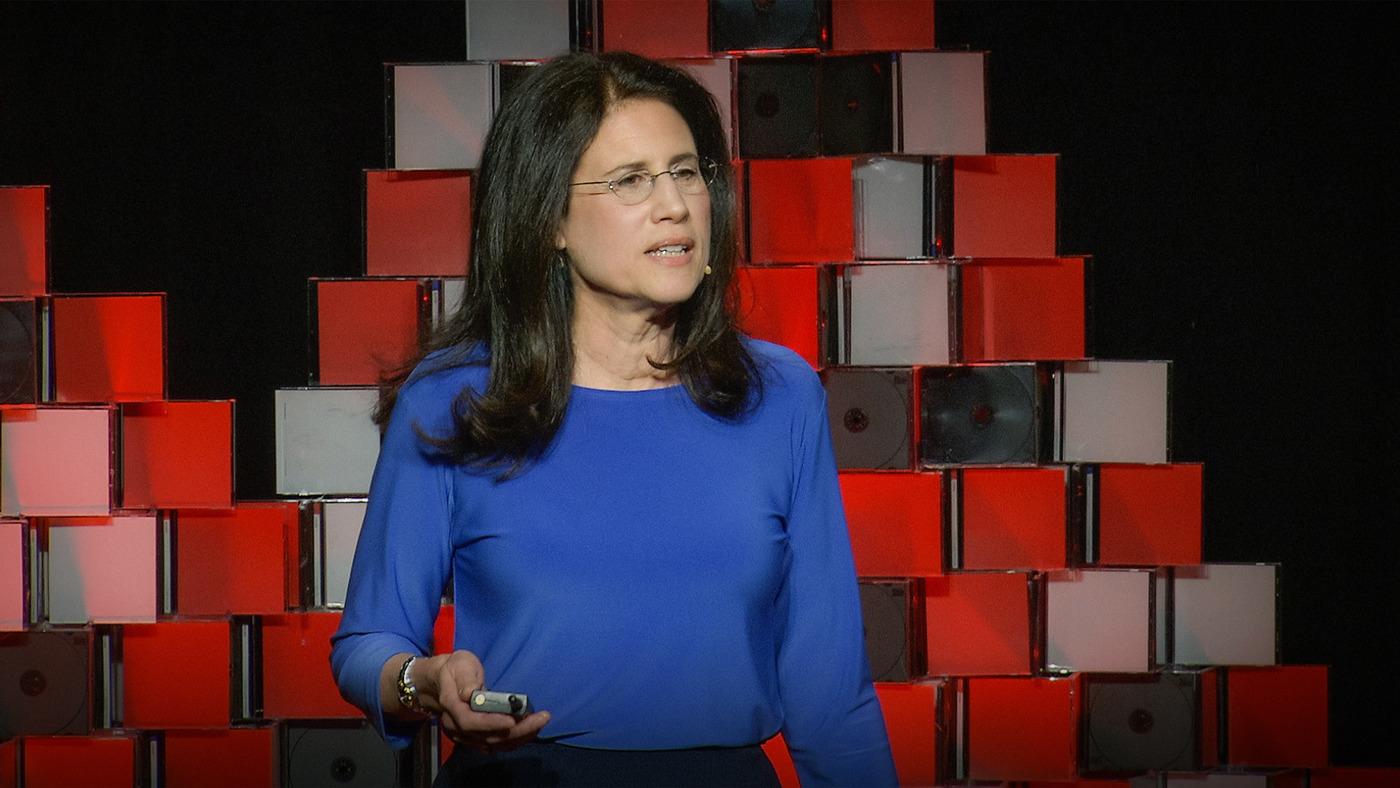
That same year, Cohen delivered a TEDxBeaconStreet talk titled “How to get back to work after a career break.” It has since collected nearly 3.8 million plays and translations into 30 languages. Its closing invitation was both strategic and cheeky: if an employer does not have a formal re-entry internship, suggest one. Become the first success story, then make the route visible for whoever comes next.
Recognition followed, though it reads less like a coronation than a map of the constituencies touched by the work. Thinkers50 placed her on its 2017 Radar and shortlisted her for awards in 2017 and 2023. The Society of Women Engineers gave her its President’s Award. She received honors connected to women’s enterprise, military-spouse employment and storytelling. Each points to the same structural fact: career breaks cross industries and identities because ordinary life does too.
Chapter 06The career line learns to bend
Cohen’s current argument reaches past a single return. As working lives lengthen, people may move in and out more than once. They may pause, re-enter, change fields and pause again. Employers that build credible on-ramps gain access to people with education, experience and a more refined sense of the work they want to do. Career-reentry programs become talent strategy rather than a charitable side project.
The 40th iRelaunch Return to Work Conference is scheduled for October 2026. Forty is a satisfyingly mature number for an institution born from the so-called 40-year-old intern. Yet Cohen’s most durable contribution may be linguistic. “Relauncher” gives movement and agency to a person a résumé parser might reduce to absence. The word does not deny the interruption. It gives the interruption a next verb.
Her own career supplies the final joke. The missing decade is the part that made the rest legible. Had Drexel survived, had Cohen followed a continuous route through finance, had the dishwasher never delivered its blunt instruction, the field she helped shape might have lacked one of its practitioners. A gap looked empty on paper. In life, it was accumulating the questions that became the work.