A young woman in an apartment building noticed that her neighbor left his Crocs outside the door. The shoes were blank. No charms, no clues, no personality. So she began adding Jibbitz, one at a time. A hot-sauce charm revealed a preference. The absence of a pizza charm revealed another. Footwear became correspondence, and correspondence became a meet-cute.
The woman worked at Crocs. When she told Carly Gomez, the brand's chief marketing officer, Gomez heard more than an office anecdote. She heard a plot in which the product had a natural role, personalization supplied the language and a pair of shoes carried the romantic suspense. Eight weeks later, Crocs released Charmed to Meet You, five short episodes with cliffhangers, on the microdrama platform ReelShort and on YouTube. By late March 2026, it had passed 10 million views.
This is the interesting thing about Gomez's marketing: the ideas often begin at human scale. A shoe outside a door. A creator who can make a recommendation feel irresistible. A teenager making identity visible through charms. She has spent a career learning how to spot those details, then helping large organizations move before the observation loses its pulse.
“Great marketing is not just about getting attention, it is about earning it and making people care.”Carly Gomez
The long route from the shop floor
Gomez did not arrive in the C-suite through a single grand brand campaign. Her education in footwear ran through retail visual merchandising, direct-to-consumer marketing, regional leadership, brand management and social media. She spent about 16 years at Vans, steadily widening the aperture of her job. The progression matters. Visual merchandising forces an executive to confront what people notice in physical space. DTC work exposes the messy route from attention to purchase. Regional marketing teaches the difference between a global idea and a slogan that merely travels.
At Vans, she eventually held responsibility across brand management, DTC and social media for both global and Americas marketing. She also helped lead the Vans US Open of Surfing, a nine-day machine involving athletes, broadcasters, local government, retail, community programs and three action sports. Gomez described the work through four traits: grit, influence, empathy and candor. The list feels less like ad language than a description of how complicated things actually get made.
Her LinkedIn record includes a Vans Sole Award for Leadership in 2014 and a Clio Sports Bronze in 2021 for Don't Try This At Home. Outside her operating roles, she became a board member of Building Futures & Friends, a guest lecturer at USC Marshall and a founding member of Chief. The through-line is not celebrity creativity. It is a manager's curiosity about how teams, channels and people connect.
After leaving Vans, Gomez joined Fabletics in 2024 as senior vice president of brand marketing and became its CMO in May 2025. Three months later she returned to footwear as senior vice president and CMO of Crocs. She moved to Colorado and into a brand that had already made a virtue of being divisive. Crocs did not need sanding down. It needed another chapter.
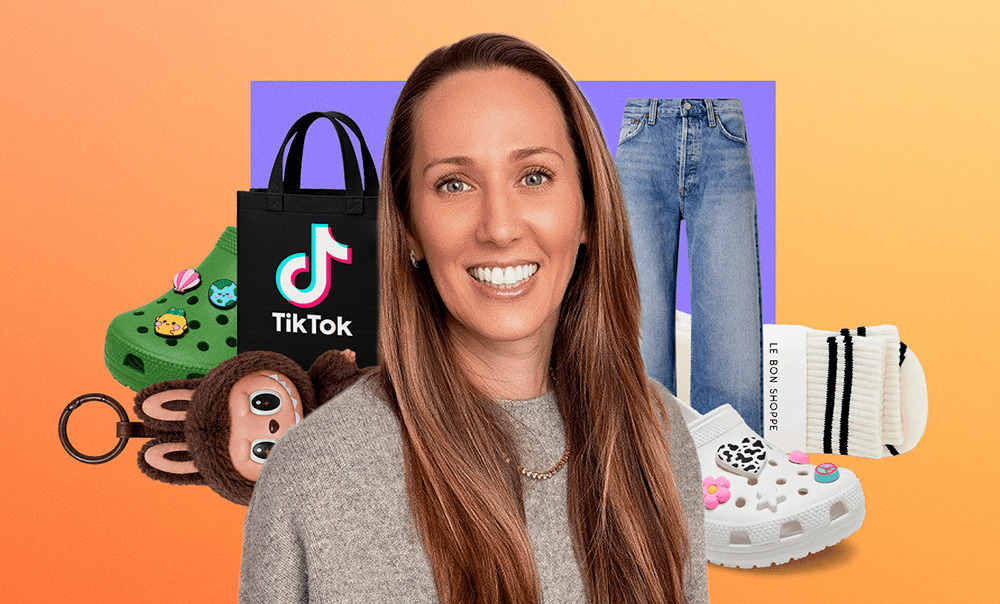
A brand can be strange without being random
In January 2026, Crocs introduced Wonderfully Unordinary, its first new global brand narrative in nearly a decade. The earlier Come As You Are idea had been an invitation to belong. The new platform moved toward becoming: trust your instincts, resist sameness and make the ordinary personal. The distinction is subtle, but useful. Gomez was speaking to a generation that had worn Crocs since childhood. The clog was no longer an ironic discovery. It was native material.
“Our true bullseye is Gen Z,” she said at Shoptalk in March. “They are really driving culture for the generations below and above them.” Her response has not been to paste youth slang onto conventional ads. It has been to ask where younger people already spend time and what kind of story belongs there.
That explains the microdramas. Their episodes are short, vertical, emotional and designed to end before the itch for the next installment disappears. Charmed to Meet You took the form seriously. The product did not interrupt the romance; it enabled it. Jibbitz acted as dialogue. This is harder than casual product placement because the object has to do narrative work.
Gomez calls the format “snackable content,” but there is a full meal of operational discipline underneath it. The team chose ReelShort because viewers already went there for serialized stories. It used TikTok to promote and show behind-the-scenes material instead of forcing longer episodes into the wrong feed. The campaign followed behavior rather than demanding behavior change.
The same instinct appears in Crocs' creator strategy. Gomez argues that talent needs a genuine connection to the brand and its values or the work will disappear into the noise. “Authenticity” is a word that corporate marketing has rubbed almost smooth. Here it has a practical test: would this person plausibly choose the product, and can the collaboration retain the peculiar tone that made people care in the first place?
The Gomez story filter
A conceptual editorial model, not measured company data. The point: observation comes first, format follows and the product earns its place.
The month that refused to end
Soon after Gomez arrived at Crocs, she heard another implausible proposal: livestream on TikTok Shop around the clock for all 31 days of Croctober. The arithmetic alone was slightly comic. Thirty-one days meant 744 consecutive hours of hosts, production, offers, comments and inevitable improvisation. Gomez backed the team.
The stream produced Crocs' strongest month on TikTok Shop and brought in roughly 87,000 new fans and customers, according to Gomez. Crocs later won Seller of the Year at the TikTok Shop Summit. The result is tempting to flatten into a stunt, but duration changed the nature of it. A one-hour broadcast is a campaign unit. A month becomes a temporary television network with commerce attached.
More revealing than the number is the culture required to approve the attempt. Gomez has described her priorities as driving culture internally and driving culture externally. The order deserves attention. A brand cannot behave experimentally in public if every unusual idea dies in a private meeting. Her leadership mantra is sharper: “Be hard on the work and easy on each other.” Demand clarity from the idea. Leave the bruising out of the room.
“The two most important things for me are driving culture internally and driving culture externally.”Carly Gomez
Former colleagues describe her as consumer-first, analytical, collaborative and willing to let teams make decisions. Those are not decorative traits when the task is a 744-hour live production or an eight-week entertainment sprint. Empowerment has a deadline. Curiosity needs a budget. “Move fast” becomes useful only when people know which parts of the brand must not move.
The CMO is also in the cart
Gomez's personal shopping habits offer a pleasantly unguarded view of the consumer observer. On Sunday mornings she reads fashion Substacks, including Magasin and Hilary Kerr's newsletter. During the week she shops on TikTok, where creators introduce her to unfamiliar products. She knows the persuasion machinery from the inside and remains persuadable. “I'm a marketer that knows that I'm being marketed to by influencers,” she has joked, “and I'm still just like, ‘I have to have this.’”
Recent purchases have included a tiny heart-shaped light for finding things inside a handbag and a blush that looked better on its recommender. She owns four Labubu figures, dresses them in miniature accessories and sees their appeal as part of the urge to signal identity through objects. Her sock drawer runs to white, black and navy, with the occasional pink daisy. She and her best friend have an annual ritual: tea, then new ear piercings.
And when she gets dressed, she starts with the shoes. “What Crocs am I going to wear today? What Jibbitz am I going to put in there?” Then come the jeans. This is funny in precisely the right way, because it collapses executive strategy into a daily gesture. She believes objects can carry stories because she uses them that way herself.
That may be the most portable idea in Gomez's work. Platforms will change. The current enthusiasm for microdramas may last or vanish into the same closet as yesterday's metaverse deck. The durable skill is noticing what people are already using to say something about themselves.
What comes after the clog
In 2026, the work expanded quickly: the Wonderfully Unordinary platform, creator campaigns, scripted entertainment, a second microdrama chapter and conversations from SXSW to Cannes. Gomez was named to Adweek's Creative 100 and Footwear News' Women Who Rock class. She used the latter recognition to redirect attention toward the teams she had worked with throughout her career.
Her stated ambition for Crocs is both global and grounded: help people express themselves, learn in markets rather than only from reports and keep the brand culturally relevant without blurring its identity. On trips through China, Japan, Paris and London, she has emphasized store visits and local teams. The CMO who came up through visual merchandising still wants to see the work at eye level.
There is no mystery in the formula, which is why it is difficult to copy. Listen closely. Keep the product peculiar. Choose the format people actually use. Let ideas travel upward from employees. Give the team enough trust to execute. Then be honest about whether anyone would care if the logo vanished.
A blank clog outside an apartment door looked like almost nothing. Someone noticed it anyway. In Gomez's hands, that small act of attention became the whole job.