Consider the distance between seeing a vacancy and getting to work. The vacancy is a few lines of text. The journey can involve an eligibility decision, a training course, a résumé, an employer introduction and someone checking what happened afterward. Career Team has made a business out of that distance. It operates employment programs and builds Career Edge, the software intended to keep those steps connected. The interesting unit here is the handoff.
- Runs workforce programs for public agencies and workforce boards.
- Builds software linking case management, learning and hiring.
- Sells to institutions; job seekers and employers use the services.
That combination gives the company an unusual vantage point. A software vendor can interview a case manager. Career Team can also employ one. Its project teams include people who have managed centers, advised employers and worked directly with participants. Their experience gives the company a practical starting point for deciding what belongs on a screen, what belongs in a conversation and where the two should meet.
A trade school asks for both
In February 2025, Dallas vocational school ForgeNow announced a partnership with Career Team. ForgeNow trains people in trades including HVAC, electrical work and plumbing. Its students need technical skills, but its employer partners were also asking for customer-facing soft skills. The school wanted help preparing graduates and connecting them to hiring businesses.
ForgeNow’s operations director, Stephen Brightman, said the school had tried other platforms. What attracted him to EDGE was the combination: professional development content alongside employer connections. In the launch announcement, he described students building résumés that placement staff could edit, with employers joining the platform within days. That is an account of early adoption, rather than proof of long-term employment results.
“the ability to connect our graduates with employers looking to hire and provide soft-skills training those employers requested.”
Stephen Brightman · ForgeNow, February 2025
Notice where the demand came from: employers. The school did not simply decide that another online course would be nice. It was responding to a request from the people expected to hire its graduates. The lesson is portable. Before adding training, ask what the next person in the chain needs to see.
The price of a pathway
Who pays for this coordination? Usually an institution. Career Team serves government and education markets through workforce-service contracts and software agreements. It operates programs under the Workforce Innovation and Opportunity Act, alongside TANF and SNAP employment services. Its services business includes experience with cost-reimbursement contracts; its software business supplies a cloud-based platform and related implementation work.
A Lexington-Fayette council record makes one purchase unusually legible. In December 2023, the council approved a $100,000 agreement with Career Edge for a cloud-based career-services learning system available to as many as 10,000 residents. The money came from reallocated federal American Rescue Plan workforce funds.
$10 per available place at full capacity. Actual usage and cost per active participant are different questions.
That arithmetic is useful precisely because it is limited. Ten dollars is the approved amount divided by maximum capacity. It is not a retail subscription price, a placement cost or evidence that 10,000 people used the service. Institutional software gets purchased as a defined package. A buyer should compare the contracted work, the number actually served and the outcomes, rather than admire the denominator.
The company’s own financing has a similar wrinkle. In December 2021, Iron Creek led a recapitalization involving management and Main Street Capital. Main Street announced $24.8 million of funding, combining senior secured debt and minority equity. The total deal value was undisclosed. The transaction adviser described founders Christopher and Susan Kuselias seeking liquidity and a partner for expansion. This was an ownership transition with growth capital, not a conventional venture round.
The people who know the forms
Founded in 1996, Career Team now sits between public-service operations, education technology and government software. Its company materials describe a Culture Club bringing together corporate leaders, frontline employees, HR and software staff. It also calls the people it serves VIPs: Very Important Persons. The vocabulary is cheerful. The operational question underneath it is serious: can an organization keep individual needs visible inside a system built to process many cases?
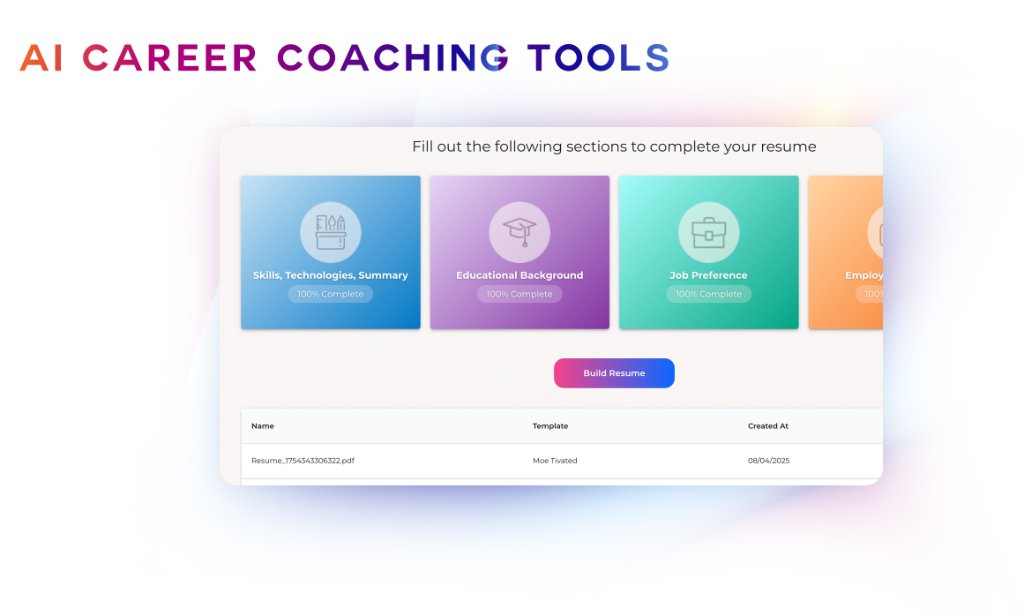
Career Edge addresses that problem with a participant record spanning intake, eligibility, services and follow-up. Employers get candidate-management tools; agencies get referrals, learning functions and reporting. Its embedded PIRL MAGIC engine is designed to check data against federal reporting logic as it is entered. AI features include résumé assistance and job matching. These are advertised capabilities, not independent measurements of improved employment.
- 01 Intake
- 02 Plan + learn
- 03 Connect
- 04 Follow up
A shared record is meant to travel with the participant.
Replacing a system takes a village
Wyoming supplies a concrete deployment. A state workforce-information report identifies HireWyo as a Career Edge product replacing the earlier Geosol service after its contract ended in 2023. Career Team describes migrating the state’s reporting and financial history as well. The product has to carry the past while supporting the next appointment.
Oregon shows the timescale. An Employment Department legislative presentation records contract execution and Career Team deployment in April 2026, with estimated project completion in July 2028. The project replaces iMatchSkills for employers and job seekers. Career Team describes four days of working sessions with more than 400 workforce professionals. Deployment, here, should not be mistaken for a finished statewide replacement.
The practical test is whether the connections hold. A shared platform still needs accurate records, staff willing and able to use it, accessible services and employers with relevant openings. That follows from the model itself. For anyone building a service business, the copyable idea is straightforward: study what happens between steps. Career Team’s proposition becomes most interesting at the moment a referral leaves one desk and has to arrive at another.