The machine had a nickname, which is rarely reassuring. Candid Color’s early Kodak Versamat processor became the “Versacrunch” because, according to the company’s history, it ate film. For a business rushing weekend party photographs back to college students by Monday, this was a particularly unhelpful appetite. A photographer could get the lighting, timing, and expression right, then lose the picture somewhere between the camera and the customer.
- The customer: photographers handling schools, sports, graduations, dance, and events.
- The offer: software, online selling, professional printing, and fulfillment.
- The difference: the lab and the sales tools belong to the same operation.
- The catch: easier ordering still needs customers who want to buy.
That journey explains Candid Color better than a description of its printers. Founder Jack Counts Jr. began photographing college functions and enlisted fraternity brothers to help. Work spread beyond the University of Oklahoma. Processing moved into an Oklahoma City lab. The company history describes production quality and efficiency as reasons to bring that work under its own roof. The bottleneck had become part of the business.

The picture needs a name
Consider school photography. A portrait is also a record: a particular child, a roster entry, an offer, an order. Multiply that chain across a school and the clerical work becomes substantial. A beautiful image attached to the wrong student is a service problem waiting to happen.
Candid’s CORE platform handles roster imports, school job structures, package configurations, and ecommerce. PhotoMatch connects subjects with images onsite. The current CORE description specifies that PhotoMatch works exclusively with CORE. These are practical tools for keeping a busy picture day from turning into a longer evening of corrections.
NowCandid serves a different starting point: streamlined sports, graduation, dance, and event workflows. Its tools include Selfie Check-In, optional face matching, gallery delivery, and automated email and text marketing. Both routes connect to Candid’s lab. The photographer chooses a workflow suited to the assignment rather than treating every event like a school roster.
For a studio comparing systems, the revealing question is how much work remains after importing the photographs. Someone must identify the subjects, decide which products appear, set prices, and organize delivery. Candid places those jobs close together. The potential saving is the time otherwise spent moving information between separate systems and checking that it arrived correctly.
A free account has a business model
NowCandid’s published FAQ makes the arrangement fairly concrete. Most workflows carry no monthly subscription or onboarding fee. For its sales-oriented programs, it lists a 5% ecommerce fee and 3% payment processing, plus flat product costs. FreePics, where a host or sponsor pays for photography and attendees receive images, uses a separate per-uploaded-image model.
On a hypothetical $100 in product sales, those two percentage fees total $8. The remaining $92 still has to cover products and the photographer’s other expenses. It is a useful distinction when evaluating an account advertised as free.
- $92 before product costs
- $5 ecommerce
- $3 processing
Illustrative fee arithmetic, not profit. Excludes tax, shipping, labor, and other expenses.
CORE Retail publishes a different schedule: standard ecommerce fees range from 3% to 8% by prior sales volume, with separate prepay and same-day provisions, plus 3% payment processing. Those distinctions matter. There is no single percentage that describes every Candid job.
The software has a shipping room
PhotoDay and GotPhoto offer alternative volume-photography sales systems. Candid’s distinguishing proposition is the connection to its own production operation. Orders can move from a gallery into lab fulfillment without the photographer separately arranging each production handoff. That is particularly relevant to a studio selling many small orders to many households.
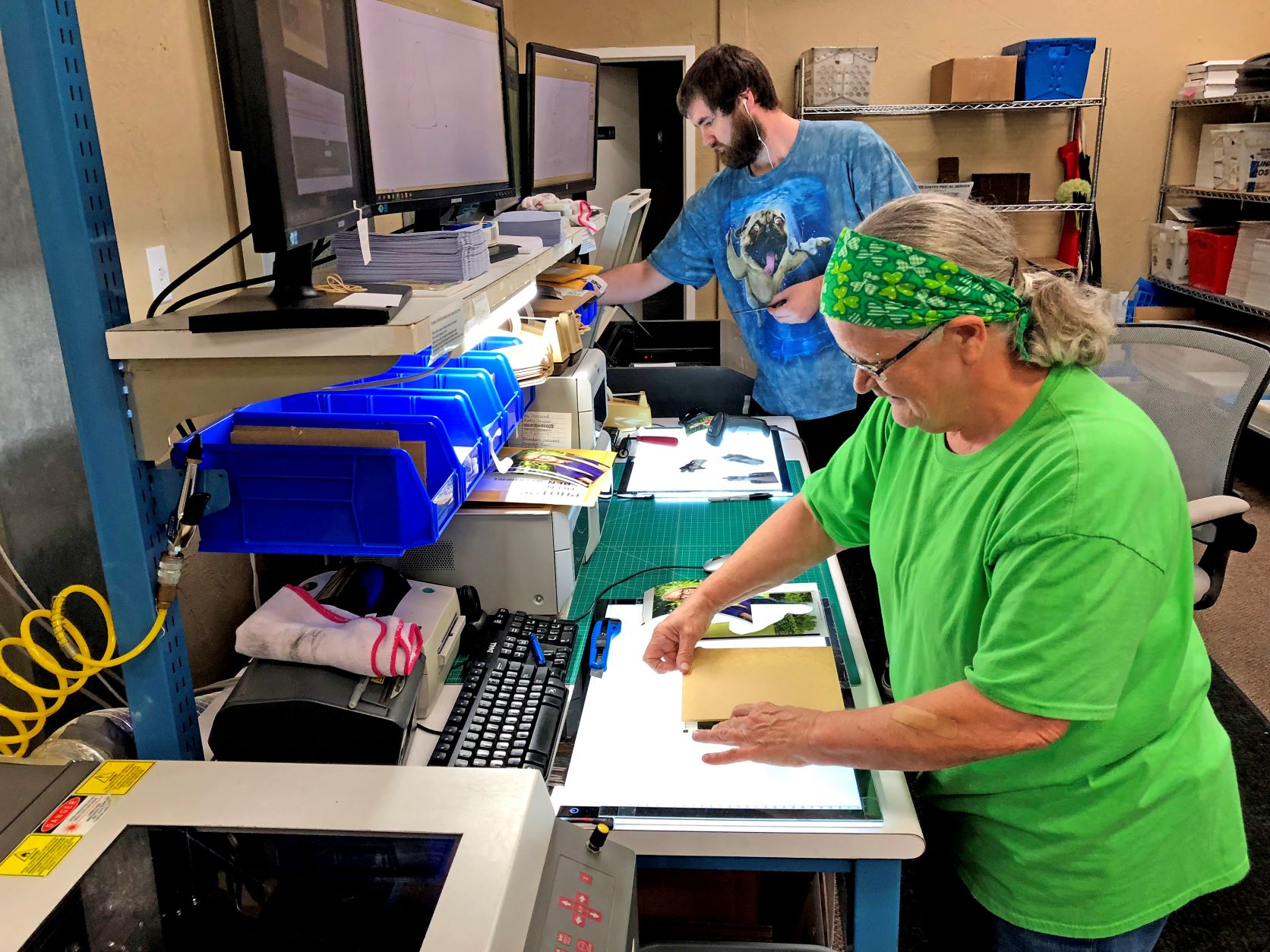
The Royal Lab’s departments include color correction, retouching, printing, quality control, and shipping. Its facility page lists two HP Indigo 7K presses and an HP Latex R2000 among its investments. On the product side, photographers can offer prints, plaques, magnets, collages, and other keepsakes. Software simplifies the route; physical production finishes the promise.
The same logic explains why a product catalog matters alongside a dashboard. A magnet, a team plaque, and a digital download give a family different ways to use one photograph. They also create different production and pricing decisions for the studio. Candid sells the tools for managing those choices alongside the ability to manufacture the result.
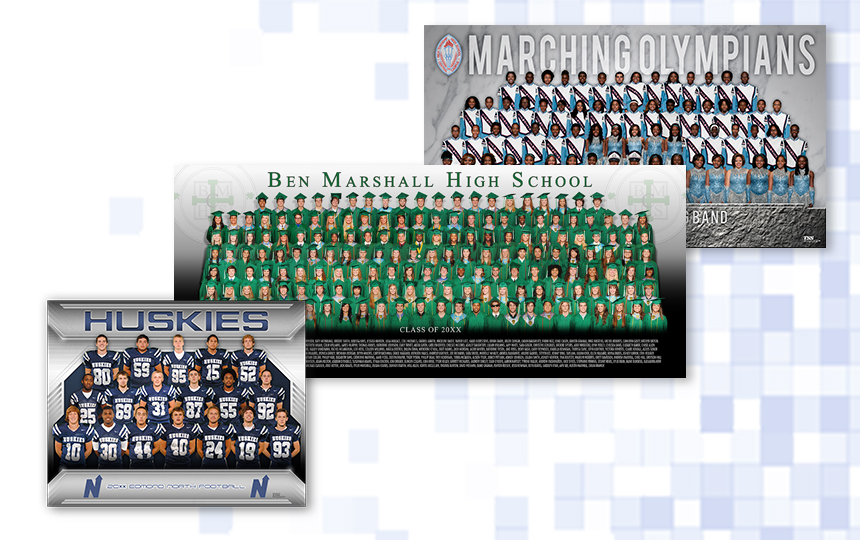
Virtual Groups makes that connection especially tangible. Individual portraits become one group photograph, so the subjects need not gather at the same time. Candid’s examples span sports teams, bands, and graduating classes. For anyone who has tried arranging a large group, the appeal requires little explanation.
Let them look. Then earn the order.
Candid’s ViewFirst approach lets families see photographs before paying. Contact information is collected, pictures are matched to people, and gallery links arrive through automated campaigns. School staff and coaches have fewer envelopes and payments to handle.
The company also acknowledges a tradeoff: ViewFirst typically has lower participation than prepay. Its answer is to pursue higher average sales with marketing and product choice. That is an argument to test, not a guaranteed result. A studio with weak contact data, little follow-up, or customers who prefer prepay may find the change less attractive.
The useful lesson travels beyond photography: reduce the distance between interest and purchase, then measure completed orders. A smoother process can remove obstacles. It cannot supply demand on its own.
There is also a useful purchasing discipline here. Start with one event and follow the full route: registration, capture, gallery access, checkout, and delivery. Compare participation, average order value, product costs, and staff time with the old method. Those measures reveal whether convenience improved the business, rather than merely making the software pleasant to use. A studio can learn more from that complete trial than from a long feature list.
A gallery link travels farther
In a September 2026 customer feature, photographer Alex Rangel described selling pictures to buyers in 48 states. The mechanism was ordinary and powerful: parents could share galleries with relatives. The audience for a local picture day no longer had to fit inside its original stack of paper forms.
“They’re a marketing hub and lab at the same time”
Island Photography / customer account published by Candid, October 2026
That October feature described Island Photography’s 30-year relationship with Candid. An April 2026 product article, meanwhile, explained PhotoGlo’s raised varnish and metallic accents. The two stories capture the business neatly: keep improving how photographs are sold, and keep giving people physical objects worth ordering. The flash is only the beginning of the transaction.