The email that changed Cameron Adams’ life did not sound like a board resolution. Its subject was “The Answer...” and the body opened with three dots, one small word and a smile: “...is YES :)” He was agreeing to join Melanie Perkins and Cliff Obrecht, two founders with a large idea and a rather more modest operation. They wanted to make design accessible to everyone. Adams had recently returned to Sydney from a discouraging trip along Silicon Valley’s Sand Hill Road, where the funding for his email startup had failed to appear. Glamour had left the room. Judgment had entered it.
Origin stories are usually scrubbed until destiny gleams from every surface. This one is better with the uncertainty left in. Adams had initially declined Perkins’ invitation. He liked Canva, but he was loyal to Fluent, the startup he had formed with former Google colleagues. Fluent looked sharp, attracted attention and seemed poised to rethink email. It also needed money. After two months pitching investors in California, the founders came home without the novelty-sized cheque they had imagined carrying through customs.
Failure narrowed Adams’ options and widened his education. He had already worked on one of the internet’s grand unrealised visions, Google Wave. Now another polished product was running out of road. When he reconsidered Perkins and Obrecht’s proposal, he was not arriving as an oracle. He was arriving as someone who knew that technical ingenuity, press interest and a beautiful interface could still be insufficient.
The law graduate who forgot the law
Adams grew up in Melbourne and remembers entering secondary school as perhaps the quietest child in his class. By his final year, a mathematics teacher complained that he talked too much. The difference, he later explained, was finding subjects worth talking about. He was good at mathematics and drawn to design, but family expectations pointed toward established professions. At the University of Melbourne he combined law with computer science.
Then he performed a small act of career sabotage: he forgot to apply for law jobs. Graphic design, which had supported him during university, became the job. Around him the web was changing from an electronic noticeboard into a medium with movement, mood and personality. Adams learned in public. Under the name The Man in Blue, he wrote about code and design, published browser experiments and built a readership among people inventing the conventions of the modern web as they went.
His agency produced work for organisations including Atlassian, NEC, TEDx and Sydney Festival. Books followed, among them The JavaScript Anthology, Simply JavaScript and collaborations on the art and science of CSS and JavaScript. Speaking invitations followed the books. At SXSW in 2006 he met Lisa Miller, an Australian zoologist who had also moved into building websites. The next year he returned as a speaker.
A useful sequence of experiments
- 2000sDesign agency, blog, books and browser experiments
- 2007-11Google Wave and a lesson in timing
- 2011-12Fluent and a lesson in funding
- 2012-nowCanva and a mission built for scale
A blacked-out room and a very large wave
The Man in Blue eventually reached Lars Rasmussen, co-creator of Google Maps. Google’s Sydney team had engineers for a secret communication product but needed someone to make its interface coherent. On Adams’ first day, he was led into a meeting room whose windows had been covered with paper. A handful of engineers had spent months on the prototype. His assignment was to make the future usable.
Google Wave tried to blend email, messaging, documents and live collaboration in the browser. It was technically audacious and difficult to explain. Adams helped shape its design, watched it launch under extraordinary attention, and watched Google discontinue it when adoption failed to justify the effort. The experience taught him about product development, but also timing. A product may anticipate the future and still fail to secure a place in the present.
He left Google in 2011 and built Fluent. It, too, reimagined communication. It, too, was admired. It could not, however, survive on admiration. The collapse was demoralising, yet its timing put Adams in the room with Perkins and Obrecht. Rasmussen made the introduction. Perkins saw in Fluent what she needed for Canva: design and development coupled tightly enough that simplicity could be engineered rather than merely advertised.
Designing the fear out of design
Perkins’ insight had begun while teaching design software. Beginners were being asked to master complicated professional tools before they could communicate a simple idea. Her earlier yearbook business had provided a test bed. Canva would take the larger proposition seriously: what if a person could design almost anything in one place, without first becoming a professional designer?
Adams joined as the third co-founder in 2012. The team launched Canva with eight people in 2013. The product’s early onboarding turned learning into play. Users moved elements, changed colours and completed a design before anxiety could harden into retreat. This was not simplicity as the absence of capability. It was complexity placed backstage.
That distinction suited Adams. His early work had always occupied the seam between engineering and aesthetics. At Canva, the seam became the product. As Chief Product Officer, he has led work across product, design, strategy and culture while Canva expanded from a graphics tool into a visual suite spanning presentations, documents, whiteboards, video and websites.
The scale can obscure the original trick. Canva did not persuade everyone to become a designer. It let people finish the poster, invitation, presentation or lesson they had come to make. The unit of success was not mastery of software. It was the idea leaving someone’s head in recognisable form.
When abundance makes taste expensive
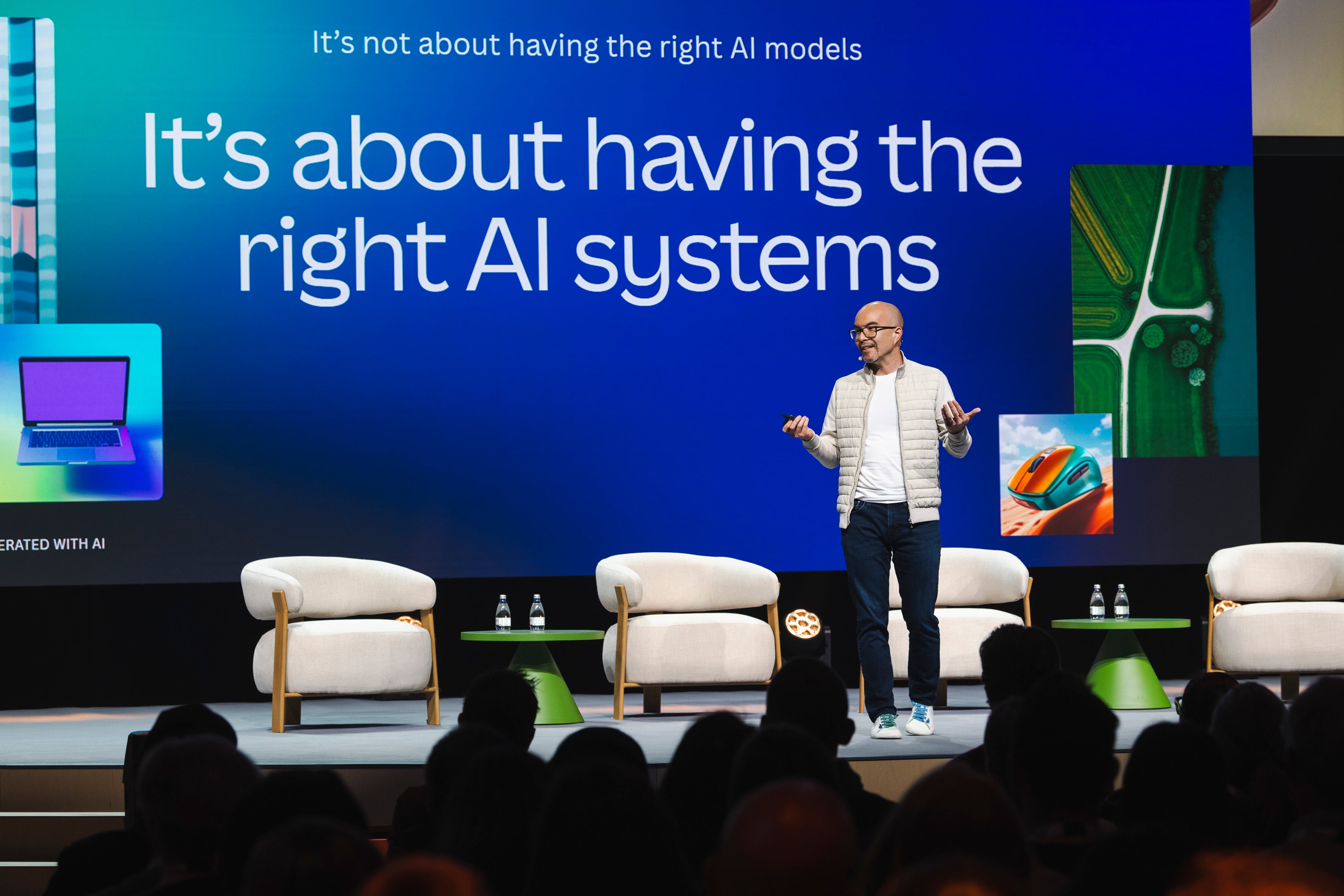
Artificial intelligence presents Adams with a familiar problem in accelerated form. New tools can remove a background, organise sticky notes, generate an image or help carry an idea through to a presentation. They can also produce a great deal of competent sameness. Adams’ answer is less about defending a guild than locating the part of creativity that tools cannot conveniently settle.
“When machines can make anything, taste becomes the job,” he wrote after Canva’s 2026 AI Vision gathering in London. The neatness of the line hides a demanding standard. If execution becomes cheap, selection becomes dear. A person still has to decide what deserves to exist, what feels true, and what should be discarded. “The machine renders. We decide.”
His product argument follows the same logic. AI can accelerate exploration, improve an outcome and compress the distance between idea and draft. Yet Canva’s generated designs remain editable. The last mile belongs to the user. Adams calls for AI-first thinking without AI-only work: protect critical judgment, begin with the workflow rather than the fashionable model, and make experimentation safe enough that leaders can admit when a trial fails.
In 2026 he made that inquiry more public through Prompted, a podcast and newsletter about AI and human ingenuity. The guests are technologists and product builders, but the premise is intimate: as machines take on routine execution, imagination, lived perspective and decision-making matter more. Adams is once again learning in public, only now the browser experiment has become a conversation.
The canvas beyond the company
Adams’ life with Miller gives the word “scale” another meaning. Through the Wedgetail Foundation, they have focused on protecting and restoring biodiversity and supporting communities whose livelihoods sit close to conservation. In 2025 they joined the Giving Pledge and committed the majority of their wealth to charitable causes.
The pledge letter is urgent but not theatrical. Nature sustains life; ecosystems are being destroyed; government and business matter; philanthropy can fund experiments and action that other institutions may not. “With good fortune comes great responsibility,” they wrote. The fortune came from lowering barriers in design. They now want to lower barriers to ambitious environmental work.
There is a pleasing symmetry here. Canva began with a belief that powerful tools should not be reserved for trained specialists. Wedgetail backs people working where ecological knowledge, enterprise and community meet. In both cases, resources are useful when they enlarge someone else’s capacity to act.
Adams still maintains The Man in Blue, complete with old experiments, speaking history and a contact page that welcomes questions about startups, design and artistic collaborations. It also welcomes free hot chocolate. The detail feels revealing. For all the language of platforms and models, he remains attracted to tangible pleasures: a tiny animation made to work, a question worth discussing, chocolate good enough to mention by name.
The tidy version of his career would move from gifted student to Google to Canva. The honest version has more doors, wrong turns and cancelled products. It includes the failure that cleared space for a partnership, the first no that became a yes, and the ambitious software that taught him what ambition could not guarantee. His advantage was not avoiding error. It was making error pay rent.
Now, as creative technology learns to produce almost anything on command, Adams keeps returning to the choice that remains ours. Judgment lives in the edit. Character lives in what we refuse to automate. The blank canvas was never the point. The point was giving more people the confidence to make a mark on it.