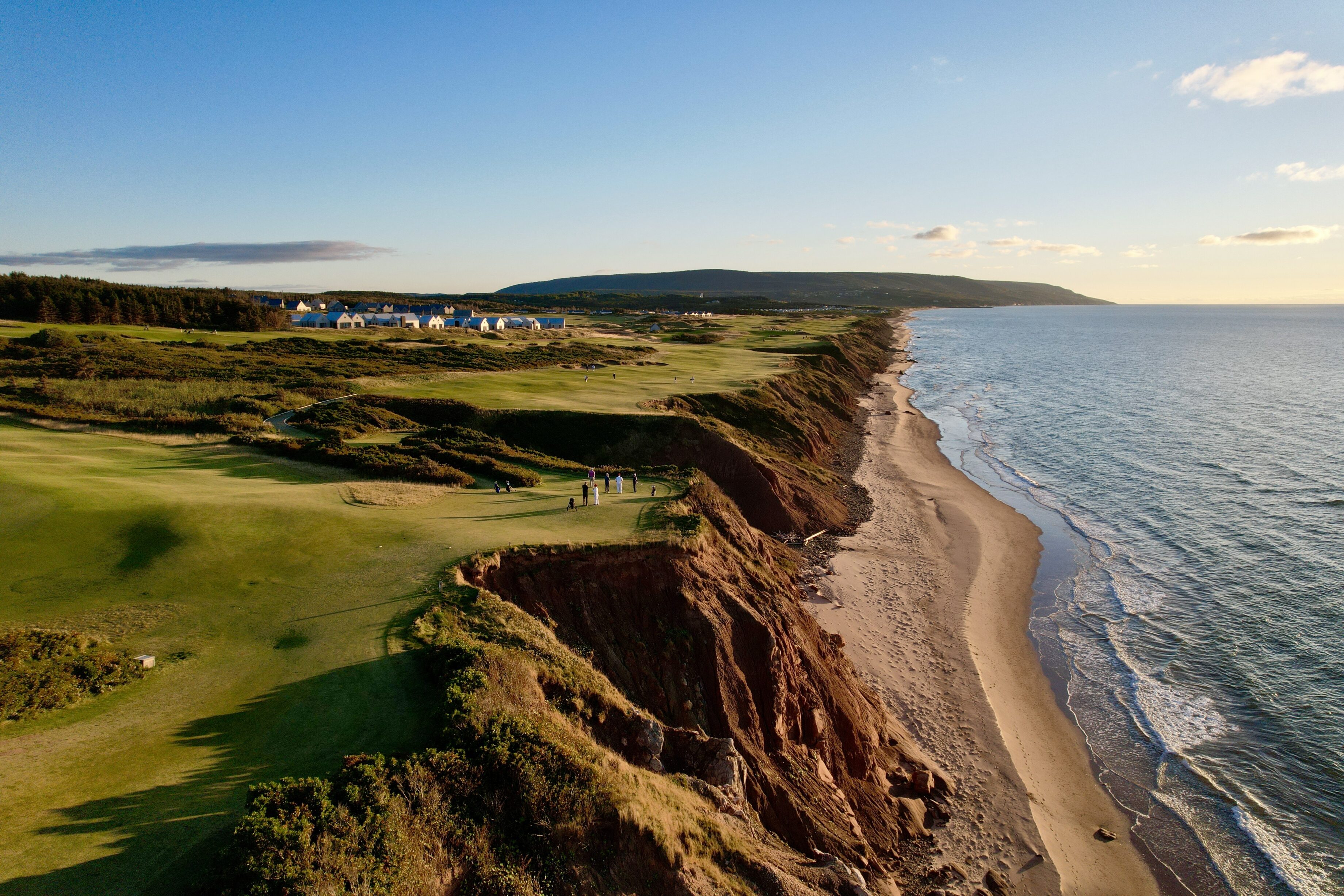
The first thing Cabot sold was an inconvenience. To play its original course, a golfer had to reach Inverness, a small town on the western edge of Cape Breton Island, then trust that a former coal-mining landscape could justify the trouble. Ben Cowan-Dewar first walked that coast in December 2004. He was 25. The mines had closed decades earlier, the town had lost its economic engine, and almost everyone he asked thought a remote golf project sounded foolish.
The land made a better argument. It had sandy soil, ocean frontage and enough scale for the kind of firm, wind-shaped golf that enthusiasts usually crossed the Atlantic to find. Cowan-Dewar called Mike Keiser, the developer behind Bandon Dunes and the person he most wanted as a partner. Keiser declined. He was busy. But the brush-off included a useful instruction: acquire more land. If the first course worked, Cabot would need a second, and success would make the neighboring parcels expensive.
Cowan-Dewar acted on the advice before he had the endorsement. Keiser later visited, invested and became co-founder. Rod Whitman designed Cabot Links. A ten-hole preview opened in 2011, with the full course following in 2012. Cabot Cliffs, designed by Bill Coore and Ben Crenshaw, arrived in preview form in 2015. The second course changed the product from a round of golf into a multi-day journey. Cabot has been repeating variations on that conversion ever since.
What Cabot actually does
Calling Cabot a golf-course company misses most of the receipt. It develops and operates golf-led resorts and residential communities. Guests buy tee times, rooms, meals, drinks, merchandise and experiences. Buyers purchase luxury residences close to the courses, often with access to resort services. Owners can place some homes into rental programs. Cabot also runs four U.S. courses for other owners through its management business, exporting operations without buying every parcel itself.
This makes the course both product and customer acquisition. A conventional resort might add golf as one amenity among many. Cabot reverses the sequence. The course earns the flight. Lodging and dining capture more of the visitor's budget. Real estate offers a permanent version of the feeling. Each layer protects the next: celebrated golf supports occupancy, active hospitality makes homes useful, and owners create a recurring constituency for the place.
The customers are correspondingly narrow. They are destination golfers willing to organize a trip around course architecture, affluent leisure travelers, private-club members and vacation-home buyers. At Cape Breton, Americans have historically represented roughly half the market, with Atlantic Canada and Ontario also important. This is not mass tourism. It is a high-spend niche in which a golfer can recognize the names Coore, Crenshaw, Whitman or Doak before seeing a room.
The price of making nowhere matter
Cabot is private, so there is no tidy investor deck disclosing consolidated revenue, margins or valuation. The early project numbers are more visible. The original Cabot Links development was reported at about C$5.7 million, supported by C$2.5 million from a federally administered growth fund. Cabot Cliffs and a hotel expansion were budgeted at C$14 million in 2013. Nova Scotia supplied an C$8.25 million interest-bearing, repayable loan. Cabot has said that provincial loan was repaid ahead of the first principal payment.
The public financing matters because the origin story was not a lone founder manifesting a course from the fog. It was a stack: local volunteers who had long wanted a course, assembled land, government development debt, Keiser's equity and credibility, and Whitman's design. The town wanted a replacement for a lost industry. Cabot needed patient capital and community cooperation. The useful version of the story includes all of them.
“We always knew we wanted a second golf course.”Ben Cowan-Dewar, on buying the Cabot Cliffs land early
That second-course decision may be the company's sharpest piece of product design. One good course can generate a day trip. Two contrasting courses can justify three nights, several dinners and a return visit. Cowan-Dewar began optioning Cliffs land before Links construction started because he expected successful golf to raise adjacent prices. In software language, he secured the expansion surface before proving product-market fit.
What failed first - and what changed
The first failure was not the course. It was the financing climate. Construction met the 2008 financial crisis, when golf development froze and Cabot's already remote thesis looked worse by the week. Work slowed. According to Cowan-Dewar, Cabot Links was one of only four courses in the world still under construction. The team kept building, then opened when almost no competing new destination was arriving. A hostile market became an uncluttered launch window, but only because the project survived long enough to reach it.
The pattern repeated in Saint Lucia. Construction started, and two months later COVID-19 stopped flights and commercial activity. Members of the design and construction team stayed on the island. Keiser's advice was plain: they already had the playbook, so keep building. Point Hardy Golf Club eventually opened in 2023. The company had changed from a single-project wager into an operator with a repeatable response to long interruptions: protect the land thesis, preserve the design standard and avoid panic changes that weaken the finished attraction.
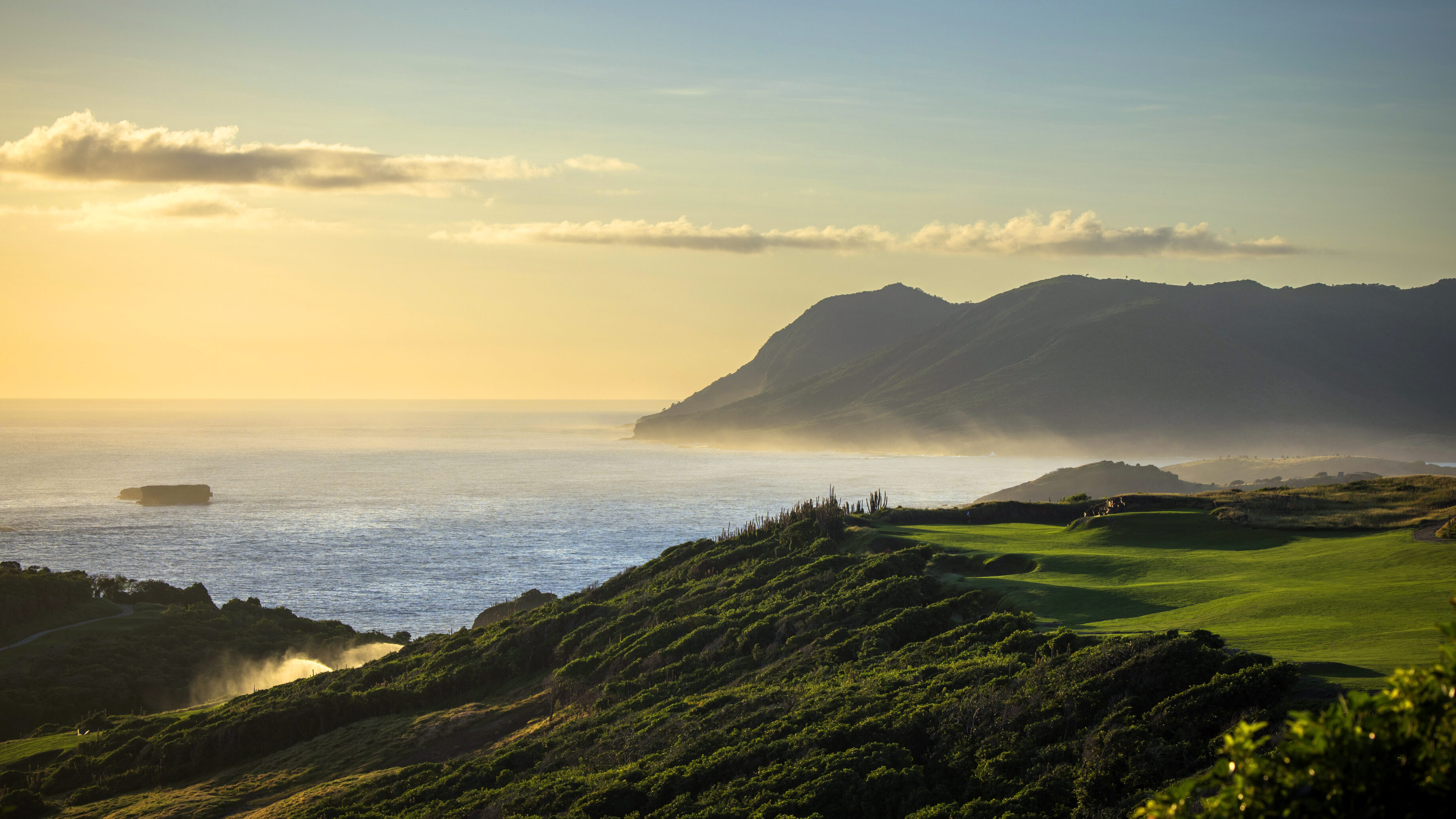
What changed Cowan-Dewar's mind along the way was evidence, not a pivot deck. Keiser's initial rejection changed the land plan. Strong first-year traffic and critical attention made the second course urgent. Cape Breton proved that golfers would travel for a place they could not reproduce near home. Cabot then looked for seasonal and geographic offsets: the Caribbean for winter, Florida for the U.S. market, Scotland and France for golf history, Revelstoke for an all-season mountain resort, and Lofoten for golf under the midnight sun.
Remoteness becomes a feature only when destination pull rises faster than travel friction. The chart is a framework, not measured Cabot data.
The parts worth stealing
Cabot's expansion now includes Cape Breton, Citrus Farms in Florida, Highlands in Scotland, Bordeaux in France, Saint Lucia, the planned Revelstoke property in British Columbia and an investment in Norway's Lofoten Links. It also manages Cascata, Serket, Grand Bear and Chariot Run in the United States. The locations do not look alike. That is the point. Cabot standardizes the selection logic and service ambition, then lets the terrain supply the personality.
Buy the sequel early
Secure the neighboring land, domain, distribution right or product surface before the first launch makes it obvious.
Build the magnet first
Lead with the one product strong enough to pull demand. Add the larger revenue stack after the trip is justified.
Borrow an expert's trust
Cabot used respected architects and an experienced co-founder to reduce buyer uncertainty around an unfamiliar place.
Keep the places different
Repeat operating principles, not scenery. A collection becomes interesting when customers want to visit every variation.
The named-architect strategy is particularly portable. Course design is hard for a traveler to evaluate before playing. An architect's reputation acts as a quality signal, much like a chef, designer or filmmaker attached to a project. Cabot gains an audience that follows the creator, while the creator gets unusual land and a patient client. The architecture is not decoration; it is part of distribution.
The management division is another useful evolution. Owning destination land is capital intensive and slow. Managing selected courses lets Cabot monetize its operating system, build relationships and extend the brand with less property risk. It also places the company between two markets: bespoke golf destinations such as Bandon Dunes, Sand Valley, Pinehurst and Streamsong, and luxury residential developers that sell club life. Cabot competes with both while combining pieces of each.
Where the playbook stops working
The model fails when scenery is pleasant but replaceable. A long drive does not become luxurious because the brochure calls it secluded. The anchor product must be strong enough to overcome the friction of access, weather and limited local demand. It also fails when the site supports only one short visit, when the developer cannot control enough surrounding land, or when financing expires before courses, lodging and services can reinforce one another.
Do not copy Cabot by buying remote land.
Copy the test: Is the place hard to reproduce? Will credible makers attach their names? Can the first product pull customers without the later amenities? Can the balance sheet tolerate years of construction and a shock? If any answer is no, remoteness is not a moat. It is an address problem.
Community conditions matter too. Cape Breton offered local advocates, a town seeking a new economic base and public institutions willing to lend. Resort growth can still bring tension over land use, seasonal work, housing and who benefits from public support. The Cabot method works best when the destination becomes useful to its neighbors as well as desirable to visitors. Without that compact, the very scarcity that supports premium pricing can become political resistance.
Cabot's current challenge is therefore less about finding another dramatic view than preserving judgment at collection scale. Revelstoke must feel like a mountain place rather than Cape Breton with ski boots. Bordeaux must make wine country integral, not incidental. The managed courses must carry Cabot service without pretending to be owned resorts. A brand built on singularity can grow, but it cannot become generic without eating its own advantage.
The original bet now looks obvious because the photographs are beautiful and the rankings are flattering. It was not obvious in 2004, or during the financial crisis, or when a second course required another large commitment. Cabot's transferable trick was to turn uncertainty into a sequence: secure distinctive land, recruit proof, build the reason to travel, watch what customers do, and only then sell more of the stay. The view was there all along. The business was learning how many times it could be experienced without making it feel common.