Sandy Kemper had more than $10 million in accounts receivable and a shortage of cash. In the company’s telling, his earlier technology business needed money quickly to cover growing expenses. The money existed. Customers owed it. The calendar, however, had other plans.
- Suppliers offer a discount to receive approved invoice payments early.
- Buyers supply cash, arrange outside funding or combine the two.
- The useful question: is getting paid sooner worth the discount?
The million-dollar phone call
Kemper called a customer and asked it to settle a $1 million invoice 30 days early. The customer agreed, in exchange for a 1% discount. That meant surrendering $10,000 to make $990,000 available sooner. Operations kept moving. The experience suggested a business: turn an uncomfortable negotiation into something companies could do routinely.
The first thing to break was the timing between earnings and expenses. A healthy receivables balance could coexist with an urgent cash shortage. A successful early-payment deal gave Kemper a reason to build a system around that gap. Founded in 2008, C2FO records its first transaction in 2010.
A market inside the invoice
Start with an invoice a buyer has already approved. Through C2FO Early Pay, the supplier selects eligible invoices and proposes a discount using Name Your Rate. If accepted, payment moves forward. The company says funds can arrive as soon as the next day; the actual date depends on the buyer’s payment schedule.
- 01ApprovedThe buyer confirms the invoice.
- 02OfferedThe supplier proposes a discount.
- 03AcceleratedAn accepted offer brings payment forward.
That last condition matters. Naming a rate gives a supplier the power to make an offer, not to force acceptance. C2FO also displays a suggested Trending Rate and an Express Accept rate with guaranteed approval. A lower offer can preserve more of the invoice’s value while reducing its chances of success.
For a supplier, the appeal is selective use. Accelerate one invoice for inventory, another before payroll, or leave them alone. Walmart’s own supplier resources describe its C2FO option in these terms: choose which invoices to expedite and propose a rate. The customer relationship supplies the starting point.
Free access. Paid-for time.
C2FO’s FAQ says the buyer has paid for the platform, so suppliers have no subscription cost or hidden fees for that access. Yet early payment has a price: the discount. Confusing free access with free capital would make an expensive reading mistake.
Consider a hypothetical $100,000 invoice accelerated by 30 days at a 1% discount. The supplier receives $99,000 and gives up $1,000. Annualizing the discount against invoice face value gives about 12.2%, without compounding. That is a comparison aid, not a quoted C2FO rate or a loan APR.
What would you give up?
12.2% simple annualized discount on face value.
What can another business copy? Price the days, then decide what those days buy. An inventory opportunity might justify the discount. Cash that will sit idle might not. Compare the offer with an available credit line, the margin on the sale and the consequences of waiting. The software makes the choice easier to execute; it cannot make the economics favorable by decree.
The buyer buys something, too
On the other side sits a treasury team. Paying early can earn a discount and help a supplier keep operating. C2FO’s Dynamic Supplier Finance supports funding from the buyer’s balance sheet, its banks, C2FO’s banking network or a mixture. Buyers can adjust that mixture as their cash needs change.
This places C2FO between enterprise finance software and supply chain finance. PrimeRevenue also offers dynamic discounting and supplier financing; SAP Taulia is another alternative. C2FO’s distinctive proposition is the supplier’s ability to propose pricing through its patented mechanism. Dynamic discounting itself is a broader market, not a category C2FO owns.
The customers span two very different desks: an enterprise finance team running a program and a smaller supplier deciding whether to use it. A 2026 C2FO announcement describes The Home Depot’s expansion to merchandise suppliers in the United States and Canada. C2FO’s 2022 results put a number on the timing benefit: suppliers were paid about 31.7 days early on average. An average is useful context, though an individual invoice can produce a different result.
Its expertise includes program design, supplier participation and working capital analysis. FinanceIQ adds cross-buyer visibility into receivables, approvals and payments. Lending Connections points businesses toward outside lenders. Those additional tools address needs an approved-invoice early-payment offer alone cannot cover.
“Why borrow working capital when you can get paid sooner instead?”
Sandy Kemper / IFC case study, March 2025
From a private bargain to public infrastructure
In March 2026, C2FO announced more than $500 billion in cumulative supplier funding and reach across 180-plus countries and territories. This measures money delivered to suppliers over time. It is separate from C2FO’s revenue and from the investment rounds financing the company itself.
Those rounds included $200 million led by SoftBank Vision Fund in 2019 and $140 million led by Third Point Ventures in 2022. In April 2025, C2FO announced another $30 million with IFC and existing shareholders, aimed at technology development and emerging markets.
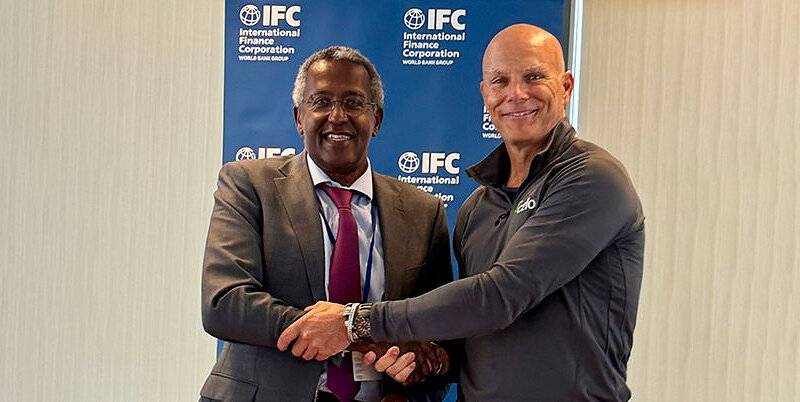
In April 2026, CycleFlow, powered by C2FO, launched in Nigeria with IFC. Participating buyers and financial institutions can purchase and discount accepted invoices to finance smaller suppliers. The ambition moves beyond one company’s vendor portal toward a wider network of local buyers, funders and businesses.
The boundaries remain concrete. Core Early Pay needs eligible approved invoices, buyer participation and an accepted offer. An unapproved bill is still a bottleneck. A discount that consumes too much margin is still costly. C2FO’s stated emphasis on supplier choice matters most when the supplier can comfortably decline.
Kemper’s original phone call contains the idea readers can take away: before seeking new money, examine when earned money arrives. Sometimes a small change in timing is worth paying for. Sometimes it is worth waiting.