Consider an invoice. The goods have arrived. The buyer has accepted them. Everyone agrees that money is owed. For the supplier, this ought to be a happy ending. Unfortunately, the rent is due before the invoice is. A perfectly respectable asset can be remarkably poor company at the payroll desk.
Premium Technology has spent much of its life working on that interval. Its FinShare platform gives banks tools to turn trading obligations into financing and to administer what follows. The company builds the systems through which a supplier requests an advance, a bank processes it and a buyer eventually settles the bill. The calendar remains; the supplier gets another way to live with it.
- The customer: banks and financial institutions running working-capital programs.
- The product: FinShare, configurable software for supply chain and trade finance.
- The interesting wrinkle: a buyer’s payment commitment can travel beyond its direct supplier.
An invoice is not a bank balance
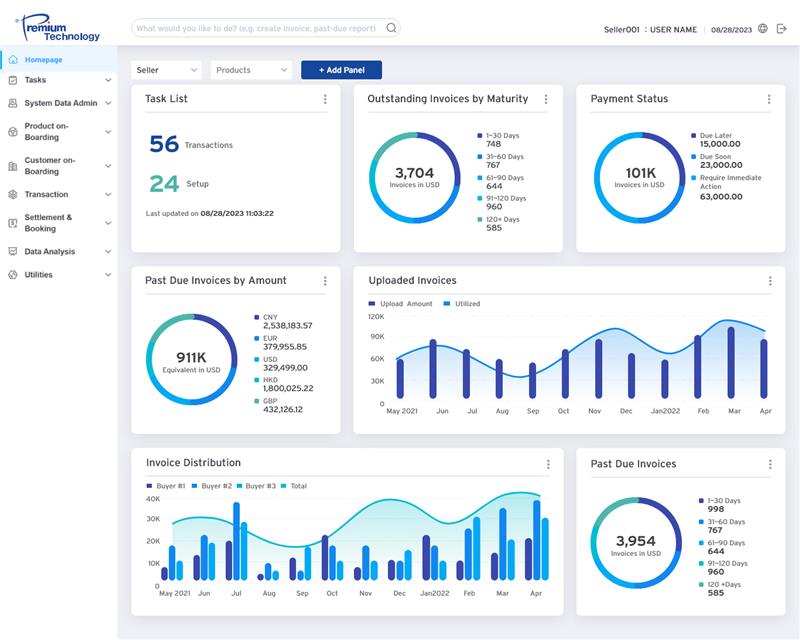
Start with the company’s receivables-finance workflow. A seller uploads an invoice and asks for an advance. The bank processes the request and, if it funds the transaction, disburses the proceeds. Collection comes later. FinShare supports different payment routes and lets the bank track overdue invoices. This is a sequence of decisions and records, with money moving at specific points.
Each step is modest enough to fit on a diagram. Together, they describe a substantial operational job. Someone must know which invoice was submitted, which request was funded and which payment belongs to which obligation. The useful question is whether the system can keep those facts connected when real transactions refuse to behave as tidily as a demonstration.
- 01InvoiceSeller submits a receivable
- 02AdvanceBank processes the request
- 03CashNet proceeds if funded
- 04CollectionPayment and overdue tracking
The product family extends in both directions from the invoice. Purchase-to-pay covers purchase orders, shipment records, matching and payment instructions. Trade-finance functions handle documents and transaction requests. The basic appeal is continuity: the transaction has a history before funding and a life after disbursement.
The bank keeps its name
There is a small vanity problem in enterprise software. The vendor would like to be seen. The customer would often prefer that nobody notice. Premium Technology occupies a market where the latter can be a selling point. A bank can use established software and present the resulting service as its own.
Historical reporting documents long-term FinShare licensing agreements with Citi and UniCredit, covering installation, maintenance and continuing development. Citi licensed receivables and payables products; UniCredit licensed receivables, supplier finance and purchase-order-to-pay capabilities. These were relationships with a continuing engineering obligation, rather than a download followed by a farewell.
“Premium Technology has been a key relationship for Citi”
Christopher Cox · Citi testimonial published by Premium Technology
That explains its place in the market. Banks can build internally, buy a platform or use an external service. IFC’s discussion of supply chain finance places FinShare alongside Demica and Orbian among providers working with banks on white-label solutions. For a prospective buyer, the comparison should begin with the operating model: who owns the customer relationship, which processes need customization and who maintains the machinery.
Premium Technology’s business model follows those choices. It sells banking software and the work needed to implement and support it. Historical documentation also describes hosted delivery. The promise of a configurable core is attractive because the bank can shape a program around its clients while drawing on software already built for the category.
Follow the promise past the first supplier
Supply chains have an inconvenient habit of continuing beyond the company whose name is on the contract. The direct supplier has suppliers too. Premium Technology’s deep-tier product addresses that less visible part of the chain with a transferable record of a buyer’s payment commitment.
In the published workflow, an anchor buyer uploads its commitment. FinShare generates an ePay token for the first-tier supplier. That supplier can ask the bank for an advance or transfer some or all of the token to a supplier further upstream. The next recipient has the same choices. Bank approval precedes disbursement; at maturity, the buyer’s account is debited and outstanding tokens are settled.
At each supplier tier: transfer all or part, or request a bank advance.
Conceptual workflow. Financing remains subject to bank approval.The detail worth pausing over is the partial transfer. A supplier need not pass the entire commitment onwards. The mechanism can accommodate obligations of different sizes across the chain. That is where an abstract idea becomes a usable workflow: it acknowledges that commerce rarely arrives in matching denominations.
A practical reading of this design is that financing access depends on making relationships visible. The bank needs a usable record of the commitment and the claims moving through the system. A token is one part of that record. The willingness of participants to join the program is another.
Different banks, different awkward details
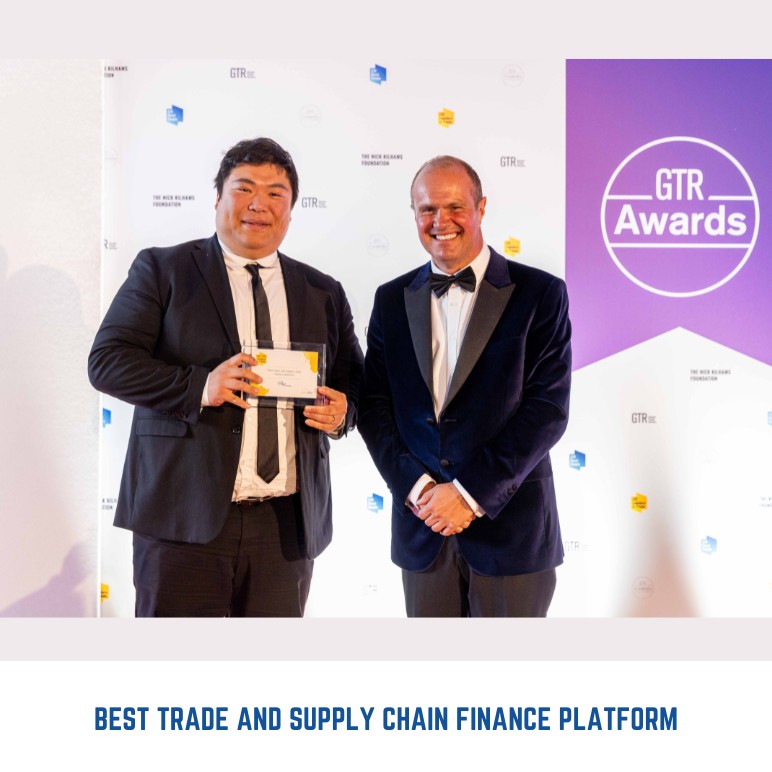
Named deployments offer a better test of the proposition than a generous adjective. GTR’s 2025 awards coverage reported that Premium Technology expanded SMBC’s supply chain finance solutions across nine global regions in 2024. The same coverage described an automated workflow and real-time tracking system for Krungthai Bank’s open-account financing. One project spread a service geographically; the other changed its operational handling.
The company’s partnerships reveal another delivery choice. An April 2015 announcement described work with Blitz IT Consultants in Vietnam, including a Techcombank implementation. Later that year, NTT DATA Getronics announced a collaboration to promote FinShare in Japan alongside its transaction-banking technology. Local connections and integration capabilities were part of the route to market.
The leadership’s experience fits this kind of work. Founder and CEO Kenny Leung has held technology roles at Wall Street banks. CTO Michael Luo’s background includes trade-finance application architecture and work at HSBC. Chief Innovation Officer John Monaghan previously led supply chain finance globally at Citi. Their biographies suggest familiarity with the institutional customer’s daily constraints.
Premium Technology describes an open-door culture and accountability among its values. Those are the employer’s statements. More revealing to a buyer is the combination of banking and software experience: a configurable product still needs people who understand why a financial institution asks for a particular exception.
The price of moving the calendar
Early cash has an economic bargain attached. In FinShare’s dynamic-discounting workflow, the buyer submits approved invoices, and the supplier can propose an early-payment discount. The parties negotiate the rate; an agreed offer proceeds to payment. The seller receives money sooner and gives up part of the invoice’s value. The buyer puts available cash to work.
For a bank adopting the software, the purchasing decision extends beyond the license. Installation, integration, configuration and ongoing support are part of the documented delivery model. The relevant business case therefore concerns the whole operation: how much work a program requires, how it fits existing systems and whether clients actually use it.
The product’s own workflow also reveals its limits. An advance still requires a bank willing to approve it. A disputed invoice or unreliable payment commitment cannot be repaired by a handsome screen. As an operational inference, weak data or incomplete participation would limit what automation can accomplish. Faster processing helps when the underlying transaction is financeable.
A useful business behind somebody else’s badge
The recent news continues the same pattern. Premium Technology’s newsroom reports that HNB’s FinShare-powered TxB ValueX launched in May 2026, covering supplier and distributor finance and broader value-chain transactions. In August, the company announced a third consecutive Trade Finance Platform award from Asian Banking & Finance. The launch is the more instructive development: another financial institution put the machinery to work under its own name.
There are useful ideas here for people building other kinds of business software. Map the process through settlement, including the overdue case. Preserve a reusable core while allowing local rules to vary. Give partners a concrete delivery role. These are lessons drawn from the documented product and deployments, rather than a formula that guarantees the same commercial outcome.
Premium Technology’s distinctive proposition is patient and specific. A bank has a financing relationship to manage; the software must carry it from a customer’s request to the final payment. An invoice begins as a promise. FinShare gives that promise a route through the bank, and sometimes through several suppliers, before the calendar finally catches up.
Explore FinShare
Try the platform overview, browse the product suite, or request a demonstration.