The paint company was doing well. It had 123 employees, a regional reputation, and an owner newly connected to an international chemicals business. Then hot work on a solvent tank seriously injured two people. In DEKRA’s account of the case, managers had been watching productivity and unit price. Safety performance was not being measured. The business had learned to count what it sold before it learned to examine how the work endangered people.
- BST’s legacy is employee observation linked to action on workplace risk.
- DEKRA bought the consultancy in 2012; today its methods sit within a broader safety practice.
- The commitment includes staff time, coaching and removing the barriers people uncover.
That gap between apparently successful operations and unseen exposure is where BST belongs. Short for Behavioral Science Technology, the California consultancy built its business around the human and organizational ingredients of workplace safety. Its work survives inside DEKRA, where the question extends beyond whether an employee followed a rule to what made the risky interaction possible.
A factory contains more than machinery
Thomas Krause and John Hidley founded BST in 1979. Their prepared testimony to a 2008 Senate hearing described an early frustration: safety initiatives addressed equipment and procedures but paid less attention to organizational and cultural causes. They adapted applied behavior analysis with ideas from quality-management thinker W. Edwards Deming and organizational-change practitioners.
The resulting business occupied a particular corner of consulting. Its raw material was the everyday relationship between people, equipment, procedures and management. DEKRA Insight’s stated customer sectors include chemicals, oil and gas, transportation, utilities, pharmaceuticals and agriculture. These are workplaces where a good quarter and a serious exposure can coexist.
By April 2012, when DEKRA announced its purchase of all BST’s shares, the buyer reported roughly 200 specialists and $45 million in annual turnover. DEKRA wanted to combine its technical analysis with BST’s organizational and human-factors expertise. In September 2015, BST joined several legacy businesses under DEKRA Insight, carrying the line Science at the heart of safety.
The checklist is the beginning
BST’s signature method, the Behavioral Accident Prevention Process, or BAPP, starts with a steering team examining incident reports. The team defines critical behaviors in observable terms. Employees learn to observe work across activities, departments and shifts, then discuss safe and risky interactions with colleagues. The aim is to understand exposure before it becomes an injury.
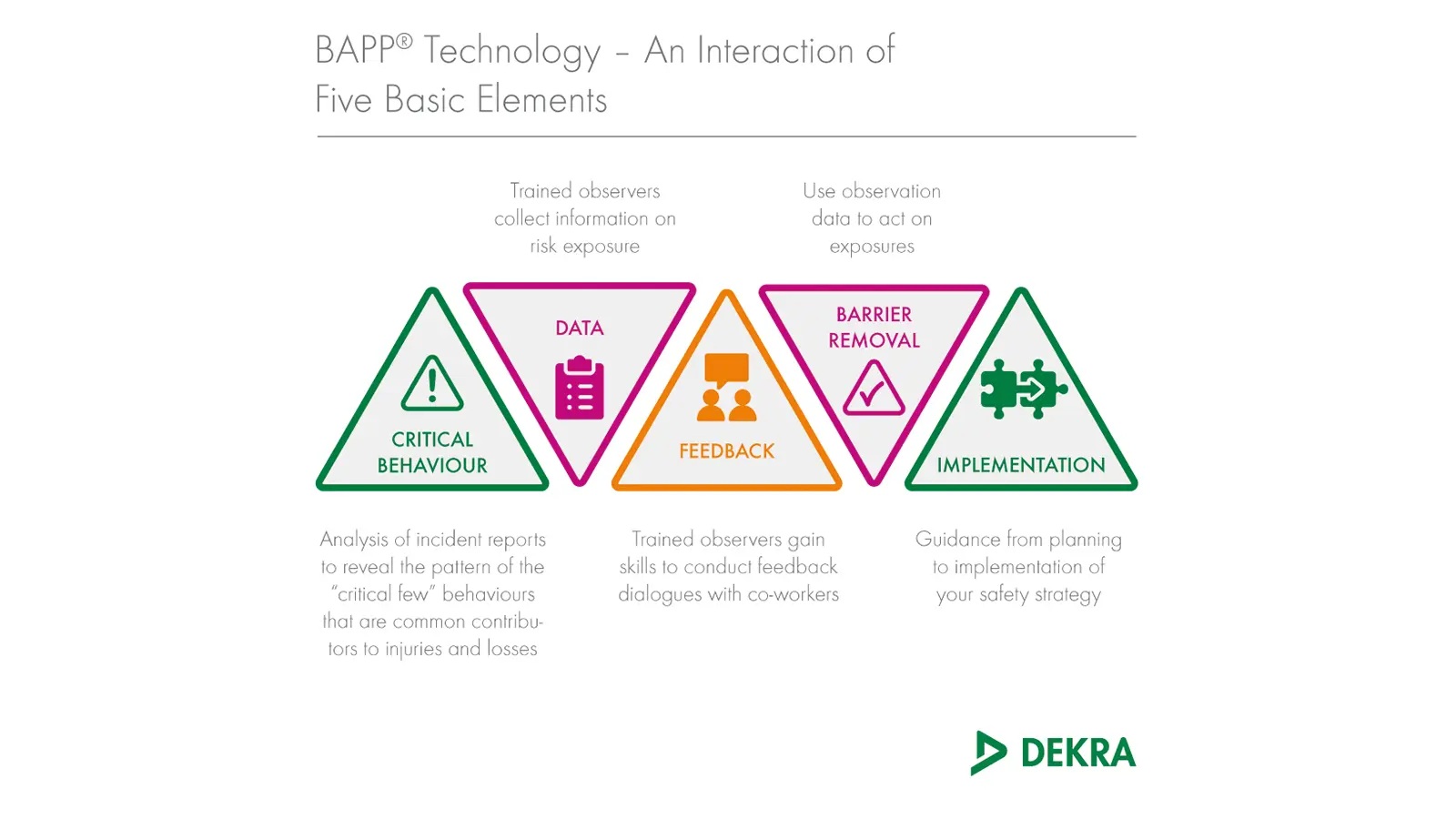
Then comes barrier removal. Observation data should help employee teams decide what needs changing. That distinction matters: a record of risky work can become another administrative task unless someone uses it. BAPP’s published design connects the conversation to interpreting data, taking action and sustaining the process.
At the paint manufacturer, DEKRA paired BAPP with work on organizational culture. The assessment surfaced communication problems, compensation concerns and aging equipment. The workforce spoke Hindi, Arabic, Urdu and English. A safety intervention here had to account for a multilingual, imperfectly equipped organization. An instruction to be more careful would have missed much of the problem.
The aim is to understand exposure before it becomes an injury.
The BAPP principle, in plain English
Even the acronym needed changing
Consider Dragon Oil’s Hazar site in Turkmenistan. DEKRA’s account says the BAPP acronym was unsuitable for wider adoption. The team developed BOAS: Be Observed, Be Aware, Be Safe. Over ten days, consultant Callum Christie worked with HSE manager Ian Fletcher and coordinator Heidar Gamidov on leadership understanding, internal champions, steering-committee involvement and practical implementation.
The useful detail is the willingness to change the packaging. A method intended to give employees ownership has to be intelligible to those employees. The case describes training in action planning, quality review and sustainability review. Naming was one part of making the work usable. It is an implementation account, rather than a quantified claim about injuries prevented.
The expensive ingredient is attention
DEKRA’s 2018 review of BAPP acknowledges the extra effort
compared with simpler approaches. Keeping observations going requires substantial internal resources. Some organizations had moved toward alternatives that appeared more expedient. That tension helped prompt a 2014 project to revisit and modernize the method using client data.
The review reports an analysis of 88 sites and 1.3 million observations, with incident reductions of 25% in year one, 35% in year two and 45% by year three after statistical controls. DEKRA also says definitive causality is difficult to claim. Read these as reported research findings, not a forecast for the next customer.
DEKRA’s 2018 research summary · 88 sites · Observational findings with statistical controls; causality qualified.
For a buyer, the budget question therefore includes employees’ working hours, observer training, management participation and the ability to act on findings. My reading: an organization that collects observations but withholds time or authority for follow-through is removing a central ingredient of the method.
The supervisor gets homework, too
The broader DEKRA offering helps explain BST’s place in the market. SafeAlign develops supervisors and managers through assessment, workshops and field coaching. The Organizational Culture Diagnostic Instrument uses 20 core questions to examine nine cultural factors, with interviews and focus groups adding context. Adaptive BBS supplies cloud software for observation management and reporting.
The software connection has history. In November 2014, DEKRA acquired Kansas-based RCI Safety to complement BST’s consulting with web-based data management spanning observations, audits and investigations. The commercial model combines consulting, training, licensed programs and support. Software can organize records; the consulting relationship develops the skills to use them.
What remains when the consultant leaves?
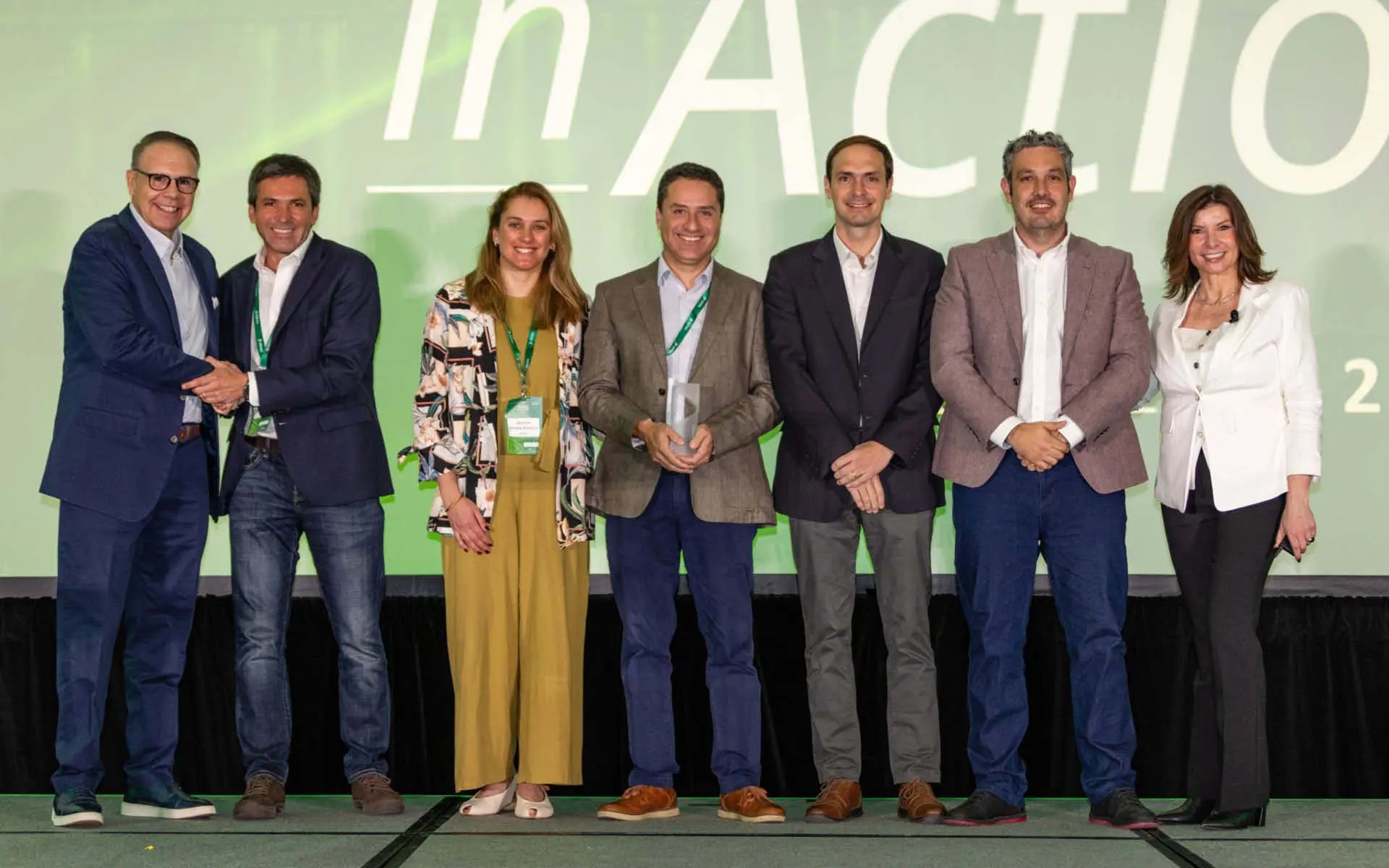
DEKRA’s capability-transfer service explicitly trains internal champions, then reduces outside involvement as those people become competent. Its May 2026 Safety in Action recap returns to leadership, useful indicators and peer exchange. The thread is consistent: safety improvement has to become something the organization can keep doing.
The lesson a reader can borrow is practical. Define the exposure clearly. Ask the people doing the job what creates it. Give somebody responsibility for the barrier. Return to see what changed. BST’s enduring contribution is a process that carries the observation beyond the clipboard.