Three days is a poor amount of time in which to reorganize a life. It is plenty of time, apparently, to buy a plane ticket. Bryce Neil had spotted what he called a “massive problem” in the semiconductor industry. He did not possess a neat answer or even a complete map of the problem. He did know that the useful conversations were happening somewhere else. So he booked the ticket, left Canada three days later and went looking for the right rooms.
That episode, which Neil later described publicly, supplies a tidy opening for an untidy kind of career. He is a computer engineer who has moved through production data systems, an on-demand boating startup, a founder interview show and now custom silicon. The connecting thread is less glamorous than the résumé might suggest: access. Who gets to use a scarce thing? What makes it expensive? Which handoff keeps the whole machine waiting?
At Visibl Semiconductors, the San Francisco company he co-founded and leads, the scarce thing is a chip designed for a specific product. Custom silicon can give a robotics, drone, industrial or edge-hardware company better control over cost, power, performance and size. It can also demand a large contract, a long schedule and people fluent in a craft whose acronyms seem to reproduce when observed. Neil’s company is trying to offer a shorter path from an idea to manufactured silicon.
First, a boat
The story does not begin in a clean room. It begins on the water. In 2022, while studying computer engineering at Queen’s University, Neil and Andrew Kraik entered the school’s Winter Pitch Competition with Veho, an on-demand boat ride-sharing venture aimed at Ontario’s Muskoka region. The pair won the $5,000 seed-funding prize.
Ride sharing for boats and software for chips make comically distant neighbors. Yet Veho already contained a version of the question Neil now pursues: can something useful, costly and operationally awkward be made available to more people? The vehicle changed from a boat to an ASIC. The appetite for removing friction stayed aboard.
Neil’s academic record gave the curiosity some scaffolding. He received Queen’s Chancellor’s Scholarship, awarded to 50 students across Canada each year, as well as the W.W. King Scholarship for incoming engineering students. He also earned Google Cloud certifications in cloud engineering, architecture and machine learning engineering. At Deloitte’s OmniaAI team, he built production software and data systems, including work used in U.S. hospitals and by teams in the public sector. The work taught him that software has consequences when it leaves the demo and meets an institution.
“I didn’t have the solution, nor did I know exactly how to solve it, but I knew I needed to get into the right rooms to figure out how.”Bryce Neil
A microphone as apprenticeship
There was another education running in parallel. With James Moffat, Neil began hosting The Venture Podcast, a series of long conversations with founders, investors and builders. By March 2026, the show listed 32 episodes. Guests ranged across cybersecurity, consumer products, space infrastructure and venture capital. Neil was learning a durable executive skill in public: ask a precise question, listen past the rehearsed answer, then locate the decision underneath it.
A podcast can be mistaken for content garnish, the entrepreneurial equivalent of parsley. Here it looks more like a roaming seminar. Interviewing operators exposes the host to many versions of ambition, along with the less photogenic machinery behind it: hiring choices, product compromises, customer discovery and the bruising distance between a pitch and a working company. The network grows, but so does the vocabulary for uncertainty.
That matters in semiconductors, where expertise is both deep and distributed. A single chip program can involve requirements, architecture, RTL implementation, verification, foundry constraints, schedules and decisions scattered through tickets, messages and documents. The work is exact. The organizational memory around it can be surprisingly mortal.
These figures are Visibl’s public descriptions of the customer problem and intended result, rather than independent performance measurements.
The expensive art of remembering
Visibl’s initial software thesis focuses on coordination. Requirements and implementation can drift apart. A verification job fails. The relevant design intent lives in a document, a message or the memory of an engineer who happens to be busy. A team spends days reconstructing evidence before it can decide what to change. In software, the delay is irritating. In silicon, a late mistake can harden into a very expensive object.
The product watches specifications, implementation, continuous-integration signals and other design material for drift. When it detects a problem, it opens a case, gathers the relevant evidence, proposes paths to a fix and packages an approved change for review. Human approval remains a gate. The larger company offering stretches beyond that coordination layer, covering architecture and design through verification, foundry management and production.
This is enterprise software with atoms waiting at the end. The useful idea is not that artificial intelligence can draw a chip while everyone goes to lunch. It is that machines can carry more of the contextual burden, showing engineers the evidence and giving them a better starting point for judgment. Visibl is selling regained attention as much as automation.
The co-founder arrives
Neil met Jordon Kashanchi in San Francisco. Their shared subject was the execution bottleneck in modern chip design. Kashanchi brought the kind of semiconductor background a slide deck cannot improvise: work at Microsoft, Intel and Arm, including digital logic and microarchitecture for Microsoft’s Azure Maia custom AI silicon. He joined Visibl as co-founder and CTO, leading engineering and product.
The pairing gives the company two complementary fluencies. Kashanchi knows how chips are designed inside major technology organizations. Neil has worked across engineering, data and business, and has spent years practicing how to translate a technical problem into a company-shaped argument. One understands the silicon path from close range; the other keeps asking who is priced out of it and why.
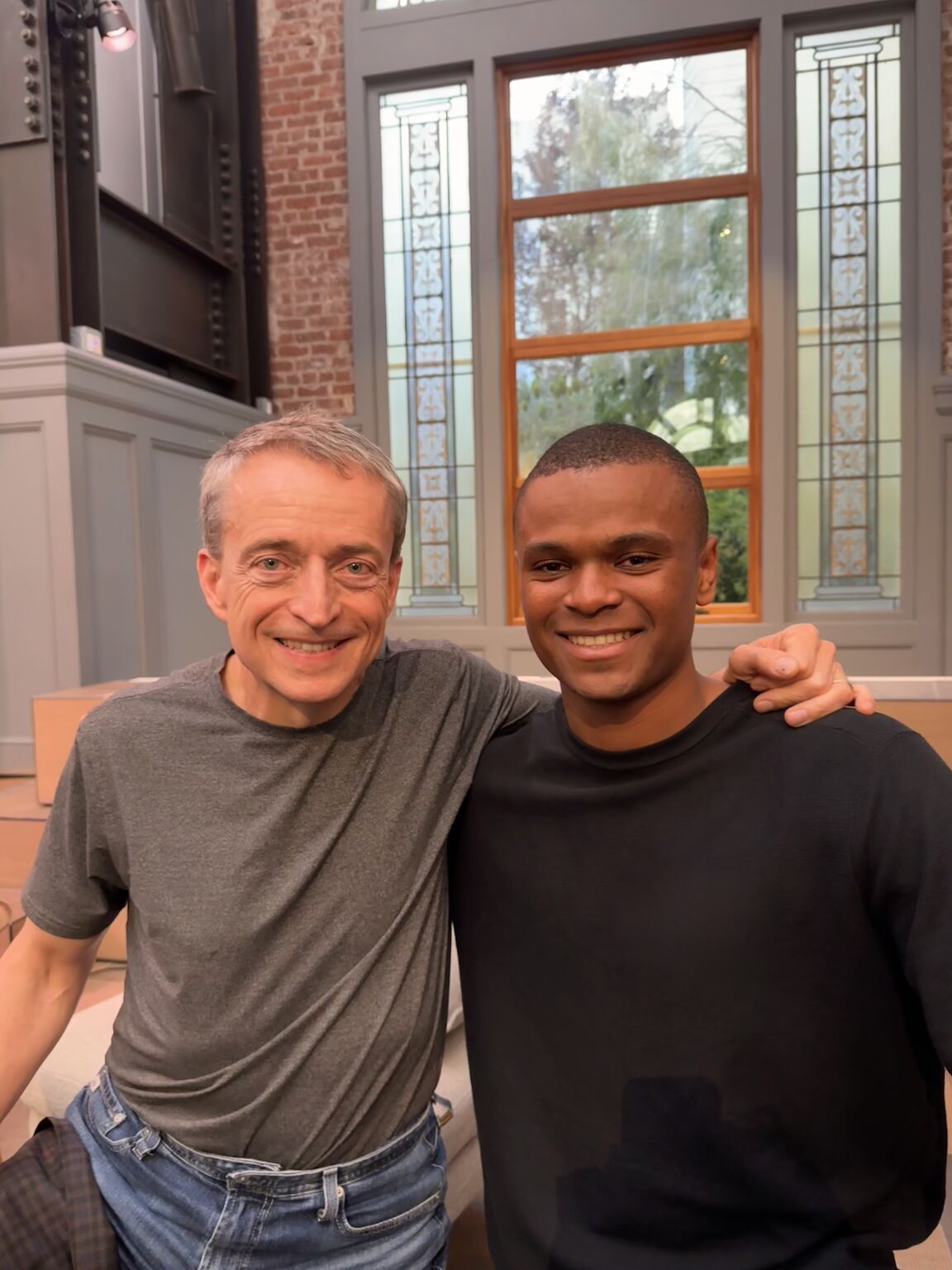
The photograph with former Intel CEO Pat Gelsinger became a marker in Neil’s account of the move. He took three lessons from the talk: lean into purpose, study failures for the blind spots they reveal and pause deliberately before a consequential decision. There is a charming tension in the last one. The person advocating a measured pause is also the person who once left a country on three days’ notice. Apparently deliberation and speed may coexist, provided each gets the correct calendar invitation.
Fewer dimensions, more persistence
Visibl joined Y Combinator’s Winter 2026 batch. Before Demo Day, Neil reduced the program’s lessons to two. First, innovate on as few dimensions as possible. Second, persistence wins through simple things done exceptionally well and repeated. It is an austere recipe for a company operating in a field where almost every noun sounds innovative.
The few-dimensions rule helps explain Visibl’s framing. The company does not need to invent semiconductors, replace every design tool or remove engineers from decisions. It can begin with the coordination tax: the effort spent discovering what changed, why a check failed, which requirement governs it and who can safely approve a repair. Reduce that tax, then earn the right to do more.
The ambition still reaches far. Visibl argues that robotics, drones, industrial systems, connected devices and edge hardware should have more practical access to custom chips. Off-the-shelf parts and FPGAs are convenient, but they may force compromises. Traditional custom development can require money and patience that smaller hardware companies do not have. A faster route could change which products receive silicon tailored to them.
Neil’s career is young enough that any grand verdict would be indecently early. The more interesting observation is the shape already visible. He has moved from engineering school to institutional software, from a boat-marketplace pitch to founder interviews, and from Canada to San Francisco in pursuit of a problem he could not yet solve. Each move added a room, a language or a collaborator.
Custom chips are often described through nanometers, performance and power. Neil’s wager begins one level above the silicon, with the fallible humans attempting to agree on what the silicon should become. Make their context easier to carry. Catch drift while it is still cheap. Leave the final gate in expert hands. For a founder who started by chasing access, the goal is consistent: open a difficult path without pretending the path is simple.