Bryan Bunker once had a rather literal problem with time. While studying at Arizona State University, he worked full time and pursued two undergraduate degrees. Getting across campus could mean running in a suit and tie, sometimes twice in a day. Before business efficiency became something he discussed as an executive, it was a matter of reaching the next room.
Years later, as chief operating officer of a commercial real estate brokerage, he described an ambition that was less breathless: make the work more efficient so advisors could give clients more attention. The person racing between commitments had become someone thinking about how colleagues could spend their hours.
Today Bunker is CEO of Noël Group and president of Nomaco, the engineered foam manufacturer based in Zebulon, North Carolina. His path runs through accountancy, information systems, an MBA, DuPont, real estate and business strategy. The variety makes for a busy résumé. The recurring concern with other people’s work makes for a more interesting story.
A suit, a timetable, two degrees
Bunker graduated from ASU in 2000 with degrees in accountancy and computer information systems. Asked later about his university years, he recalled learning to weigh immediate demands against important ones. It is an unusually concrete educational lesson: the calendar was as much a part of the exercise as the coursework.
In 2009 he began studying at Indiana University’s Kelley School of Business, completing the MBA period in 2011. He received a Dean’s Fellowship. His record includes first-place finishes in a first-year case competition and a second-year capstone business simulation.
Those exercises require a team to turn an argument into a decision. A spreadsheet can accommodate several competing possibilities; an operating plan eventually has to choose. Bunker’s education put accounting, information and management in the same working vocabulary, useful preparation for a career that would cross industries.
There was also work well away from the business-school setting. Between 1994 and 1996, he volunteered as a missionary in St. Petersburg, Russia. Later, at DuPont, he took on Days of Caring coordination responsibilities with United Way of Delaware. These are distinct episodes, with different tasks and settings. They belong in the story alongside the professional appointments.
Giving the advisors their time back
At Menlo Group Commercial Real Estate in Tempe, Bunker worked with founder and president Tanner Milne on a new permanent office and a refreshed brand. The changes were announced in 2017. A brokerage helps clients decide where to work; this time its leaders were making that decision for themselves.
The new space included room for as many as 30 team members, eight conference rooms and an area where visiting clients and vendors could work between appointments. The design made room for the people passing through as well as those arriving each morning.
“We want to give time back to our advisors”
Bryan Bunker, on Menlo Group’s operating approach
Bunker connected efficiency with client service. That is a useful test for an internal improvement: what does it allow someone to do afterward? A process can be quicker yet still leave everyone occupied. His stated aim gave the saved time a destination.
The working relationship with Milne also appears in a smaller moment. When Milne received a Phoenix Business Journal 40 Under 40 honor in 2018, Bunker attended the celebration with other colleagues. He praised Milne’s appetite for learning and his interest in helping others succeed.
Recruit Tom Ellixson offered another view of the pair. After meeting Milne and Bunker, he recalled being impressed by their preparation and the plan they brought to the conversation. It is a modest recruiting detail, but an instructive one: an applicant was evaluating the people across the table, too. Prepared leaders gave him something concrete to consider.
In 2018 Bunker received Sun Devil 100 recognition for his Menlo Group leadership. His advice to emerging entrepreneurs included finding capable people who would listen, care and challenge them. The emphasis was on the company a person keeps while trying to build a company.
From the transaction to the customer
Bunker’s earlier DuPont work included global product-line and market-segment responsibilities, as well as leading a business unit’s strategy process. At Noël Group, he became vice president of strategy and development, supporting initiatives across its business interests.
The scale and products changed between those settings. The underlying questions of strategy remained practical: where is the opportunity, what does the customer need, and what must the organization be able to do? Such questions have to survive contact with the people carrying out the answer.
In October 2020, Bunker joined the board of Customer Vineyard. Noël Group announced further investment in the company, which provided data analytics and marketing services for wineries’ direct-to-consumer businesses. Beverage analyst Danny Brager also joined the board, and founder Mary Jo Dale was appointed CEO and president.
The appointment placed Bunker beside people with different kinds of expertise. Wine marketing, customer data and an industrial parent company met at the same board table. The announcement supplies a specific example of the breadth of his strategy role.
A customer relationship can run through a broker, a manufacturer or a winery. Each business has its own economics and its own products. Looking across them makes the ordinary word “customer” more demanding: somebody has to understand the particular reason a person buys, returns or chooses another supplier.
- Real estateAdvisors and their clients
- Customer VineyardWinery data and direct sales
- NomacoEngineered foam and applications
The long view, made in foam
Nomaco designs and extrudes engineered foam for construction, protective packaging, home furnishings, fitness, recreation and other applications. Polyethylene, polypropylene and proprietary materials appear in its product offering. For Bunker, manufacturing brings customer relationships into contact with a physical product that has to do a particular job.
Construction and packaging ask different things of foam. A supplier serving several markets has to understand those differences before offering a solution. Nomaco’s range gives a president plenty to attend to beyond a single product line.
In a company team spotlight, Bunker named three things he valued at Nomaco: its long-term orientation, its people and its range of capabilities. He described family values and concern for stakeholders as part of the company’s appeal, alongside its ambitions for growth.
“It’s a company with a soul.”
Bryan Bunker, on working at Nomaco
His comments about colleagues were similarly direct. He valued people who worked hard and looked after one another. The breadth of possible foam applications helped keep the work interesting for him. The explanation joins a preference for the working environment with curiosity about what the business can make.
Noël Group’s own approach includes building on existing businesses, developing ideas in adjacent markets and making investments for continuity. Bunker’s two leadership roles place the operating company and the broader group within the same career chapter. One concerns the daily work of a manufacturer; the other carries a wider set of business interests.
That pairing gives his story a useful scale. There are decisions about a particular customer’s application and decisions about the direction of a group. A president and a CEO can encounter both, even when they are the same person.
The Kindle requires a power supply
Business interviews occasionally improve when the questions become less businesslike. Ahead of Foam Expo in 2023, Bunker was asked what he would take to a desert island. He chose a Kindle filled with books and reference material, while considering how he might charge it with solar power. Coconuts entered the thought experiment by way of Gilligan’s Island.
The answer has an agreeable flaw: even a portable library needs electricity. Bunker gave the hypothetical some practical attention before settling on his choice.
For a dinner with a famous guest, he selected Ryan Reynolds, citing humor, family and entrepreneurship. He also expressed appreciation for people whose meaningful daily work receives little attention. The choice allowed room for a celebrity without making celebrity the point.
His interest in AI during that interview came with a qualification. He was following the technology closely while leaving its eventual effect on foam manufacturing open. Curiosity and a specific prediction are different commitments. His answer made space to watch, learn and see what would develop.
A place for the company and the town
In May 2026, the company’s name moved into another setting: Five County Stadium became Nomaco Park through a partnership with Capitol Broadcasting Company. The stadium had been a regional gathering place for nearly 35 years. Its new chapter included the Zebulon Devil Dogz and Wake Technical Community College athletics.
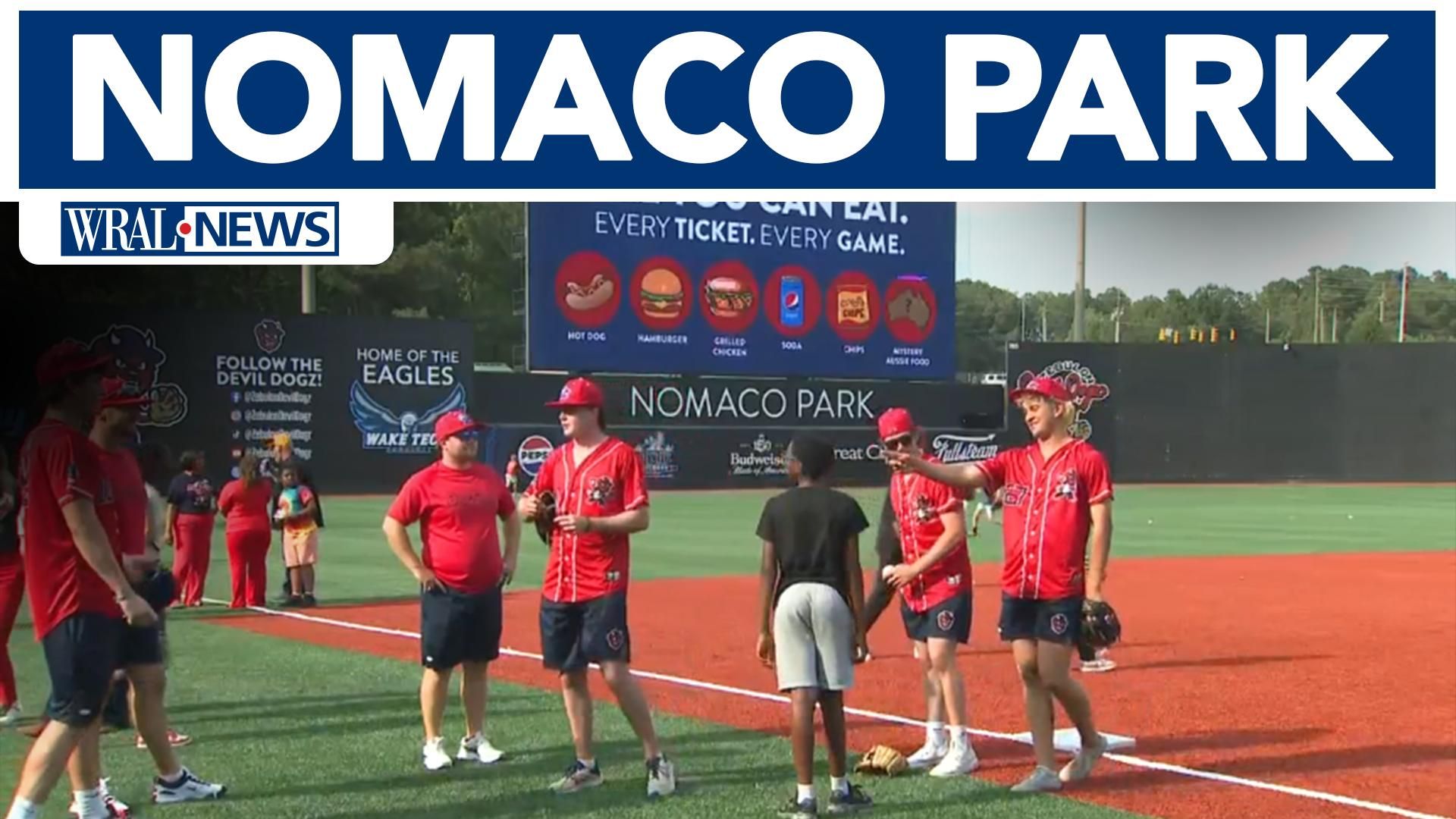
Bunker described the partnership as an investment in the community and its future. Plans extended to concerts, festivals, other gatherings and hiring events. A stadium visit could become an introduction to employment at the company as well as an evening at a game.
A manufacturer’s work often reaches people through a product used by another business. A ballpark offers a more visible meeting place. The Nomaco name is there where neighbors gather, rather than only where customers place orders.
Bunker’s career began with commitments that sent him hurrying between rooms. It has come to include the question of what other people can do with their time, and places designed to accommodate them. In Zebulon, that story now has a field, a crowd and a reason to stay for the next inning.