Warren Lichtenstein gave more than $2 million toward a baseball renovation at the University of Pennsylvania. The name chosen for the playing surface belonged to someone else: Tommy Lasorda. For an investor accustomed to questions of ownership, it was a rather personal allocation of naming rights.
The gift connected his alma mater with a friendship that had changed his understanding of coaching. Lasorda, the former Dodgers manager, had become a mentor. Lichtenstein wanted Penn’s field to carry that relationship into another generation of players. A stadium improvement could do two jobs at once.
His career has often involved this sort of double assignment. Buy an interest in a business, then become involved in how it works. Build a sports organization, then ask what the children learn while playing. Across the two, the recurring question is how much an owner can change by remaining involved.
A name borrowed from a galvanizer
Born in 1965 and originally from Long Island, Lichtenstein attended Tulane before earning an economics degree at Penn. His first professional stops were Para Partners, where he worked as an analyst, and Ballantrae Partners, where he analyzed acquisitions. In 1990, at 24, he founded Steel Partners.
The name came from Kinark Corporation, an early investment whose principal business was galvanizing steel. Lichtenstein put in $10,000 saved from his bar mitzvah. There were five original investors. When the attempted acquisition of the whole company did not happen, Kinark sold non-core and underperforming operations instead. Its shares appreciated.
The episode supplied both a name and an early example of change without complete ownership. Steel Partners could make money when a company altered what it owned and how it operated. The galvanizer eventually became a footnote to a broader business, but its name stayed on the door.
The investment that became a job
SL Industries offers a longer view of his method. Steel Partners began investing in the company in 1991. Lichtenstein served on its board from 1993 to 1997, then returned to management after profitability and the share price declined. In 2002, he became chairman and chief executive.
This was a more intimate relationship than selecting a stock. The company made equipment involving power electronics and motion control. A chief executive had to deal with the enterprise behind the ticker: products, customers, employees and the decisions that determined whether the enterprise earned money.
He remained CEO until 2005, with James Taylor succeeding him. Steel Partners ultimately acquired SL Industries in 2016. A position opened a quarter-century earlier had become part of the operating group. The sequence is a useful corrective to the idea that an investment career consists entirely of finding an entrance and an exit.
Lichtenstein’s responsibilities elsewhere multiplied. He served as CEO of Steel Partners’ general partner from July 2009 until February 2013, when he became Executive Chairman. His career also took him onto boards across manufacturing, aerospace, defense and banking. These were businesses with very different customers, held together by decisions about capital and operations.
Patience meets the exit door
The move toward a holding company came through a dispute. By November 30, 2008, investors in the Steel Partners II funds had requested redemptions amounting to approximately 38 percent of assets under management. Redemptions were temporarily suspended in December. Long-term investments and immediate withdrawal requests had collided.
A proposed restructuring would exchange fund interests for interests in a publicly traded partnership. Some investors objected: the new units would not carry the same redemption rights. Resistance led to litigation. The disagreement was about what investors could receive, when they could receive it, and who could decide.
The revised arrangement offered a choice between receiving holdings in kind and exchanging a distribution for Steel Partners Holdings units. Implementation occurred in July 2009. The ensuing holding-company model gave the operating businesses a different financial home, but the transition had been contested by people whose capital helped support it.
That history belongs beside the language of patient ownership. Patience has terms. A founder’s preferred timetable and an investor’s timetable can diverge sharply, especially when markets are in distress. Reorganizing the vehicle addressed a practical problem while also changing the relationship between its manager and its investors.
- 1990Steel Partners founded
- 2009Holding-company exchange
- 2011Steel Sports founded
- 2012NYSE listing
- 2026Return to private ownership
The arithmetic of ownership
The operating group today reaches beyond industrial products into energy, supply chains, financial services and sports. Its 2024 revenue was about $2 billion. The work behind that total includes examining profitability at the level of plants, products and customers, rather than treating an acquisition as a completed achievement.
The Steel Business System uses lean manufacturing, Six Sigma and continuous improvement. Those labels describe disciplines for examining processes and reducing waste. In practice, a diversified owner has to ask which activities earn their place, which consume resources, and which improvements can travel from one business to another.
That can sound bloodless. Plants have capacity limits; customers have requirements; a product that looks attractive in aggregate may be less attractive after its costs are examined. The operating question is more demanding than whether the acquisition looked sensible on announcement day. It has to be asked again as conditions change.
Ownership also carries the possibility of being outvoted. At Aerojet Rocketdyne in June 2022, shareholders elected the eight-person slate backed by chief executive Eileen Drake. Preliminary results gave her slate more than 75 percent of votes cast; Lichtenstein’s competing slate received roughly 25 percent. His board tenure ended.
The contest followed the collapse of a proposed merger with Lockheed Martin. It was an emphatic defeat for his preferred board. A career involving corporate governance includes occasions when other shareholders choose someone else’s direction. No amount of familiarity with the business removes their vote.
A dinner with consequences
Lasorda entered Lichtenstein’s life through a dinner arranged by Tony Bergamo. In Lichtenstein’s recollection, he knew little about the manager’s baseball record when they met. The friendship began before he had fully taken inventory of the celebrity. That is an unusually pleasant way to encounter a famous person.
At his son’s Little League game, he watched Lasorda encourage a batter who had gone without a hit all season. The child then connected with the ball. Lichtenstein remembered the moment as an illustration of what encouragement could do. The lesson helped inspire the creation of Steel Sports.
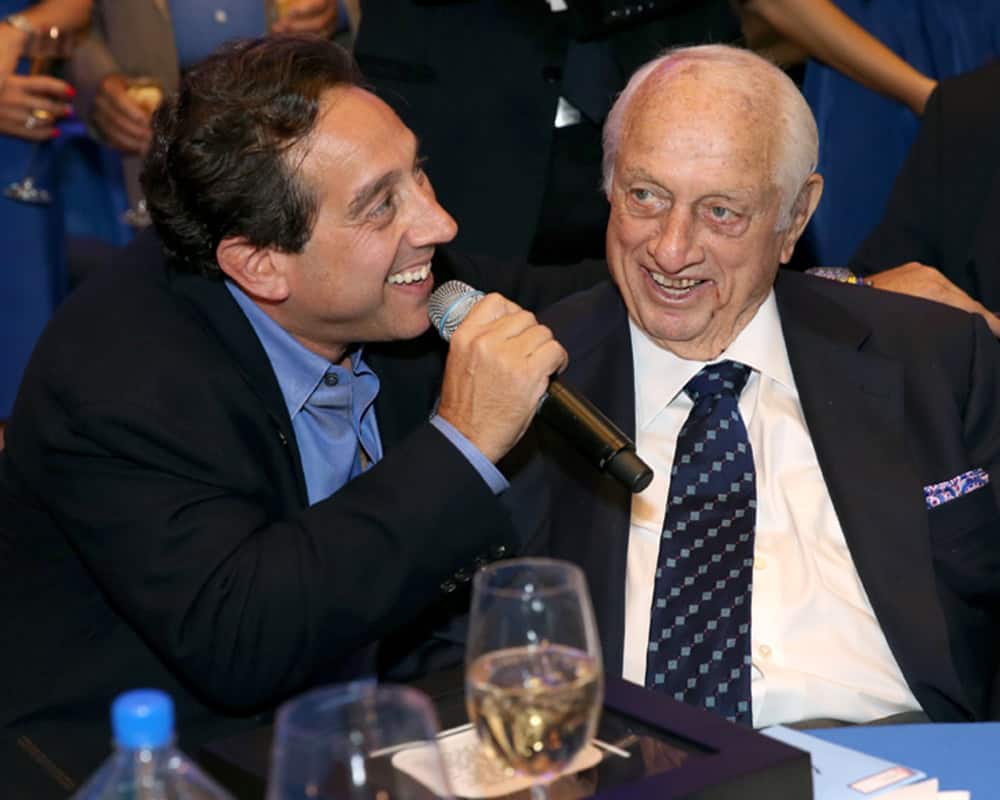
Steel Sports began in 2011. Its coaching system draws on Lasorda’s approach, emphasizing teamwork, respect, integrity and commitment. Turning a friendship into a coaching organization meant making its lessons available beyond the people who happened to be sitting at dinner or standing near the dugout.
There is an obvious difficulty in that ambition. A charismatic coach’s manner cannot simply be photocopied. An organization has to decide which habits it can teach, how coaches will practice them, and how athletes will experience the difference. The system gives Lasorda’s influence a structure that can continue without his presence.
When the coach sits down
One experiment within Steel Sports gave players more room to direct themselves. Beginning around 2018, its leaders, including Lichtenstein, incorporated free play. Some coaches opened practice with 10 to 15 minutes in which children organized their own games. Sandlot baseball made room for rules negotiated by the players.
In Plymouth, Massachusetts, a boys’ five-on-five soccer team coached by Ian Hughes took the idea into competition. With Hughes’s approval, the players coached themselves during tournament games. They won their regional competition and then their age group’s national championship in Virginia in 2021.
A single team’s result does not establish that self-coaching caused the victory. It does offer an interesting scene inside an organization founded by an investor: the adult in charge choosing to watch while the participants make decisions. Responsibility becomes something the players exercise, rather than something described to them.
The experiment complicates the picture of leadership as constant intervention. A coach can prepare players and then leave room for their judgment. On a field built for instruction, knowing when to sit down may be part of the instruction itself.
“Potential is interesting, but performance is everything.”
Warren Lichtenstein
Put the money where the players are
At Penn, his commitment included a dollar-for-dollar match of up to $2.05 million toward the $4.1 million first phase of the baseball renovation. The planned work included turf, dugouts, protective netting and a reorientation of the field. These are decidedly practical expressions of affection.
The matching arrangement asked others to participate. It also made the tribute to Lasorda part of a facility that successive teams would use. A name on a playing surface has a different life from a name in a commemorative program: people return to it, season after season.
At Chadwick School in California, Lichtenstein contributed $1.5 million toward new fields and the school’s Center for Innovation and Research. His son Stefan played baseball there. The renovated diamonds became Lichtenstein Family Field. His interest was rooted in the community his family had experienced, including the influence of coaches over several years.
Access requires a different kind of spending. In 2023, he gave $100,000 to the Steel Sports Foundation to support scholarships for underserved children attending camps and joining baseball, softball and soccer teams. A playing field provides the setting. A scholarship helps a child get onto it.
The next people in the lineup
In November 2025, Steel Partners launched a two-year leadership program with four six-month rotations. Participants would work across business areas and learn from senior leaders. Lichtenstein linked it to the organization’s interest in developing future leaders. Coaching had acquired an office itinerary.
The same month, Bobby Valentine joined the Steel Sports Advisory Board. A longtime friend and collaborator of Lichtenstein, Valentine had his own connection to Lasorda, who managed him in the minor leagues. The network around Steel Sports continued to include people with direct experience of the mentor behind its coaching philosophy.
Steel Partners’ financial structure changed again. After announcing a voluntary NYSE delisting in April 2025, it announced in January 2026 that an affiliate would purchase eligible outstanding common units for $50 each. Lichtenstein’s current biography describes the company’s return to private ownership that year.
The forms have changed across his career: fund, holding company, public listing, private ownership. The work still involves businesses and people whose development takes time. The baseball field at Penn supplies a quieter image of that ambition. Its donor’s friend has his name on the turf. The players have another season ahead.
Follow the businesses and the baseball
Public profiles, reporting and further reading.
- Warren Lichtenstein’s website · Personal LinkedIn · Biography blog
- Steel Partners · Investor letters · Wikipedia profile
- Steel Partners social accounts: X · Instagram · Facebook · LinkedIn
- Steel Sports · Steel Sports videos on YouTube
- Penn’s baseball gift announcement
- Reuters: the Aerojet shareholder vote
- The soccer team that coached itself
- Lichtenstein’s remembrance of Lasorda