Steve Mitchell has a fairly specific answer to the question of what Oklahoma has going for it. At an aerospace groundbreaking in Claremore in July 2026, he talked about workers, water, electricity and room to build. Then he praised the local officials for making an expansion possible. In a business accustomed to discussing capital in the abstract, his list had the satisfying weight of things you could point to.
Argonaut Private Equity had acquired Pryer Aerospace the previous year. Now the company was breaking ground on a 60,000-square-foot addition. Mitchell, Argonaut’s CEO and managing director, described manufacturing across Middle America as entering a renaissance. His argument for northeastern Oklahoma began with the everyday conditions that let a factory function. Even an aircraft component requires somewhere to put the machine that makes it.
There is a useful clue to Mitchell’s career in that preference for particulars. Before Tulsa’s industrial companies became his daily business, he worked on acquisitions for Mark Cuban in media, sports and entertainment. Earlier still, he was a corporate lawyer. The settings changed; the task of understanding what made a business work followed him home.
A round trip with a law degree
Mitchell was born and raised in Tulsa and is a member of the Cherokee Nation. He graduated from Baylor University and the University of San Diego School of Law. His qualifications span a bachelor’s degree in marketing and a law degree: two disciplines with rather different ideas about how much enthusiasm belongs in a sentence.
At Gibson, Dunn & Crutcher, he specialized in mergers and acquisitions. He subsequently became a principal at Radical Incubation and 2929 Entertainment, leading acquisitions on Cuban’s behalf. Media, sports and entertainment supplied the subject matter. Buying businesses supplied the continuity.
Those names give his biography an unusually lively opening for an industrial investor. There is entertainment in the background of a career now concerned with electrical equipment and precision manufacturing. Yet the practical connection is straightforward. An acquisition requires judgments about people, ownership, customers and how the parts of a business fit together. The product can change without removing those questions.
Mitchell joined Argonaut in 2004. His responsibilities came to include finding and leading investments, managing the portfolio and setting the firm’s overall strategy. That combination puts him on both sides of the investment decision: choosing a business and remaining responsible for what happens after the choice. The signing ceremony is only one appointment in a much longer calendar.
The work after the handshake
Argonaut’s stated investment focus gives that calendar a shape. The firm seeks industrial businesses in Middle America and other underserved U.S. markets. Manufacturing, infrastructure and services sit at the center of the strategy. It describes an approach that uses relatively little debt and emphasizes improving the companies it owns.
Its transactions include partnerships with entrepreneurs and family businesses, management buyouts, corporate divestitures and companies facing operational difficulties. These are different ownership problems. A family deciding on succession has a different conversation from a corporation selling a division. In each case, the investor arrives at a moment when the business’s next owner matters.
For Mitchell, the management team is a recurring part of the public explanation. When Argonaut acquired Pennsylvania drilling-equipment maker Center Rock in April 2023, the existing leadership remained in place. Argonaut would support expansion into additional industries and countries. The company’s expertise stayed with the people already running it.
Center Rock makes downhole drilling tools for construction, mining, utilities and energy. It is an apt illustration of the portfolio’s vocabulary: hammers, bits, rigs and highly particular customer requirements. There is little room for a vague product description when the customer needs to drill through bedrock. The attraction lies in a business doing a difficult job that other businesses need done.
That example also guards against treating Mitchell’s Tulsa address as the boundary of his investing. His home base is local; the companies and their customers extend beyond it. Understanding a place can be useful without requiring every investment to be made down the street.
Five hundred million reasons to get the details right
In August 2019, Argonaut announced the final close of its fourth fund at $400 million. Its investors included pensions, endowments, financial institutions and family offices in the United States and abroad. At that point, more than $120 million of equity had been deployed into four portfolio companies. Fundraising and company building were already running alongside each other.
The fifth fund reached its final close in December 2023 with $500 million in commitments, above its original $400 million target. The difference was $100 million, or 25 percent. The numbers describe a fund’s commitments, rather than Mitchell’s personal wealth or a company’s sales. They represent money entrusted to an investment strategy, with all the responsibility that verb implies.
Mitchell’s explanation of the strategy during fundraising centered on purchase prices, limited debt and execution. Higher interest rates made the cost of borrowing harder to ignore. He emphasized work within the businesses: better manufacturing processes, software, talent development and acquisitions that could add capabilities.
This is the less photogenic portion of private equity. Upgrading a software system seldom earns anyone a ceremonial shovel. But it is precisely the sort of work Argonaut names when explaining how it intends to create value. For an executive setting the strategy, the test comes in whether the companies can carry out those changes. Raising the fund supplies the means; it does not finish the job.
The electrical side of the future
In July 2024, Argonaut announced a partnership with Layco Electric Innovations, a Tulsa business dating to 1945. Layco manufactured electrical equipment and serviced motors, with customers in industries including manufacturing, petrochemicals, renewable energy and data centers. At the time, it was building a new manufacturing facility in Tulsa.
Mitchell connected the investment to rising U.S. energy demand and the need for more supporting infrastructure. He also made the local connection explicit. His description of the partnership placed company growth and the city’s manufacturing economy together.
“It’s a perfect fit and benefits Tulsa.”
Steve Mitchell / Layco partnership, July 2024
By June 2025, Layco had adopted the name American Power Innovations. Its offerings included power distribution centers and motor control centers engineered and manufactured in Tulsa. The business served customers across the country, bringing a national market to a local production base.
There is something pleasantly literal about this chapter. Conversations about artificial intelligence quickly become airborne; electrical equipment brings them back to the floor. Whatever the eventual use of a data center, power must reach the equipment. Mitchell’s investment sits among the businesses supplying that physical requirement. The future has a surprisingly extensive parts list.
Tulsa, with the joke left in
Mitchell’s public posts have room for a little civic teasing. Sharing an invitation to an Experience Tulsa network for former residents, he asked why anyone would ever want to leave the city. Given his own education outside Oklahoma and subsequent Tulsa career, the joke has a tidy symmetry. He can advertise the hometown while having a biography that travels.
His connection to local economic development also includes formal work. PartnerTulsa’s 2023 annual report listed him as a trustee and chair of the Tulsa Development Authority. The role places him in the civic institutions concerned with the city’s development as well as in the private businesses participating in it.

In September 2024, Garry Clark shared a photograph of the two of them at lunch and described discussing Mitchell’s career and Tulsa’s future. The picture is ordinary in a useful way: a restaurant table, a notebook, two people talking. Economic development has public announcements and formal boards. It also has conversations between the people expected to make those plans happen.
Mitchell has brought company leaders and business partners to Tulsa for Argonaut’s CEO Summit and annual investor meeting. In a post about the 2022 gathering, he highlighted operational excellence. The phrase links the people in the room to the work in their businesses. A portfolio needs individual management teams; a gathering gives those teams a chance to compare experience.
Enough room for the next machine
The investment cycle also includes departures. In January 2026, Argonaut announced the sale of VoidForm Products to White Cap. Argonaut and other investors had partnered with the business in 2021. During that period, VoidForm invested in facilities and strengthened its senior management team. Mitchell expressed support for White Cap as the company’s next strategic partner. A business could move on after a period of work together.
Then came the Claremore groundbreaking. Pryer Aerospace, acquired in 2025, brought experience in precision machining, sheet metal fabrication and structural assemblies for aviation and space programs. The expansion moved the story from an ownership announcement to a building project. Mitchell’s July remarks included $40 million in equipment alongside the additional floor space.
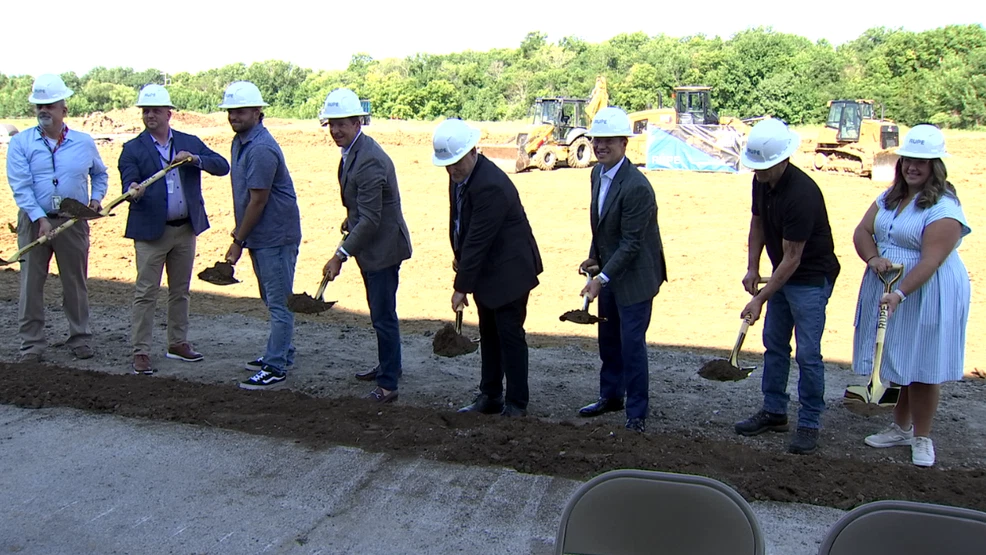
“Claremore and Rogers County makes it very easy to invest capital and to grow,” he said. The compliment concerned the conditions around a company as much as the company itself. For the Tulsa native who moved from legal agreements to entertainment acquisitions to industrial investing, the next chapter had a measurable footprint: more space, new equipment and a place prepared to accommodate them.