Brooks Schaden was in Los Angeles for a Lakers game when he noticed the customers who had stayed behind. The basketball crowd usually drained away toward the arena. This time, at 8:30 on a Monday evening, the restaurant was still half full. Football was on the televisions. People had another reason to sit down.
For someone with a background in investment banking and private equity, it was a useful kind of anomaly: revenue behaving differently from the expectation. The restaurant was part of Tom’s Urban, a broader dining concept. The customers were suggesting a narrower, more compelling purpose. A game taking place somewhere else could fill seats here.
Schaden later recalled that evening as one of the small discoveries behind the decision to rebrand the concept as Tom’s Watch Bar in 2019. There was no need to persuade those people to enjoy watching football together. They were already doing it. Management’s job was to notice, then make the room work better for them.
That observation offers a way into Schaden’s career. He has worked on acquisitions, founded an investment fund and helped develop restaurant businesses. At Tom’s, the question became unusually tangible: what makes someone choose this seat, in this room, for the next three hours?
A financier finds a different kind of audience
Schaden’s route to the dining room ran through corporate finance. He worked in mergers and acquisitions at ABN-AMRO, then held investment banking executive positions at Merrill Lynch. He subsequently founded and ran Baseline Partners, a private equity fund focused primarily on emerging markets.
His education matches that early career: a bachelor’s degree in International Business and Finance from Washington University in St. Louis, followed by an MBA from the University of Chicago Booth School of Business. At SIF Partners, his responsibilities broadened to include operating businesses, securities and real estate investments.
Restaurants brought another set of demands. Schaden was involved in Smashburger’s growth and its eventual sale to Jollibee Foods. The connections carried into Tom’s: Smashburger co-founders Tom Ryan and Rick Schaden were fellow founders of the sports-viewing business, alongside restaurant operator Shannon McNiel. Brooks initially served as chief financial officer.
In November 2024, Brooks and McNiel became co-CEOs. The partnership joined a finance and investment background to years of restaurant operations experience. The announcement described a chain approaching 13 venues. Their task was to take a recognizable experience into more cities while keeping the particulars of each location in view.
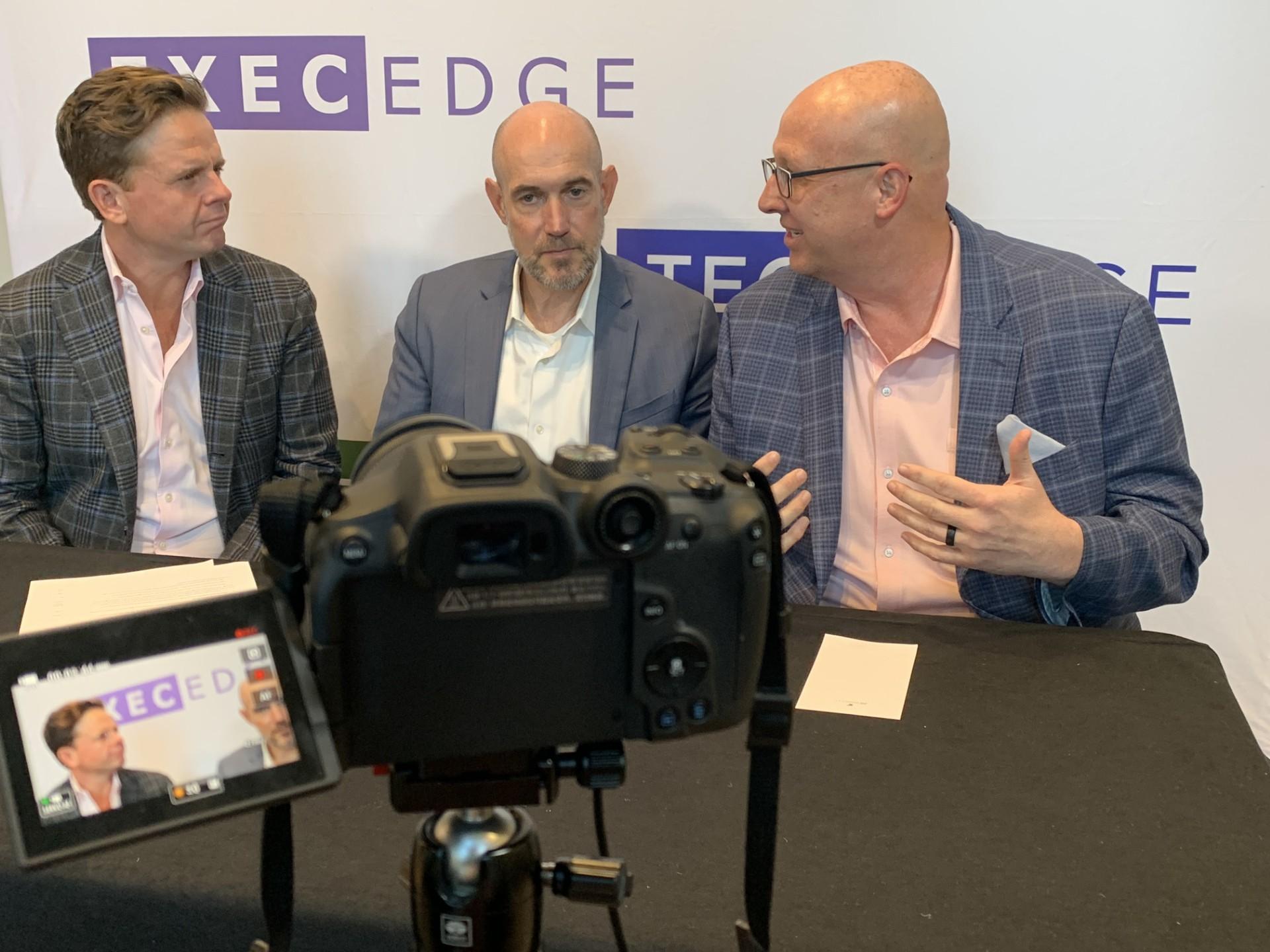
The useful business of being next door
Listen to Schaden discuss expansion and a particular phrase keeps appearing: “gravities of traffic.” Arenas, convention centers and casinos attract people for reasons a restaurant does not have to invent. Tom’s looks for places within that pull, where a crowd has already made the decision to go out.
There is a practical attraction to this geography. A concert, convention or ballgame supplies an occasion. A restaurant can serve people before it, after it and, with an away-game gathering, when the local team is playing in another city. The calendar becomes as relevant to the location as the surrounding buildings.
Inglewood made the idea concrete. Schaden and McNiel were considering a second Los Angeles location when a contact approached them about a space at the Lum Hotel. It sat in the neighborhood of Intuit Dome, SoFi Stadium and YouTube Theater. By late 2025, Tom’s had taken the opportunity to open there.
The announced Cincinnati deal followed a related logic. In September 2025, Tom’s signed a lease with the Reds for a space near Great American Ball Park and agreed to a multiyear marketing partnership. A location and a relationship arrived together. The club had supporters; the restaurant would have somewhere to welcome them.
The Milwaukee announcement paired a lease near Fiserv Forum with a marketing agreement with the Bucks. These were specific bets on sports neighborhoods. A neighboring arena might explain why a customer first noticed the place. Giving that customer a reason to return remained a separate piece of work.
A crowd has its own clock
Schaden’s descriptions of Tom’s often move quickly from the address to the mechanics. The screens have to carry the games people came for. The kitchen has to cope when those people arrive together. A sports schedule is an awkward dinner reservation: kickoff is fixed, attendance can surge, and overtime declines to consult the staff.
In laying out his priorities for 2026, he put real estate and operational technology side by side. Tom’s service model, he explained, was designed to deliver food in under eight minutes during peak periods. A programming schedule informed by data would help the business carry the games its customers wanted.
The eight-minute aim matters because waiting has a different meaning when everyone is watching a clock. Dinner can be the evening’s entertainment at another restaurant. Here, the food needs to arrive while the entertainment continues. The operational promise is part of the invitation to stay in your seat.
That puts an investor’s vocabulary beside a host’s responsibilities. Site selection, scheduling and efficiency are familiar management subjects. In this setting, their consequences appear in small interruptions: a missed passage of play, an uncertain answer about a broadcast, a group deciding where to gather next time. Schaden’s attention to those systems gives his account of the business much of its substance.
“gravities of traffic”
Brooks Schaden’s phrase for the event districts that guide Tom’s expansion
The 2026 World Cup added another version of the problem. Tom’s introduced tiered seat reservations with Sports Illustrated Tickets for the tournament. Customers could purchase a particular level of certainty about where they would watch. Schaden described the appeal in terms of being alongside friends and fellow fans, with the screens, food and drinks arranged around the match.
That is a revealing detail in a career that began with financial transactions. At Tom’s, even a reservation belongs to the experience he is trying to construct. A group planning its afternoon wants to know that the room will be ready for it. The team on television may be unpredictable; the business serving the audience has a different obligation. A reserved seat, a published schedule and a kitchen prepared for the rush are ways to make the outing easier to choose.
Borrow the crowd’s trust
The partnerships also tell you something about his approach to growth. Professional teams already know how to reach the people who care about their games. Working with them gives a new restaurant a route into an established audience, rather than asking it to assemble that audience one advertisement at a time.
Schaden has described team email lists and fan channels as particularly valuable. An away-game watch party can bring familiar parts of the stadium experience into the restaurant: mascots, cheerleaders and announcers. He recalled one gathering where the mascot needed a handler to make progress through everyone wanting a photograph. Even a costume needs crowd control.
Other collaborations work through a shared occasion. Tom’s has partnered nationally with Flecha Azul Tequila, the brand backed by Mark Wahlberg. The commercial logic is visible: a beverage business gets a place in the gathering; a restaurant gains another promotional relationship. Schaden talks about choosing partners with a compatible vision as well as reach.
By October 2026, that approach included a partnership with Dodgers fan club Pantone 294. The arrangement offered its chapter network places to watch regular-season and playoff games across Tom’s venues. The allegiance belonged to the fans before the restaurant entered the picture. The business offered a dependable meeting place for it.
Tom’s and Xperience Hospitality planned more than 200 tailgates and pep rallies across an 18-week season.
A separate October announcement formalized a football tailgate partnership with Xperience Hospitality after events in 2025. The plan covered 12 venues and more than 200 tailgates and pep rallies for professional and college games. Partnerships had become something that could be scheduled repeatedly, with a reason for guests to put another date in their calendars.
The partner beside him, and the role ahead
For all the attention to crowds, one of Schaden’s more personal descriptions of the business concerns a single colleague. He has spoken about knowing what McNiel is doing and thinking after their years working together. Their shared leadership depended on trust built through the work, alongside friendship.
That relationship now has a different arrangement. On October 21, 2026, Tom’s appointed McNiel sole chief executive. Schaden returned to his role as CEO of SIF Partners, the investment firm that owns the business. He remains involved through the board and ownership group. A co-founder’s connection can continue after the operating title changes.
“Tom’s Watch Bar was incubated at SIF, and is now ready to stand on its own,” Schaden said. He expressed confidence in McNiel and said he looked forward to supporting the brand in new ways. The phrasing places the transition within his longer career of developing businesses and deciding how to support their next stage.
There are visible markers of what happened during the shared leadership period. Tom’s said its footprint grew by nearly 50 percent in 2025. In August 2026, it announced inclusion in that year’s Inc. 5000. The company had grown from a small group of restaurants into a national network of sports-viewing venues.
Schaden’s story returns, nevertheless, to a smaller scene: customers still sitting in a Los Angeles restaurant when management would ordinarily have expected them to leave. The financier had a crowd in front of him and an assumption worth revisiting. The next opportunity was already on television. He had to look around the room to see it.
Continue the conversation
- SIF Partners biography
- Brooks on LinkedIn
- Tom’s Watch Bar website
- The October 2026 leadership announcement
- Watch: ICR 2025 interview on YouTube
- Listen: Everybody Pulls The Tarp
- The Los Angeles turning point
- Inside the fan experience
- Locations and the event calendar
- Inglewood expansion
- Cincinnati partnership
- Milwaukee partnership
- 2026 operating priorities
- World Cup seat reservations
- Pantone 294 partnership
- Football tailgate series
- 2026 Inc. 5000 announcement