Andro Nodarse-Leon’s interest in hotels began with a peculiar restriction: he could admire one, but he could not check in. Born in Cuba, he visited Havana’s Hotel Nacional and was struck by the place. As a Cuban, he was not allowed to be a guest. Hospitality had presented him with a rather inhospitable introduction.
The incident has the shape of an origin story, although the route from that visit to hotel ownership took decades. It passed through the University of Pennsylvania, investment banking, private equity and a business that assembled private schools. In 2015, he participated in the purchase of El San Juan Hotel in Puerto Rico. The visitor had become an owner.
There is an obvious temptation to stop the story there. A closed door, a determined young person, a set of keys: the ending almost writes itself. His subsequent career is more interesting because ownership supplied fresh complications. Renovations had to be paid for. A hurricane undid work already completed. Expansion meant waiting for sellers whose prices made sense. Getting the keys was an opening chapter.
The nightlife company before the finance career
While studying at Penn, Nodarse-Leon started a nightlife company. It is a small detail with considerable explanatory power. Before the institutional finance jobs, there was already an interest in bringing people together and giving them a reason to stay out. The later resort owner had an early acquaintance with the business of an evening.
His education combined a BS from Wharton with a BSE from Penn’s School of Engineering and Applied Sciences, both earned cum laude. Finance and engineering offer different ways to interrogate a plan. One asks about the money; the other asks whether the thing will work. A hotel gives both questions a full day’s employment.
He began his professional career at Goldman Sachs, then worked at KKR in New York. Those firms gave him experience with transactions and with businesses whose performance continued to matter after the paperwork was signed. The familiar prestige of those names can obscure the practical apprenticeship: learning to examine an enterprise closely enough to risk capital on it.
He founded LEON, MAYER & Co. in 2005. By 2012, his work included Endeavor Schools, where he led the firm’s ownership, financing and operational oversight through 2018. Schools and resorts might appear an eccentric pairing on a résumé. Each, however, asks an owner to take responsibility for buildings, people and the daily experience inside them.
A reopening, then another renovation
El San Juan supplied an unusually public stage for this combination of capital and social life. On Memorial Day weekend in 2017, the renovated hotel’s unveiling coincided with Michael Capponi’s birthday celebration. Nodarse-Leon appeared among guests alongside musician and actor Jencarlos Canela. Live music, a nightclub opening and a beach-club launch were part of the weekend.
That scene matters because hotel investment is easy to describe as a sequence of asset purchases. Here was the product being used: people assembling, music playing, public spaces earning their keep. A ballroom can be measured in square feet. Its purpose becomes clearer when somebody has a reason to put on a jacket and enter it.
Then Hurricane Maria struck in September 2017 and severely damaged the property. An owner who had overseen one major renovation faced another restoration. The rebuilding was completed at the end of 2019, and the property became Fairmont El San Juan Hotel in January 2020. The chronology allows little room for the idea that a purchase alone finishes the job.
The hurricane also complicates any easy account of persistence. Rebuilding a hotel is a specific commitment of money, coordination and time. There is no need to imagine private conversations or heroic speeches to see the consequence: Nodarse-Leon remained involved through a second round of work on the same property. The investment had become a continuing obligation.
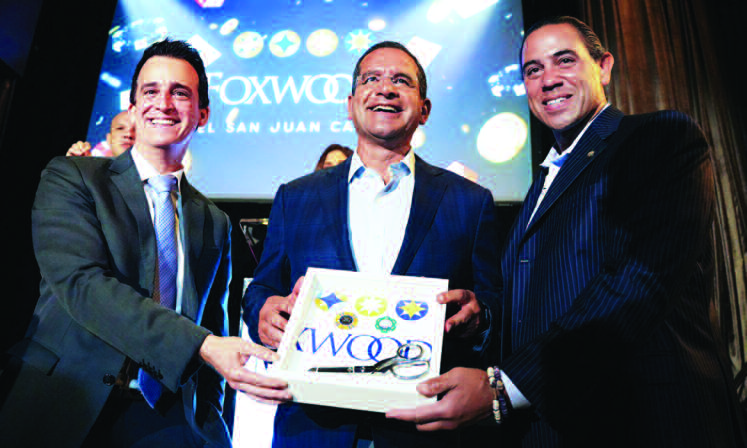
Another chapter arrived with the 2021 soft launch of Foxwoods El San Juan Casino, a partnership involving LionGrove and the Mashantucket Pequot Tribal Nation. In the event photograph, Nodarse-Leon stands beside Governor Pedro Pierluisi and tribal chairman Rodney Butler. Hotel ownership had brought him into an alliance that crossed commercial, governmental and tribal institutions.
The responsibility survives the closing dinner
LionGrove, which he founded in 2018, makes an explicit connection between buying and managing. The team that leads a hotel acquisition remains responsible for its asset management. An affiliated company also manages properties where the arrangement fits. That structure keeps the people who proposed an investment close to the business that must make the proposal work.
This is a revealing organizational choice. An acquisition presentation can give every initiative a tidy completion date. Actual hotels have guests who arrive early, suppliers who arrive late and restaurants whose appeal cannot be settled by a spreadsheet. Keeping the investment team involved makes those realities part of the original promise.
The firm’s acquisition criteria give this philosophy a scale: hotels in the United States and its territories, at least 100 rooms, with target transaction sizes from $20 million to $250 million or more. Its focus includes capital improvements, changes in brand positioning and better management oversight. These are businesses substantial enough to require a team and particular enough to resist a universal renovation recipe.
Nodarse-Leon’s explanation of resort operations is similarly concrete. Front desk, housekeeping, security, marketing and food and beverage have to communicate with one another. A guest experiences their combined performance. Departmental boundaries provide little comfort to somebody waiting for a room. The owner’s challenge is to make a complicated organization feel uncomplicated to its visitors.
The expensive art of waiting
Expansion brought a different test. LionGrove spent years searching for an appropriate mainland acquisition before adding ADERO Scottsdale Resort, Autograph Collection, announced in January 2025. Nodarse-Leon described a competitive market in which the firm sometimes lost even after making an all-cash offer close to the seller’s asking price.
His account contains a useful qualification to the standard founder’s enthusiasm for growth. He wanted room for error in the investment assumptions. An attractive location could still carry an unattractive price. Passing on a hotel leaves no opening ceremony to photograph, but it can be a consequential decision for the people supplying the capital.
“There aren’t a lot of mispriced opportunities.”
Andro Nodarse-Leon, January 2025
ADERO had been in receivership for more than a year. Complexity made the process slower; Nodarse-Leon said the firm was prepared to do the additional work. A receiver, a lender and a prospective buyer add procedural demands to a transaction that already needs an operating plan. Patience here meant continuing the examination while declining to pretend that the complications had vanished.
The resort added 177 rooms and a desert setting to a portfolio concentrated in Puerto Rico. Its stargazing, mountain views and regional dining offered a different vocabulary of place. The shift from Caribbean coast to Sonoran Desert is geographically conspicuous. The underlying question remains familiar: what can this particular hotel give a guest that makes the trip feel worthwhile?
A resort needs a reason to stay up
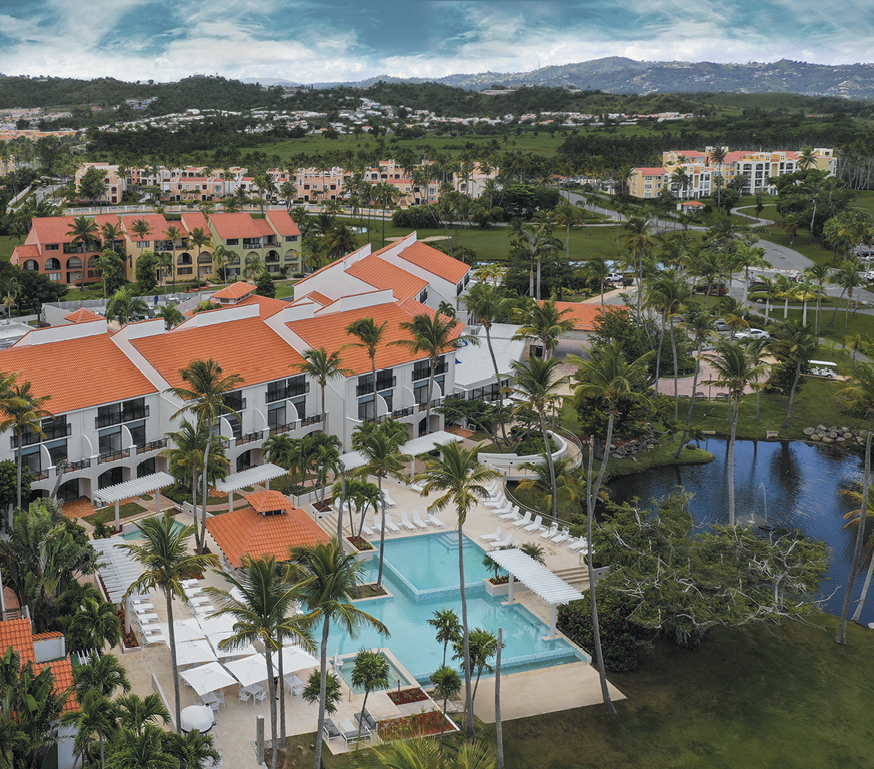
At Wyndham Grand Rio Mar, acquired in 2022, that question has produced a $70 million reinvestment. By February 2026, Nodarse-Leon was discussing the reworked resort on No Vacancy Live!, including food, local sourcing, guest movement and the practical logistics of operating on an island. A refurbishment budget is large and abstract. The way somebody spends a day is easier to understand.
Completed renovation reported in February 2026
Changes included distinguishing spaces for different visitors, with an adults-only pool experience and a rebuilt family pool complex. Evening programming expanded through Caicu, a bar and lounge with live music, and The Vault, a casino speakeasy featuring local performers. The former student nightlife entrepreneur had returned, on a much larger property, to the question of what happens after dinner.
Different visitors bring different clocks. Parents, couples and business groups can occupy the same resort while wanting quite different evenings. A sensible plan has to accommodate that variety without making each guest feel like an interruption. Those operating details offer a more useful view of Nodarse-Leon’s work than the acquisition announcement alone.
A Cuban thread, and the next set of plans
Cuba continues to occupy a separate place in his public work. He co-authored Cuba: From Economic Take-off to Collapse Under Castro with economist Jorge Salazar-Carrillo, published in 2015. He serves as vice president of the Cuban American National Foundation’s board, and appeared on ABC News in May 2026 to discuss U.S.-Cuba relations.
His professional ambitions are also stated publicly. In 2024, he set an objective of taking LionGrove’s hotel portfolio beyond $1 billion in asset value within five years. That is an aspiration with a date attached, rather than a result already achieved. The distinction matters for a founder whose account of investing places so much emphasis on assumptions.
The firm’s May 2026 announcement of development and talent leadership appointments gives the ambition a practical accompaniment. Sophia Chan became senior vice president of development; Ricardo Vázquez became vice president of talent and culture. Buildings and the people running them require different kinds of attention. Growth increases the demands on both.
His story keeps returning to that pairing: the place and the life inside it. A hotel that once excluded him helped start his interest. A university nightlife business gave it an early commercial outlet. Years of finance supplied the means to become an owner. Now the work continues after the keys change hands, through menus, music, renovations and the less photogenic discipline of waiting for the right price.