A video has two lives. In the first, someone watches it. In the second, someone has to make it watchable: upload it, label it, encode it, restrict it, deliver it, sell advertising against it and discover whether anybody stayed until the end. The first life gets the applause. Brightcove has built its business around the second.
- Brightcove supplies video infrastructure to businesses, publishers and broadcasters.
- Its early consumer destination gave way to a focus on customers’ own video operations.
- Contracts buy software and usage allowances; audience demand remains the customer’s job.
- Bending Spoons bought the company in 2025. AI and everyday usability now share the product agenda.
That distinction explains why a company might pay for streaming software when posting a video elsewhere costs nothing. A brand may want a player on its own website. An employer may need a recording accessible only to staff. A publisher may need advertising, television apps and useful viewing data. “Put it online” turns out to be a remarkably imprecise brief.
The audience it stopped chasing
Jeremy Allaire and Bob Mason founded Brightcove in 2004. Allaire became its founding chief executive; Mason its technology chief. They were early to a question that would become ordinary: how does a professional organization publish video on the internet?
For a while, the answer included attracting viewers to Brightcove itself. In a November 2007 interview with VideoNuze, Allaire described a reassessment: YouTube’s lead made winning the consumer destination market unlikely, while competing for viewers risked conflict with Brightcove’s media customers. Investment in Brightcove TV was reduced to zero. The company concentrated on publishing and management software.
There is a useful business lesson here, provided we resist making it too tidy. Brightcove had ambitions in two directions. One asked customers to buy its machinery; the other put the machinery supplier into their audience business. The reassessment made the first relationship easier to understand. Sometimes the attractive expansion is also the distraction.
The glamorous question was who would own the audience. The paying question was who would run the machinery.Our reading of Brightcove’s early change in direction
This was a financed decision, not a romantic tale about spare change and a garage. Brightcove announced a $59.5 million third funding round in January 2007. AllianceBernstein, Brookside Capital and Maverick Capital led it; investors also included media businesses and earlier venture backers. Money gave the company room to pursue its market. Judgment determined which part of that market to pursue.
The work hiding behind a play button
The central platform is Video Cloud. Its documentation describes a practical sequence: manage videos, manage players, publish, review analytics and operate live broadcasts. A video library becomes a working system with metadata, permissions and destinations, rather than a folder somebody promises to organize after the launch.
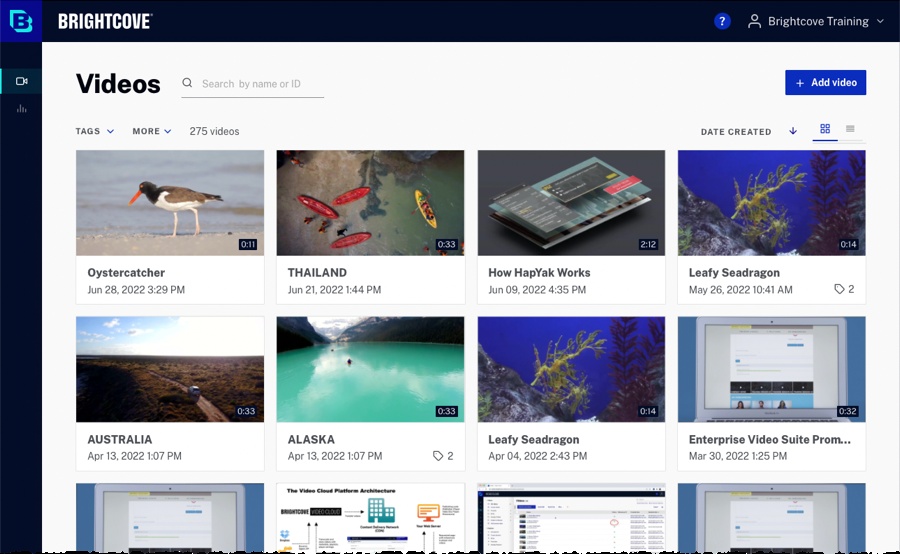
Brightcove packages that machinery for different jobs. Marketing Studio addresses campaigns and customer engagement. Communications Studio serves organizational video, including internal broadcasts. Media Studio concentrates on publishers, broadcasters and monetization. Beacon supports OTT app experiences; Zencoder supplies standalone encoding. The distinction is useful because an employee briefing and an entertainment subscription may use similar files while demanding very different surrounding systems.
Media customers can work with advertising, subscriptions, transactions or combinations. Interactivity adds chapters, calls to action, branching and polls. Developer APIs let organizations connect video to their own applications. These are concrete ways to make a video behave like part of a business, rather than an object dropped into a webpage.
- 01OrganizeUpload, label, set permissions
- 02DeliverEncode, publish, play
- 03LearnMeasure viewing and refine
Its market position is easiest to see through the alternatives. Kaltura also offers enterprise and media video tools. Mux presents video infrastructure principally through developer APIs. Brightcove combines an operating interface for publishing teams with integration tools for developers. That is an editorial comparison of their public offerings, not a claim that one platform wins every assignment.
The buyer’s question is therefore organizational: who will run video here? A staffed engineering team may want building blocks. A publishing operation may want a ready working environment. Brightcove belongs on the shortlist when coordinating the whole operation matters as much as making an individual stream work.
A festival, a finance lesson, a television trailer
In 2021, SXSW selected Brightcove as the official video partner for its online festival and education events. The announcement emphasized reliable viewing, security and the ability to reach attendees on their chosen devices. A festival going virtual needs a delivery system as well as a programme. The infrastructure must accommodate people arriving for particular sessions, with particular expectations, at particular times.
A smaller example makes a different point. Brightcove’s documentation shows an interactive Xero training video with chapters, a form, a quiz, calls to action and personalization. A viewer can navigate or respond. For somebody teaching a process, that offers a useful improvement over hoping the learner watches politely and remembers everything.
Then there is the editing desk. When Brightcove announced AI Content Suite’s general availability in January 2025, it described tools for clips, vertical reframing and metadata. Translation was then marked as coming soon. STV, a pilot customer, reported a faster process for creating trailers and clips from existing programming.
“What used to take hours now takes minutes, allowing us to reduce costs and focus more on creativity and strategy.”Remi Brunier, STV Director of Product and UX, in Brightcove’s January 2025 announcement
That is a customer testimonial, without a published controlled comparison or itemized savings. Still, it identifies a sensible use for automation: a team already owns substantial footage and repeatedly needs shorter versions. The business case can be tested on actual editing time and acceptable output, rather than enthusiasm for the initials AI.
The meter keeps running
Brightcove sells subscriptions, with the details determined by package, contract and usage. Its AWS Marketplace listing supplies a useful illustration: a Video Cloud contract at $12,000 for twelve months. Other listed packages cost more. The same listing specifies additional charges when use exceeds the contract, including bandwidth, storage, transcoding and streams.
Video Cloud on AWS Marketplace. Package scope, allowances and overages matter. This is a listed contract example, not a quote for every buyer.
The meaningful cost is the operating bill for the job you intend to do. A live-event calendar, a large archive and repeated audience peaks place different demands on a platform. Buyers should put those expectations into the quotation and ask which capabilities require an add-on. A cheap-looking agreement can become less charming when everybody finally watches.
A useful product can still have a difficult business
Brightcove’s reported 2023 results resist the comforting assumption that more video automatically means more growth. Revenue was $201.2 million, down from $211.0 million in 2022. It reported a $22.9 million net loss and ended 2023 with 2,559 customers. Those are historical figures, but they show a substantial company facing real commercial pressure.
Bending Spoons completed its acquisition on February 4, 2025, paying $4.45 a share in an all-cash transaction worth approximately $233 million. Brightcove moved from the public market into the Italian company’s portfolio. That purchase price belongs to an ownership transaction; it should not be mistaken for new venture money flowing into the product.
The February 2026 roadmap joins two concerns: AI features and quality of experience. Plans include improved captions, audio descriptions, contextual advertising and live clipping, alongside a Video Cloud redesign, player upgrades and better operational navigation. Brightcove also says it delivered 18 major platform enhancements in the second half of 2025. Announced plans should be treated as plans until a buyer verifies the relevant feature.
The pairing is revealing. A publishing team may appreciate automated clipping, but it also needs to find the right channel and understand the controls. Product sophistication is of limited comfort when the ordinary task is difficult. The less glamorous half of the roadmap deserves attention.
Bring your awkward video to the demo
The practical lesson for a prospective customer is to arrive with a difficult assignment. Bring a real recording, the intended audience and the access rules. Ask how it reaches your website or app, what happens during a live event, which viewing data returns and how that data enters the tools your team uses. Put someone who will operate the software in the demonstration.
A simple public clip may not justify enterprise software. Nor will a platform supply rights you do not own, programming people want or an audience willing to pay. Automation requires editorial review, especially where mistakes in captions or excerpts carry consequences. These are limits of the job, not peculiar defects in Brightcove.
For founders, the earlier lesson is just as useful: examine whether a new ambition serves the customer who already pays you. For buyers, examine the work around the video before shopping for its player. Brightcove’s story becomes interesting precisely there, in the territory between pressing play and making play possible.
Explore the machinery
Start with Brightcove, compare studio packages or watch product walkthroughs. For the ongoing company story, visit the newsroom, blog and 2026 roadmap.